
Tempers Flare as Seattle Police Chief Faces Questions on Out-of-Town Absence During Mass Shooting
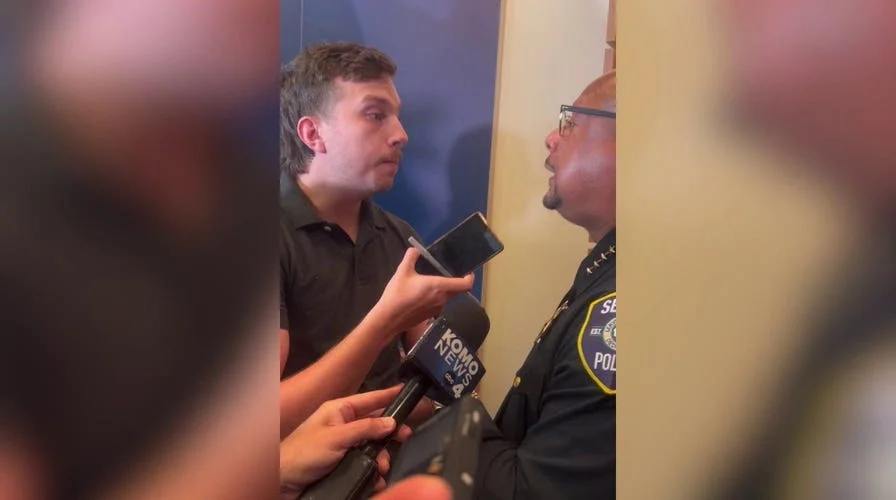
Just days after a deadly mass shooting at the Bite of Seattle food festival left three dead and at least four injured, Seattle Police Chief Shon Barnes found himself in a tense standoff with a reporter. The confrontation occurred during a press conference on July 28, 2026, after Barnes was asked why he was not in the city when the shooting unfolded on the afternoon of July 26.
Video from the event shows Barnes bristling at the question, with aides physically stepping between the chief and Connor Nash, a reporter for The South Seattle Emerald. “I have been working as hard as I can for this city from the day I got here. Do you got that?” Barnes snapped, before being escorted from the room.
According to reports from KIRO Newsradio’s “The Jake and Spike Show,” the exchange highlighted a growing tension between city leadership and the public over the department’s response to the shooting. “There’s two stories happening simultaneously,” said co-host Jake Skorheim. “One is the shooting, and then also the victims. The response from local officials is a whole nother side of the story.”
Barnes later defended his travel habits, telling reporters, “Reports I’m gone every weekend are grossly misstated.” He acknowledged that his family lives in Chicago, which has fueled speculation about frequent weekend trips, but insisted he remains fully committed to the city.
The Bite of Seattle Shooting: What We Know So Far
The shooting took place around 6 p.m. on July 26 outside the Seattle Center Armory, a crowded hub during the popular food festival. Police say two or more individuals exchanged gunfire in the area, leaving three people dead — a 19-year-old man, a 44-year-old man, and a 56-year-old woman. At least four others were wounded, including a 2-year-old boy. An eighth victim later reported to a hospital, bringing the total injured to at least five.
Officers working the event detained a 15-year-old boy within seconds of the shooting. Police recovered a Polymer80 9mm ghost gun with a 33-round extended magazine, which they believe was used in the shooting. When recovered, it still contained 19 bullets. A second firearm, a Springfield Armory RO Compact 9mm, was also found, but police say it was not used in the incident. A third weapon — a Glock 45 with a fully automatic switch and an extended 40-round magazine — was discovered during vendor cleanup. It had 21 rounds remaining.
Despite the prompt detainment of the teen, police have not arrested anyone for the homicides. The suspect was booked on first-degree assault and firearms violations. Crucially, authorities have acknowledged that the other person believed to have exchanged gunfire has not been identified or located, raising concerns about public safety.
Mounting Criticism Over Emergency Response and Communication Failures
Chief Barnes’ absence during the crisis has become a flashpoint, but it is far from the only complaint about the official response. Mayor Katie Wilson’s office issued its first public statement more than two hours after the shooting — at 8:30 p.m. — and that statement incorrectly claimed two suspects were in custody. The city did not correct the record until the following day.
Vendors at the Bite of Seattle expressed frustration at the lack of direct communication from Seattle Center, the Seattle Police Department, or the mayor’s office. Paul Nicholas, a vendor whose booth had a direct line of sight to the gunfire, told KOMO News he received no updates on whether the area was safe or when he could retrieve his property. He said the first direct instruction came the following morning, when he was told to leave the property. “This is crazy,” Nicholas said. “It’s not about the shooting. It’s about the response after the fact.”
No emergency text alert was sent to the public, even as police searched for a possible second shooter who remained at large for days. Seattle residents and elected officials alike have questioned why the city failed to deploy its mass notification system during a chaotic and evolving incident.
Chief Barnes’ Travel Record Under the Microscope
This is not the first time Shon Barnes’ time away from Seattle has drawn attention. Since taking the job in 2024, Barnes has commuted from Chicago, where his wife and children remain. Local media have documented multiple weekends when the chief was not in the city, though Barnes insists the reports are exaggerated.
During the press conference scuffle, Barnes defended his travel, saying, “I have been working as hard as I can for this city from the day I got here.” He did not provide specific numbers on how many weekends he has spent away, but acknowledged that vacation time contributed to his absence during the shooting.
The controversy highlights a broader tension in policing: the expectation that a chief — the city’s top law enforcement officer — be physically present during crises. Critics argue that the role demands constant availability, especially in a city grappling with rising gun violence and gang activity.
Internal and External Pressure
Seattle Mayor Katie Wilson appeared alongside Barnes during the press conference and has largely defended him, focusing instead on the investigation and recovery. However, city council members and community leaders have begun to question whether Barnes’ commute is sustainable.
The Stoney Creek shooting that killed two teens and involved bear spray retaliation offers a recent parallel case where police communication was criticized for delays, underscoring a pattern some residents see as systemic.
Broader Implications for Trust in Seattle’s Leadership
The fallout from the Bite of Seattle shooting and the ensuing press conference scuffle could have lasting effects on public trust in both the Seattle Police Department and Mayor Wilson’s administration. As heat domes and extreme weather events become more common — the Heat Dome 2026 index reached a 123°F “feels like” temperature — the city’s ability to communicate emergencies effectively is under scrutiny.
“This is about the response after the fact,” said vendor Paul Nicholas, capturing a sentiment shared by many Seattleites. The failure to issue timely alerts, correct misinformation, and provide clear guidance to vendors and residents has eroded confidence in city institutions.
A Leadership Crossroads
Chief Barnes now faces a critical test. He must either reassure the public that his out-of-town commitments do not compromise his ability to lead, or face mounting calls for a residency requirement. Some council members have already floated the idea of requiring the police chief to live within city limits, a common policy in many major cities.
For now, Barnes remains in his role, but the questions are unlikely to subside. As Seattle wrestles with a deadly mass shooting, a second suspect still at large, and a chief who was hundreds of miles away when the bullets flew, the city’s leaders have work to do to restore confidence.
The investigation continues. Police are reviewing CCTV footage from the Seattle Center and nearby businesses, and are appealing for witnesses to come forward. Mayor Wilson pledged that the city would “leave no stone unturned” in finding the second shooter.
Conclusion: A City and Its Chief at a Crossroads
The Bite of Seattle shooting has laid bare deeper issues within Seattle’s emergency response framework. From communication breakdowns to leadership absences, the incident has prompted an urgent reckoning. Chief Barnes’ defensive response to a simple question — where were you? — has only amplified the scrutiny.
Whether Barnes can rebuild trust or whether the pressure will force a change in leadership remains to be seen. But one thing is clear: Seattle residents expect their police chief to be present, especially when the city bleeds.
Comments