
San Jose Fire Department Faces Dual Crisis: Unstaffed Station and Active Wildfire
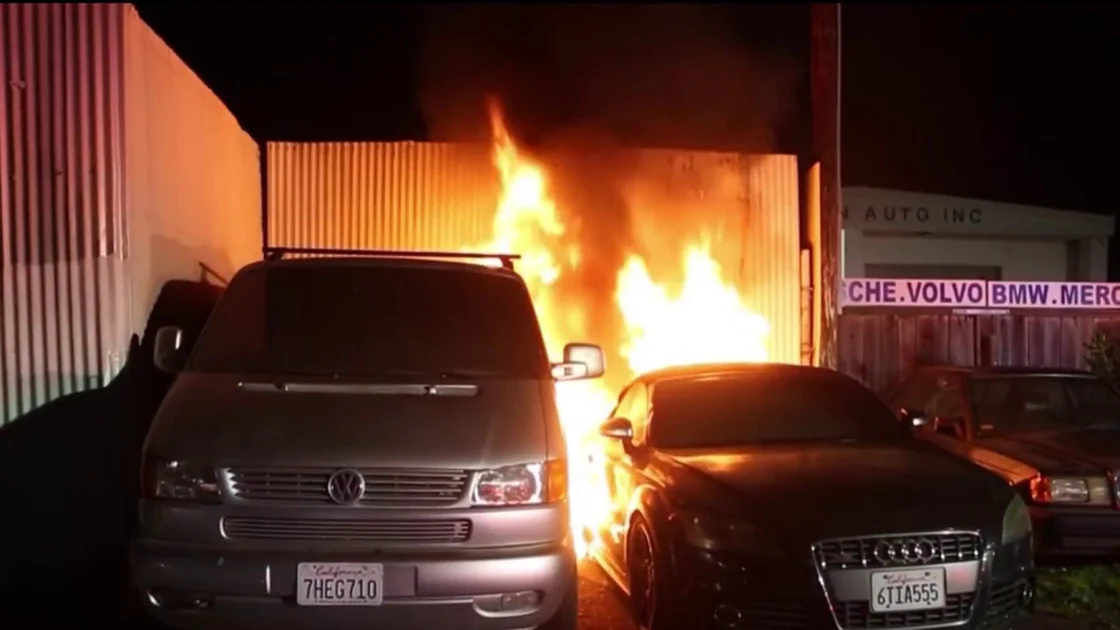
San Jose is confronting a stark contradiction in its fire safety posture on June 25, 2026. While a 5-acre vegetation fire, dubbed the Sierra Fire, burns in the city’s eastern foothills near Alum Rock, a newly constructed fire station designed to serve that very region sits empty and unstaffed due to city budget cuts. Firefighters are actively battling the blaze, but the simultaneous absence of Station 32 underscores deepening concerns about emergency response capacity in one of California’s fastest-growing cities.
The Sierra Fire was first reported Thursday morning near the 5300 block of Sierra Road, close to Boccardo Peak. According to the San Jose Fire Department (SJFD), the fire is approximately 5 acres in size with a slow rate of spread in low grass. No structures are currently threatened, and no evacuation orders have been issued for nearby Alum Rock residents. The cause of the fire is not yet known. Social media users shared videos and photos of flames visible from Alum Rock Park, with one resident describing it as a “major fire” and another posting images to a local community page asking for information.
Firefighters Respond as Wildfire Threat Looms
SJFD crews are on scene with a Tier 2 vegetation fire response, and a police helicopter has been observed hovering over the area. The department has urged the public to avoid the area. While the Sierra Fire remains relatively small and contained for now, the incident serves as a dramatic backdrop to the ongoing controversy over Fire Station 32, which was built to reduce response times in this exact portion of the city.
Empty Fire Station 32: A $50 Million Budget Gap
Just miles from the Sierra Fire, Fire Station 32 stands as a multimillion-dollar monument to deferred priorities. Located near the interchange of U.S. Highway 101 and Interstate 680, the building is nearly complete yet lacks official signage and, more critically, any firefighters. Groundbreaking for the station took place in September 2024, funded by bond Measure T, approved by San Jose voters in 2018. Construction is essentially finished, but crew funding was deferred until 2028 as part of a city budget plan designed to close a $50 million shortfall.
The San Jose City Council approved the 2026-2027 fiscal year budget on June 16, which goes into effect July 1. The decision to delay staffing for Station 32 has drawn sharp criticism from the San Jose Firefighters Local 230 union. “It is empty because our city council members and the mayor have not prioritized public safety in the city of San Jose,” said Jerry May, president of the union. According to May, the station is designed to house both an engine and a truck company, putting eight personnel on duty daily to respond to medical emergencies, structure fires, and vehicle accidents.
Federal Grant Pursued but Insufficient
In a sign of the city’s scramble to address the gap, the San Jose City Council voted unanimously Tuesday to apply for a federal grant to help cover staffing costs. However, Fire Chief Robert Sapien acknowledged that even if the grant is approved, the federal money will not be enough to fully operationalize the station. The station was originally scheduled to be in service by this year. “It would have an immediate impact on the response times in that service area, but also to surrounding stations which are extremely busy,” Sapien said. “In fact, that is one of the busiest parts of our response area.”
The situation mirrors broader challenges elsewhere. In Los Angeles, a similar emergency prompted Mayor Karen Bass to declare a state of emergency as the Boyle Heights fire raged on, highlighting how municipal budget constraints are colliding with escalating wildfire risks across California.
Rescue at Abandoned Psychiatric Hospital Adds to Strain
Just days before the Sierra Fire broke out, San Jose firefighters were called to an entirely different emergency that further illustrates the unpredictable demands on the department. On Saturday evening, crews responded to the former Agnews State Hospital, a long-abandoned psychiatric hospital, after an individual fell down an elevator shaft and became trapped at the bottom. To reach and free the victim, firefighters had to deploy the Jaws of Life. The individual was transported to a local hospital with non-life-threatening injuries.
The historic campus, originally opened in 1889 as the Agnews Insane Asylum, is strictly off-limits to the public and actively monitored by security. Despite these restrictions, it remains a hotspot for urban explorers drawn to its extensive history and local folklore, including rumors of hauntings. The facility closed permanently in 2011. A former local urban explorer, speaking with a voice altered to protect his identity, said, “Part of the thing about Agnews, probably one of the reasons this occurred, is because it’s so well known. It’s an abandoned building so there were hazards everywhere, and most of the fun of being in there is that it’s a bit of a hazard.”
Police confirmed that no criminal charges have been filed against the rescued individual, despite the trespassing violation. The incident highlights the physical dangers inherent to the deteriorating structures on the property and adds another layer of demand on a fire department already stretched thin by the unstaffed Station 32.
Urban Exploration Risks and Public Safety
The Agnews rescue is a reminder that San Jose firefighters must be prepared for more than just fires. Urban exploration of abandoned sites is a growing trend, and the risks are significant: dark interiors, unstable floors, and hidden hazards like open elevator shafts. With Station 32 empty, response times to such incidents in the underserved eastern part of the city could increase, potentially turning a non-life-threatening situation into a tragedy.
What This Means for San Jose’s Future
The convergence of these three events—an active wildfire, an empty fire station, and a high-risk rescue—paints a troubling picture of San Jose’s emergency preparedness. While the Sierra Fire is currently manageable, the fire season is far from over. California’s climate is producing hotter, drier conditions that increase the frequency and intensity of wildfires. The fact that a brand-new fire station in a high-risk area is sitting idle because of a $50 million budget gap suggests systemic underfunding of public safety infrastructure.
A Trend Across California?
San Jose is not alone in facing this dilemma. Municipalities across the state are grappling with budget deficits as post-pandemic federal aid runs dry and property tax revenues lag. Fire departments, which are often among the largest line items in city budgets, are frequently targets for cuts. The decision to defer staffing for Station 32 until 2028 may save money in the short term, but it risks longer-term costs in property damage, injuries, and even lives.
The firefighters’ union has been vocal in its criticism, arguing that the city council and mayor are not prioritizing public safety. “This is a choice,” May said. “The money exists, but the political will does not.” Meanwhile, the Sierra Fire is a stark reminder that nature does not wait for budget cycles. The fire could easily have been larger or closer to homes, and the absence of Station 32 could have meant the difference between a quick containment and a disaster.
The Human Cost
For residents of the Alum Rock area, the empty station is a source of anxiety. “We see the building every day, and we know it’s not being used,” said one local resident who asked not to be named. “It’s frustrating because we were told it would help us. Now we’re watching a fire on the hills and wondering if the response will be fast enough.”
The San Jose Fire Department continues to do its best with the resources available. Chief Sapien has repeatedly emphasized that the department is committed to serving all residents, but the math is simple: fewer stations mean longer response times. The federal grant application is a stopgap, not a solution.
Looking Ahead: Grants, Elections, and Climate Reality
The city’s reliance on a federal grant to partially fund Station 32 is a gamble. Even if approved, the money will not fully staff the station, leaving the city to find additional funds elsewhere. The 2028 staffing target may be optimistic, given that the city’s budget shortfall is projected to persist. Voters who approved Measure T in 2018 may feel betrayed that the bond-funded building is not delivering the promised service.
A Call for Accountability
The situation also raises questions about how cities evaluate public safety investments. Measure T was sold as a way to improve emergency response times, but budgeting decisions since then have undercut that promise. The San Jose City Council and mayor’s office will face increasing pressure from voters and the union to reprioritize spending.
In the meantime, the Sierra Fire is a test run for what San Jose could face this fire season. With Station 32 empty, every other station in the area must pick up the slack. The Agnews rescue showed that firefighters are resourceful, but they cannot be everywhere at once. As one urban explorer put it, “The fact that this one happened, and thankfully he survived, is probably as good of an outcome as you could hope for.”
San Jose’s emergency services are being stretched by budget constraints, increasing wildfire risk, and unpredictable rescue calls. The empty Station 32 is a symbol of a broader challenge: how to fund the public safety infrastructure that a growing city needs when political and economic pressures push in the opposite direction. For now, the Sierra Fire is under control, but the firefighters who responded are doing so without the backup that Station 32 was supposed to provide. That is a reality that cannot be ignored, especially as the summer heat intensifies and the next wildfire is never far away.
Comments