
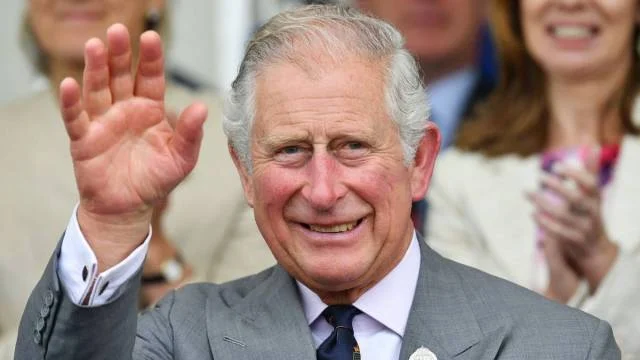
A Week of Unlikely Headlines for the Monarch
It has been an eventful week for King Charles III, who finds himself at the center of three very different stories that highlight the peculiar nature of modern royalty. From a social gaffe involving a celebrity and a bowl of risotto, to a political controversy over the very definition of his Britishness, and a revealing glimpse into his private marriage, the King's public image is being shaped by a series of moments that blend the absurd with the consequential.
On Tuesday, a podcast interview with TV personality Anna Williamson went viral. Williamson, best known for the dating show Celebs Go Dating, recounted her first meeting with the King at his Highgrove estate. While attempting a combined curtsy, bow, and handshake, Williamson lost her balance and, as she put it, "spat the risotto in King Charles's face." The mishap, which she described as an "embarrassing" ice-breaker, ended with the King helping her back up. The story, reported by Hello! magazine, quickly became a lighthearted royal anecdote, with many noting the King's good-natured response.
However, a more serious story has emerged from the political sphere. In an interview on the BBC's Today programme, Rupert Lowe, leader of the hard-right Restore Britain party, refused to say whether he considers the King to be a "white Briton." This comes after Lowe cited a report predicting that "white Britons will become a minority by 2063," a forecast that defines the term as someone whose parents were both born in the UK. Given that the King's late father, Prince Philip, was born in Greece, presenter Nick Robinson pressed Lowe on whether the monarch fits his own definition. Lowe repeatedly declined to give a direct answer, dismissing the question as "splitting hairs" and attempting to pivot to his party's economic policies.
The Politics of Identity and a Life in the Spotlight
The exchange with Lowe is significant beyond a simple political interview. It thrusts the monarch into a contentious debate about national identity, immigration, and demographic change—a debate that the King, as a constitutional figure, must navigate with extreme care. The refusal of a political leader to affirm the King's Britishness, based on a technicality of birthplace, raises questions about how the far-right perceives the institution of the monarchy itself. While Lowe did not question the King's role as sovereign, his evasiveness has been widely interpreted as an attempt to appeal to a base that views multiculturalism and global heritage with suspicion.
This political spat contrasts sharply with the story of the King's personal life. On the Palace Confidential podcast, the Daily Mail's royal editor Rebecca English revealed an "odd" secret to the longevity of Charles and Queen Camilla's marriage: they spend their weekends apart. The King, 77, retreats to his beloved Highgrove House, where he can indulge in his passion for gardening, while the Queen, 79, prefers to stay at her own Wiltshire home, Ray Mill House. English explained that this arrangement, far from being a sign of trouble, is a deliberate and effective strategy that has allowed the couple to maintain a happy and independent life within the constraints of royal duties. This glimpse into their private arrangements offers a humanizing counterpoint to the public duties and political controversies.
The past year has also showcased the King's more playful side. In a viral clip from his April state visit to the United States, the King met comedian Matt Friend. Friend, who had been attempting to perfect his impersonation of the monarch, told him so. The King's response was a masterclass in dry wit: "Keep trying." The exchange was widely praised online and demonstrated an ability to not take himself too seriously, a quality that endears him to the public. His sense of humor is a known asset, often surfacing at engagements, such as his amused reaction when a seagull relieved itself on him during a visit to Newcastle. He famously joked, "It's well it didn't land on my head!"
A Monarchy Navigating a Changing Britain
These disparate stories—a risotto accident, a political evasion, a glimpse into a marriage, and a sharp comeback—collectively paint a portrait of a monarchy adapting to a changing Britain. The King's role is no longer simply ceremonial; he is a figure who is constantly observed, analyzed, and even used as a political football. The incident with Mr. Lowe shows that the monarch can become a symbolic battleground in cultural debates. The King's own mixed heritage, via Prince Philip, complicates simplistic narratives of what it means to be "white British," a fact that the Restore Britain leader found himself unable to address directly.
At the same time, the more personal stories, such as the one about his marriage and his humorous interactions, work to maintain the monarchy's relevance and relatability. In an era where public figures are often scripted and guarded, these moments of apparent genuineness are valuable. The King's willingness to laugh at himself, whether after a risotto is thrown at him or when he is being impersonated, helps to bridge the gap between the institution and the public.
As the monarchy looks to the future, with the Prince of Wales and Princess of Wales taking on more responsibilities, these fundamental dynamics are likely to continue. The royal family will remain a source of fascination for their human foibles and a target for political point-scoring. The week's events show that the King, while undoubtedly a symbol of tradition, is also a central figure in the nation's ongoing conversation about its own identity, all while navigating a life that involves both state banquets and the occasional stray seagull. The ability to absorb these moments, from the silly to the serious, and emerge with grace and humor, may well be the most vital skill for a monarch in the 21st century.
For those interested in the challenges facing younger royals, a recent report on the decision to potentially send Prince George to Eton offers a glimpse into the careful planning of the next generation's path. Read more: Prince William and Kate Consider 'Gentleman's Agreement' to Shield Prince George at Eton.
Comments