
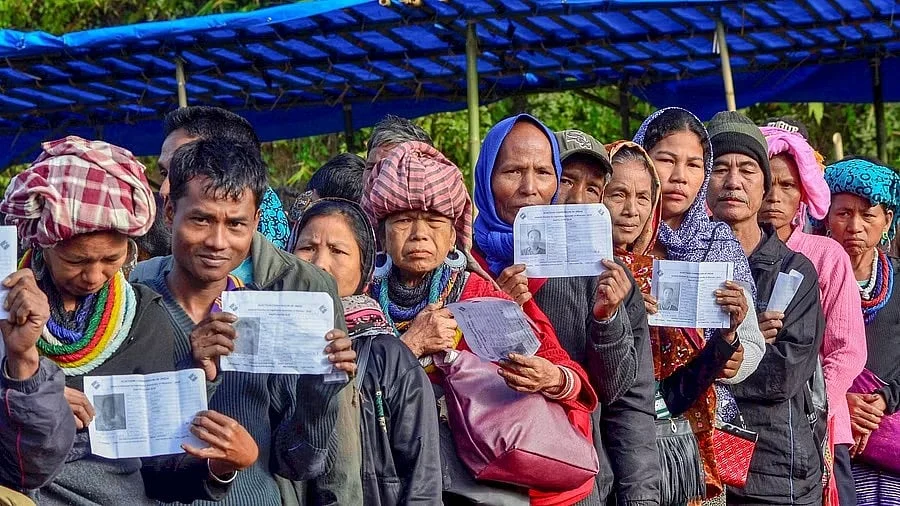
Polling Card Confusion: Do You Need ID to Vote in Today's Elections?
Millions of voters across the UK head to the polls today, Thursday, May 7, 2026, for a raft of local elections, but a last-minute blunder by a Scottish council has sparked confusion over one of the most basic questions of election day: do you need your polling card, and do you need photo ID?
The answer, as is often the case in British elections, depends entirely on where you live. While the vast majority of voters in England must present a valid form of photographic identification before they can cast their ballot, voters in Scotland do not. This discrepancy has been thrust into the spotlight after South Ayrshire Council was forced to apologise for sending out polling cards in envelopes that incorrectly stated photo ID would be required.
The envelopes, sent to residents ahead of the Scottish Parliament elections, were printed with a large notice reading: "You will need photo ID to vote" and advised voters to apply for a free Voter Authority Certificate. The council later clarified that the error was the fault of a third-party printer and stressed that no ID would be needed in Scotland. The mix-up has prompted concern that some voters, particularly the elderly or those without a driving licence or passport, could be disenfranchised if they mistakenly believed they could not vote without ID.
Meanwhile, in England, residents in dozens of local authority areas—including all 32 London boroughs, Hampshire, and others—are voting today for councillors, mayors, and more. For them, the photo ID rule remains firmly in place.
What the South Ayrshire envelope error means for voters
A spokesperson for South Ayrshire Council said: "We are aware that, due to an error by a third party printer, envelopes containing poll cards have incorrect information on them. The poll cards issued are correct and are in relation to the Scottish Parliamentary Election on Thursday 7 May 2026. Contrary to what is printed on the envelopes containing the poll card, photographic ID will not be required to vote. We apologise for any confusion."
The error affected envelopes sent to voters across the constituency, which includes the towns of Ayr, Prestwick, and Troon. A local resident who contacted BBC Scotland News expressed concern that the mistake could "disfranchise" people who lacked photo ID and believed they could not vote. The council has since urged anyone with questions to contact them directly.
Photo ID rules for the 2026 elections: England vs. Scotland
What voters in England need to know
Since the introduction of the Elections Act 2022, voters in England have been required to show an accepted form of photo ID at polling stations. This rule applies to all local elections, including today's contests for borough, district, city, and county councils, as well as mayoral races in areas such as Croydon, Hackney, Lewisham, Newham, and Tower Hamlets.
Accepted forms of ID include:
- A UK, Channel Islands, or Isle of Man passport
- A photo driving licence (full or provisional)
- A 60+ Oyster Card (in London)
- A PASS card (the national Proof of Age Standards Scheme card)
- An Older Person's Bus Pass or Disabled Person's Bus Pass
- An Armed Forces Veteran Card
Importantly, the ID can be out of date, as long as the photograph still resembles the voter and the name on the ID matches the name under which they are registered to vote. Photocopies or digital images are not accepted; only the original physical document will suffice.
Haringey Council, in a guide published yesterday, stated: "You do not need your polling card to vote. You will only need to provide your name, address and an accepted form of photo ID." The same message has been echoed by councils across the country.
What voters in Scotland need to know
For Scottish Parliament elections, photo ID is not required. The Scottish Government has consistently opposed the Westminster-imposed voter ID rules, arguing they create an unnecessary barrier to participation. The situation is reversed for UK general elections, which do require ID, but today's vote is solely for the Scottish Parliament.
Anyone heading to a polling station in Scotland today—whether in Ayr, Glasgow, Edinburgh, or elsewhere—simply needs to give their name and address. No passport, driving licence, or other photo ID is necessary.
The polling card itself: helpful but not mandatory
Across all of the UK, the polling card is a convenience, not a requirement. It contains the voter's name, address, and details of their designated polling station. Bringing it along can speed up the check-in process, as staff can quickly scan the barcode or verify the address. But if you have lost your card, or simply forgot to bring it, you are still entitled to vote, provided you are registered and, in England, that you have acceptable photo ID.
Polling stations are open from 7 a.m. to 10 p.m. Anyone queuing at 10 p.m. will still be allowed to vote.
What is at stake in today's elections?
The 2026 local elections are widely seen as a key political test ahead of the next general election. In London, all 1,817 council seats across the 32 boroughs are up for grabs, along with mayoral contests in five boroughs. Labour currently controls 21 of those councils, but recent polling suggests the party could face significant losses, with the Green Party and Reform UK both expected to make gains. YouGov has predicted that the Greens could take control of Hackney, while Reform could emerge as a major force in Havering and other parts of outer London.
In Hampshire, the elections coincide with a major local government reorganisation, making this potentially the last time many current councillors will stand for their wards. Reform UK is leading in the polls, followed by the Conservatives, in what is shaping up to be a two-horse race. The outcome could reshape the political map of southern England.
For a broader look at the national picture and the Supreme Court shock that has dominated headlines this week, you can read our earlier analysis: Britain Votes Tomorrow: Local Elections, Mayoral Races, and a Supreme Court Shock.
What happens if you forget your ID?
If you are voting in England and arrive at your polling station without an accepted form of photo ID, you will not be allowed to vote. Polling station staff are not permitted to make exceptions. However, you can return later with your ID, as long as you arrive before 10 p.m.
If you have no valid ID at all, you can apply for a free Voter Authority Certificate, but this must be done before the deadline—which has now passed for today's elections. The process is online via the government's website and requires a recent digital photograph and your National Insurance number.
Broader implications: a tale of two voting systems
The confusion over polling cards and photo ID highlights a growing divergence between the electoral systems of England and Scotland. While the UK Government has pushed for voter ID as a measure to combat fraud, critics argue it suppresses turnout among minority groups, younger voters, and the elderly. Scotland's decision to opt out of the ID requirement for its own elections reflects a different set of priorities.
The South Ayrshire envelope error, though a simple printing mistake, underscores how easily misinformation can spread. In an era where trust in institutions is fragile, such errors can have real consequences. It also serves as a reminder that voters should always check the official guidance from their local council or the Electoral Commission rather than relying on printed materials alone.
For those still unsure, the simplest rule of thumb is this: in England, bring photo ID; in Scotland, you don't need it. In both nations, a polling card is optional but helpful.
As the final hours of voting tick by, election officials are bracing for a busy day. Turnout is expected to be high, driven by intense competition in key battlegrounds. Whether you are in a quiet village in Hampshire or a bustling ward in Tower Hamlets, the message is clear: your vote matters, and you don't need a polling card to cast it.
Practical tips for polling day
- Check your polling station: Use the postcode tool on your council's website or the Electoral Commission's site to confirm where to go. It may not be the one closest to your home.
- Bring your ID if in England: Double-check it is an accepted form and that it is the original, not a photocopy.
- You can bring children: Families are welcome in polling stations, though children are not allowed to mark ballot papers.
- No photography inside: Taking photos or selfies in the polling station is illegal and could result in a fine of up to £5,000 or up to six months in prison. Photos are permitted outside.
- If you need help: Polling station staff can assist voters with disabilities, and you may bring a companion over 18 to help.
For more on the financial pressures facing households this spring, read our guide: Council Tax Bills Rise Again in April 2026: What Households Need to Know.
And if you're looking for something to do after voting, the Download Festival 2026 Schedule Revealed: Everything You Need to Know About This Year's Donington Lineup might provide some relief from the political drama.
The bottom line
Do you need your polling card to vote? No. Do you need photo ID? Only if you are voting in England. The South Ayrshire council error, though embarrassing, serves as a valuable lesson for voters everywhere: always verify the rules for your specific election. Whether you're voting for a local councillor, a Scottish MSP, or a borough mayor, the key is to turn up informed and ready.
If you are still in doubt, your safest bet is to bring both your polling card and an accepted form of photo ID—just in case. And remember: if you are in Scotland today, you can leave the passport at home.
Comments