
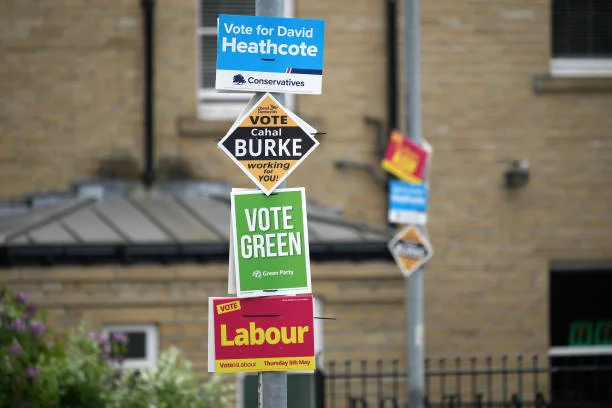
Britain Votes Tomorrow: Millions Head to Polls in Elections That Could Reshape Local Power
Tomorrow, Thursday, May 7, 2026, voters across large parts of the United Kingdom will head to polling stations for what political editor Chris Mason calls "the biggest set of elections since the general election two years ago." The contests span 136 English councils, six mayoral vacancies, the entire newly expanded Senedd in Wales, and the Scottish Parliament. Polling stations open at 7 a.m. and close at 10 p.m. In London alone, 1,817 council seats across 32 boroughs are up for grabs, with additional mayoral elections in Croydon, Hackney, Lewisham, Newham, and Tower Hamlets.
In the London Borough of Ealing, for example, voters will elect councillors in 24 wards—most choosing three representatives, two wards choosing two—who will set the council's strategies on everything from bin collections to adult social care for more than 385,000 residents. Across England, the contests will determine who runs services affecting millions.
What You Need to Vote
All voters must bring an accepted form of photo identification. Acceptable IDs include a UK passport, a driving licence, or a free Voter Authority Certificate. Polling cards—sent to every registered voter—specify the location of each person's polling station, and voters who did not apply for a postal ballot must cast their vote in person. Local council websites also provide lookup tools for station addresses. Elections teams in each borough remain open for calls until late today and from 7 a.m. on Thursday to assist voters with questions or accessibility needs.
The Stakes: Who Wins, Who Loses, and Why It Matters
The results, expected by Saturday, May 9, will set the political landscape for years. In London, Labour currently controls 21 of 32 boroughs, but YouGov polling suggests the party could take a significant hit. The Green Party is poised to challenge in Hackney, Reform UK is projected to make gains in Havering, and the Conservatives hope to reclaim Westminster. The battle is national in scope.
Scotland and Wales: The Rise of Reform
In Scotland, the Scottish National Party (SNP) is confident of winning a fifth consecutive devolved election, but hopes for an outright majority are fading as Reform UK surges. A related analysis by our newsroom confirms: SNP on Course to Win Scottish Election But Majority Hopes Fade as Reform UK Surges. Reform is also competitive in Wales, where it is locked in a tight race with Plaid Cymru to become the largest party in the Senedd. Plaid argues it is the only party that can beat Reform, urging tactical voting from those who oppose Nigel Farage's party.
The prime minister, meanwhile, has sought to frame the election as a verdict on his government's judgment—citing the UK's decision not to join the US-Israel campaign against Iran as a key call. Labour emphasises progress on the NHS and workers' rights, but internal polling suggests dissatisfaction with the pace of change may depress turnout among its base.
The Supreme Court Cloud
Just days before polls open, the US Supreme Court issued a ruling in Louisiana v. Callais that has reverberated across the Atlantic. The 6–3 opinion, authored by Justice Samuel Alito, changed the standard for proving racial discrimination in congressional redistricting: plaintiffs must now show discriminatory intent, not merely discriminatory effect. Legal scholars and civil rights activists have declared the Voting Rights Act—a cornerstone of the civil rights movement—effectively a dead letter. The ruling has intensified debates about voter suppression and the fragility of democratic protections, even as British voters prepare to cast their own ballots.
The Mechanics of a Mass Ballot
Local elections in England are conducted ward by ward. In Ealing, voters choose councillors who will serve until 2030. The party with the most councillors forms the administration and sets priorities for four years. The process is mirrored across the country, with roughly 5,000 seats in England alone being contested. In boroughs with directly elected mayors, voters will also decide who leads the executive.
Postal Votes and Turnout
Millions of postal votes have already been cast. The final weeks of campaigning saw parties sprinting to convert undecided voters. Turnout is expected to be a critical factor: lower turnout tends to benefit parties with more motivated bases, while higher turnout often favours Labour and the Greens in urban areas. Analysts will watch for shifts among younger voters, who are heavy users of postal ballots and may have been energized by recent political controversies.
The Bigger Picture: Voting Rights Under Pressure
Beyond the immediate results, the election takes place against a backdrop of heightened scrutiny on the mechanics of democracy itself. In the US, the Callais ruling has prompted warnings that the same logic could be applied to the Civil Rights Act of 1964—specifically Title VII, which prohibits employment discrimination with a disparate impact. Critics argue that requiring proof of intent would allow subtle, systemic discrimination to go unchecked.
A Global Moment for Democracy
In Britain, concerns about voter ID laws—introduced nationally in 2023—have been largely resolved, with the Electoral Commission reporting smooth implementation. But the focus on identification requirements has revived debates about access. Advocacy groups urge voters to check their ID early and to contact local councils with any questions. Human rights organisations note that the principle of one person, one vote remains under assault in various forms worldwide.
A Changing Political Landscape
The rise of Reform UK is the most significant trend since the 2024 general election. Having secured a foothold in Westminster, the party is now competing in devolved and local elections with growing credibility. Its message—focused on immigration, cultural sovereignty, and an unabashed populism—has resonated with voters disaffected from both main parties. In the Welsh Senedd, Reform is projected to win a substantial number of seats, potentially displacing the Conservatives as the principal opposition to Labour and Plaid Cymru.
Lessons from Abroad
The US Supreme Court ruling may seem distant, but it resonates with British debates about judicial overreach and legislative supremacy. UK courts do not have the same power to strike down primary legislation, but the principle of proportionality in equality law is under constant negotiation. The Callais decision sharpens those questions: how much must a democracy tolerate in the name of autonomy, and when does deregulation become disenfranchisement?
What Happens Next
Polling stations close at 10 p.m. Thursday. The first exit polls will appear shortly after, with actual counts beginning overnight. By Friday morning, the broad shape of the new local and devolved governments will be clear. Final results are expected by Saturday lunchtime. For many, the outcome will determine the quality of services—from street cleaning to social care—for the next four years. For the nation, it will signal the direction of travel toward the next general election.
Tomorrow, the ballot box speaks. The question is what it will say.
Comments