
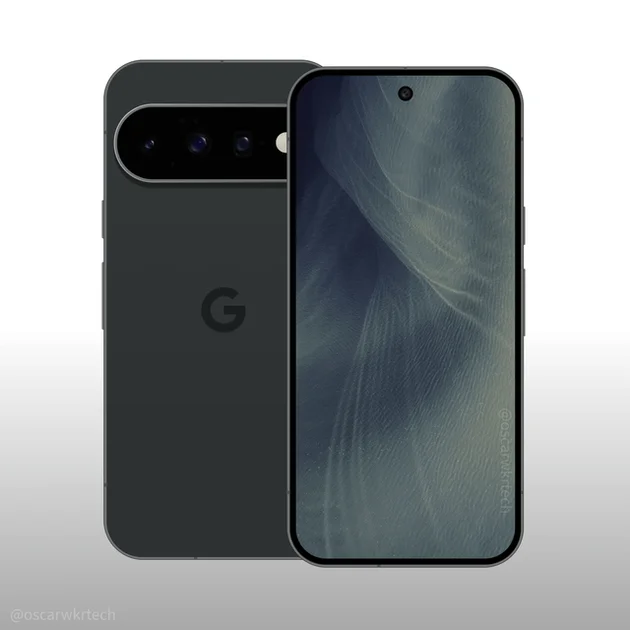
Pixel 11 Leaks Reveal Price Hikes and RAM Cuts Ahead of August 12 Launch
With just over a week to go before Google's August 12 launch event in New York, the Pixel 11 series is already an open book. A detailed leak from Android Headlines, corroborated by The Verge and 9to5Google, paints a picture of a lineup that's more expensive, less generous on RAM, and barely changed from the Pixel 10 generation.
The entire Pixel 11 family—standard, Pro, Pro XL, and Pro Fold—will be powered by the new Tensor G6 chip, reportedly the first Google chip built on TSMC's 2nm process. But the similarities end there. Prices are up across the board, and the base tiers of the Pro models are expected to ship with 12GB of RAM, a step down from the 16GB that became standard on the Pixel 10 Pro.
Here's what the leaks suggest for US pricing and specs:
- Pixel 11: Starts at $899 (up from $799), with 256GB base storage (up from 128GB), a 4,985mAh battery (slightly smaller than the Pixel 10's), and no telephoto lens. A 512GB option and 12GB/16GB RAM variants will be offered.
- Pixel 11 Pro: Starts at $1,099 (up $100), comes in 12GB and 16GB RAM variants, but storage is capped at 512GB—down from the 1TB option on the Pixel 10 Pro. Battery drops to 4,850mAh.
- Pixel 11 Pro XL: Starts at $1,299 (up $100), with the same 12GB/16GB RAM split, a 5,115mAh battery (down from 5,200mAh), and storage options capped at 512GB.
- Pixel 11 Pro Fold: Starts at $1,899 (up $100), with 12GB or 16GB RAM, a 4,806mAh battery (down from the Fold's previous capacity), and a weight drop from 258g to 239g.
Google has already confirmed prices will rise, but the combination of higher costs and reduced baseline specs has sparked a wave of criticism. The Verge summarized the mood: "More confirmation that price hikes and RAM cuts are coming our way."
Why It Matters: RAMageddon and Google's Squeeze
The pricing and spec changes aren't a random corporate decision—they're a direct consequence of what industry analysts have dubbed "RAMageddon." A global surge in memory chip prices, driven by AI data centers soaking up supply, has pushed up the cost of components across the tech industry. For Google, which is also pouring billions into its own AI infrastructure, the timing couldn't be worse.
As 9to5Google's Ben Schoon noted, "It's not the Pixel team's fault, but AI data centers are the reason this whole mess exists, and now Google has to deal with the impact of the market that it's pushing so hard to pull ahead in."
The result is a lineup that feels more like a defensive play than a celebration of the Pixel's 10-year anniversary. The Pixel 10 series was able to mask a similar lack of design changes with headline features like Qi2 wireless charging. This year, the most talked-about addition is "Pixel Glow," a small RGB light in the camera bar that can display notification colors when the phone is face-down. It's a nice convenience, but hardly the kind of thing that gets fans lining up.
Meanwhile, the design language remains untouched, as Google has committed to major refreshes every 2-3 generations—and this isn't one. The cameras, displays, and overall silhouettes are essentially carryovers. Even the foldable, the Pixel 11 Pro Fold, is described as a "very minor evolution" by 9to5Google, arriving just as Samsung is refining its own foldables and Apple is rumored to enter the category.
The Bigger Picture: A Perfect Storm for Pixel
The Pixel 11's challenges go beyond specs and pricing. They come at a time when the smartphone market is saturated, consumer upgrade cycles are lengthening, and competitors are delivering more tangible improvements. Samsung's latest foldables have finally addressed long-standing complaints (like the crease and battery life), and Apple's first foldable is expected to land within the next year—a threat that looms over every Android maker.
For Google, the Pixel line has finally gained real momentum, thanks to a string of solid releases starting with the Pixel 8. The Pixel 10 was a high point, with strong cameras, clean software, and the introduction of Qi2. The Pixel 11, by contrast, feels like a step sideways—and at a higher price.
There are some silver linings. The Tensor G6, built on TSMC's 2nm process, should bring notable efficiency gains. The base Pixel 11's storage bump to 256GB is welcome, and the weight reductions across all models are a nice touch. The Pixel Glow feature, while simple, could prove genuinely useful. New colors like "Dune" and "Fuchsia" have generated some buzz, and the Pro models may get new camera sensors that aren't reflected in the leaked spec sheets.
But as PhoneArena's report put it, "The Pixel 11 could cost more and offer less than before." The leaks point to a company that's being squeezed by external forces—higher component costs, a need to protect margins, and a self-imposed design cycle that's left it with little room to surprise.
When Google takes the stage on August 12, it will have to convince buyers that a more expensive, less RAM-savvy Pixel is still worth it. The foldable market is heating up, AI features are becoming table stakes, and consumers are increasingly price-sensitive. The Pixel 11 might be a perfectly good phone—just not the one Google needed to deliver.
For now, prospective buyers will have to weigh whether the Tensor G6 and Pixel Glow justify the premium. If RAMageddon continues, this could be the new normal for flagship phones, and not just for Google. The broader tech industry is watching closely, and this launch may set a precedent for how other manufacturers handle memory price spikes.
In the meantime, the Pixel faithful will be counting down the days to August 12, hoping the leaks are wrong—or at least incomplete. As one analyst put it, "It's not like we didn't expect this." But that doesn't make it any easier to swallow.
What to Watch For
- Will Google address the RAM cuts on stage, or spin them as part of a broader efficiency story?
- The Pixel 11's camera performance, especially on the standard model without a telephoto.
- Real-world battery life with the Tensor G6.
- How the Pixel 11 Pro Fold compares to Samsung's refreshed Galaxy Z Fold lineup.
- Whether the Pixel Glow feature is as useful as it sounds, or just a gimmick.
For more on how AI's hardware demands are reshaping the tech industry, check out our analysis of Alibaba's Moonshot AI deal and the broader chip shortage. If you're more into sports, the Everton stadium move shows how tradition and change can coexist—something Google might take a lesson from.
Comments