
Goodison Park's Legacy Endures as Everton Embrace New Era at Hill Dickinson Stadium
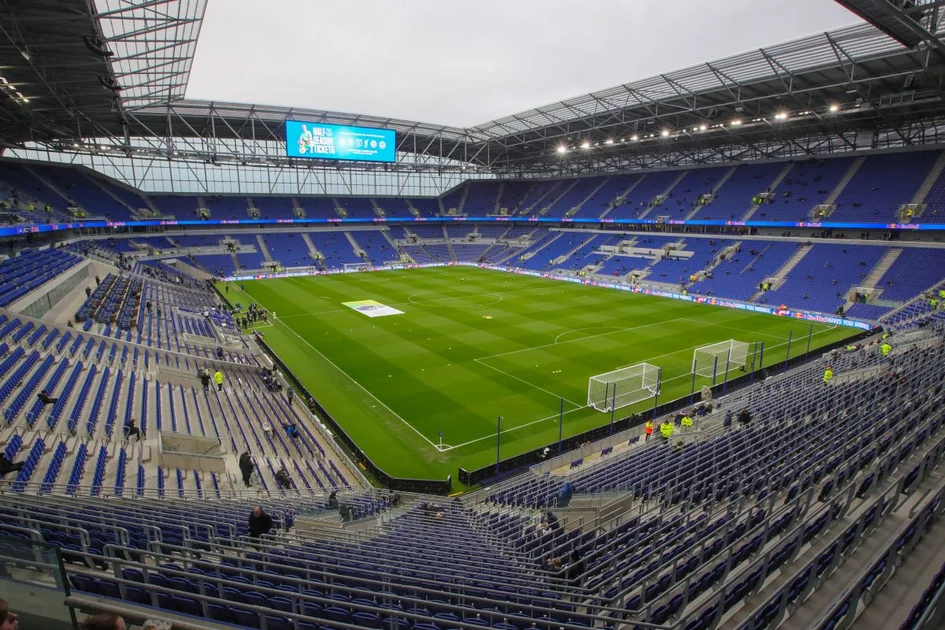
It has been exactly one year since Everton played their first home match at the Hill Dickinson Stadium, a state-of-the-art venue on Bramley-Moore Dock that has officially replaced the iconic Goodison Park as the club’s permanent home. The move, which ended a 133-year stay at Goodison, marked a seismic shift in the identity of one of English football’s oldest clubs. Now, as the 2026-27 Premier League season approaches, Everton are marking the anniversary with a series of initiatives designed to welcome both new and returning fans to their new surroundings—while the memory of Goodison Park continues to shape the club’s story.
On 2 August 2026, Everton announced a 50% discount on Hill Dickinson Stadium tours for children under 14 when accompanied by a full-paying adult, a promotion running throughout August. The offer, valid until 28 August, is intended to encourage local families to explore the club’s new home during the school holidays. The tours, which include access to the dressing rooms, the tunnel, and the manager’s dugout, also offer panoramic views of Liverpool’s skyline from the South Stand. The initiative comes just ahead of Everton’s opening league match of the season on 22 August, when they host Crystal Palace at the Hill Dickinson Stadium.
A Year of Transition: From Goodison Park to Bramley-Moore Dock
The move to the Hill Dickinson Stadium, named after the law firm that acquired the naming rights in a landmark sponsorship deal, was officially completed in time for the 2025-26 campaign. The first home match at the new venue was a 2-1 win over Wolverhampton Wanderers in August 2025, a result that offered a glimmer of optimism after years of uncertainty. However, the season that followed was challenging: Everton finished 14th in the Premier League, a position that mirrored the struggles of previous campaigns but still represented a slight improvement on the 15th-place finish in their final year at Goodison.
David Moyes, who returned for a second spell as manager in January 2025, has been tasked with making the Hill Dickinson Stadium a formidable fortress. The club’s old ground was famously one of the most intimidating venues in English football, and Moyes has spoken openly about wanting to recreate that atmosphere in the new arena. The early signs have been positive, with the team losing only four of their 19 home league matches last season, but the new stadium’s atmosphere has yet to match the cavernous noise of Goodison.
The Enduring Pull of Goodison Park
While Everton have physically relocated, Goodison Park remains a touchstone for supporters. The stadium, which was first opened in 1892, hosted its final competitive match in May 2025, a 1-0 win over Bournemouth. Since then, the ground has stood mostly empty, save for a few community events and a series of farewell tours that drew thousands of fans clamoring for one last look at the old terraces.
The redevelopment of Goodison Park is still a topic of debate among fans and local authorities. The site, located in the Walton district of Liverpool, has been earmarked for a mixed-use development that includes housing, retail, and a community park, but progress has been slow. In the meantime, the stadium remains a silent monument to a century of football history, and its emotional resonance has not faded.
Former Everton chief executive Keith Wyness, who served at the club between 2004 and 2009, reflects on the shift: “Leaving Goodison was always going to be a difficult moment for everyone connected with Everton. It’s not just a stadium; it’s part of the fabric of the city. But the club had to move forward, and the new stadium offers a chance to grow in ways that weren’t possible before.”
Pre-Season Tours and Financial Winds
The August tour discount is part of a broader strategy to embed the Hill Dickinson Stadium into the community and generate ancillary revenue. Stadium tours have become a significant income stream for modern clubs, and Everton are no exception. The club’s commercial department has been keen to market the new venue as a destination not only for matchdays but for everyday visitors, from school groups to corporate clients.
In a separate development, Wyness recently revealed that Tottenham Hotspur’s pre-season tour of Australia and New Zealand, which included a record-breaking friendly in Auckland, yielded only around £1.5 million. Wyness, now a football business consultant, used that example to highlight that the real value of such tours lies in long-term brand exposure, not immediate financial gain. For Everton, the new stadium is similarly a long-term investment, but the immediate priority is to fill it with passionate supporters and establish a winning culture.
The Premier League Landscape and New Beginnings
Everton’s transition occurs against a backdrop of a rapidly changing Premier League. The 2026-27 season promises to be one of the most competitive in years, with the so-called “big six” all strengthening and a host of mid-table clubs including Everton hoping to break into European places. Moyes, who has previous experience of leading West Ham to a Europa Conference League title, is considered one of the league’s most experienced tacticians, and he has been backed in the transfer market with the signings of two midfielders from Ligue 1 and a young left-back from the Championship.
The club’s financial picture, once perilous, has been shored up by the naming rights deal and increased matchday revenue at the new stadium. However, the shadow of financial fair play regulations still looms, and Everton have been cautious not to repeat the excessive spending that led to points deductions earlier in the decade.
Broader Trends: Stadium Moves and Club Identity
Everton’s move from Goodison Park is part of a wider trend in English football, where historic grounds are being replaced by modern venues designed to maximize comfort and revenue. In recent years, West Ham moved from Upton Park to the London Stadium, and Tottenham built a new stadium on the site of White Hart Lane. Chelsea, meanwhile, are in the process of planning a new stadium, and both Liverpool and Manchester City have expanded their existing homes.
For Evertonians, the new stadium is a source of pride but also a source of anxiety. Some fear that the club’s soul has been diluted, while others welcome the chance to compete on a level playing field with Europe’s elite. The emotional connection to Goodison is undeniable, and the club has made efforts to preserve its memory, including a permanent exhibition of memorabilia in the new stadium’s museum.
Wyness offers a pragmatic view: “Clubs are not just about brick and mortar; they are about people and memories. Everton’s history will never be erased by a change of address. The new stadium is an opportunity to create new memories while honoring the old.”
A New Season, A New Chapter
As Everton prepare to host Crystal Palace on 22 August, the mood among supporters is cautiously optimistic. The team has shown resilience under Moyes, and the fans are eager to see if the new stadium can become a cauldron of noise, similar to the best days at Goodison.
The anniversary of the first home match has also sparked reflection on what the Hill Dickinson Stadium means for the club’s future. The stadium, which seats 52,888 spectators, is the ninth-largest in the Premier League and has been praised for its design and atmosphere, though comparisons to Goodison are inevitable.
“Goodison was special because it was tight, and the fans were right on top of you,” says Paul Read, a season ticket holder of 40 years. “The new place is different, but we have to give it a chance. If the team does well, the atmosphere will come.”
The club is also engaging with the wider community, offering discounts and events throughout August, including a family fun day at the stadium on 15 August. These efforts are designed to ensure that the new venue becomes a hub for more than just matchdays.
Conclusion: The Past and Future Intertwined
Goodison Park may no longer be Everton’s home, but its legacy continues to influence the club’s identity and decisions. As the team settles into the Hill Dickinson Stadium, the lessons of Goodison—its power to intimidate opponents and unite supporters—are not lost on those in charge.
In the broader context of modern football, Everton’s move is a case study in how clubs must evolve to survive. The financial benefits of a modern stadium are clear, but the emotional cost can be high. Yet, as Wyness points out, the passion of the fans is what truly defines a club. And that passion remains as strong as ever, whether it echoes through the cavernous stands of the Hill Dickinson Stadium or in the memories of Goodison Park.
As the new season begins, Evertonians will look forward, but they will never forget where they came from. The spirit of Goodison lives on, not just in the trophy room, but in the hearts of everyone who ever stood on the Gwladys Street terrace. And with a fresh start at a new home, the club is determined to write a new chapter worthy of its storied past.
Related Articles:
Comments