
Android devices show January 2027 update date in widespread glitch
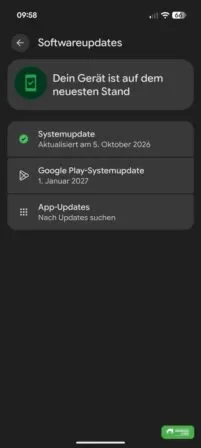
Android users across multiple brands have reported a strange anomaly: their phones are displaying a Google Play system update dated January 1, 2027, even though October 2026 hasn't yet ended. The issue, first surfaced on Reddit and social media, has since spread to other platforms and drawn coverage from several tech outlets.
According to Android Police, the incorrect date appears on devices ranging from the Google Pixel 8 Pro to the Vivo X300 Ultra, and even affects older phones running Android 12. Android Authority confirmed the glitch on its own Galaxy Z Fold 8 review unit and noted reports from Galaxy S26 Ultra, Galaxy S23 Ultra, Galaxy A17 5G, and Galaxy S24 Plus owners. Sammy Fans added that Motorola, Nothing, and OnePlus devices are also showing the future date, with some users on Android 17 and others on Android 16-based One UI 8.5.
Despite the alarming date, the glitch appears to be cosmetic. Multiple sources indicate there are no functional issues—apps work normally, and the update does not grant early access to upcoming features. Changing the phone's date and time settings or performing a reset does not fix the display. Google's official Play System update release notes page still shows October 2026 as the latest version, and the company has not yet commented on the cause.
What is a Google Play system update?
Google Play system updates are separate from full Android OS upgrades and monthly security patches. They allow Google to push updates to core Android components—such as system services and security features—without requiring manufacturer involvement, which speeds up delivery. These updates are typically dated by month and year, and a January 2027 date would normally indicate a build from the future. The current glitch seems to have altered only the version label, not the actual contents, as users report no new features or changes beyond the date itself.
Context: why the date glitch matters
The incident highlights the complexity of Android's update pipeline and the potential for confusion when versioning goes awry. While this particular bug is harmless, it raises questions about quality control in Google's rollout process. The fact that devices from multiple manufacturers and Android versions are affected suggests a widespread issue in the Play system update mechanism, possibly a server-side misconfiguration that labeled the update incorrectly.
Sammy Fans noted that Google may have already halted the rollout, and future updates could restore the version to a normal September or October 2026 date. However, as of October 23, no official fix has been announced. The glitch also underscores how dependent users and manufacturers are on Google's update infrastructure—and how quickly a minor error can become a major talking point.
A week of Android update news
The date glitch coincides with other Android update developments. On October 23, 9to5Google reported that Samsung confirmed a list of Galaxy devices slated to receive its Android 17-based One UI 9 update, starting with the Galaxy S26 series in September and expanding to older flagships and mid-range models through October and November in Japan, with global rollout continuing afterward. The list includes the Galaxy S25, S24, S23, Z Fold 7, Z Flip 7, and various Galaxy A and Tab devices. While unrelated to the Play system date bug, the timing means Samsung users are already navigating a busy update season.
Perspective: a cosmetic bug with broader implications
Although the January 2027 date is benign, it serves as a reminder of the fragility of software update systems. A simple labeling error can create confusion and erode trust, especially when it affects a component as fundamental as Google Play system updates. For Google, the incident may prompt a review of its versioning and rollout checks to prevent similar mishaps. For users, it's a reassuring reminder that not every anomaly signals a security risk—but also a caution that future-dated updates should be scrutinized.
As Android's update mechanisms evolve, transparency from Google will be key. The company has yet to explain what caused the mislabeling or whether it will issue a correction. Until then, affected users can rest assured their devices are functioning normally—just with a timestamp that's ahead of its time.
What to do if your phone shows the 2027 date
If your Android device displays the January 2027 update, there's no action required. You can check the date under Settings > Security and privacy > Google Play system update (or similar paths depending on your manufacturer). Google is expected to resolve the issue server-side, and a future update should restore the correct date. In the meantime, avoid attempting manual fixes, as they are unlikely to work and could cause unnecessary hassle.
Comments