
PG&E Shutoffs Hit 46,000 as Fire Risk Surges Across Northern California
Pacific Gas and Electric Co. triggered widespread public safety power shutoffs across Northern California this weekend as gusty winds, low humidity, and dry vegetation created critical wildfire conditions. The planned outages affected more than 46,000 customers at their peak Sunday, with thousands still in the dark Monday morning.
By Sunday afternoon, PG&E’s outage center reported 46,664 customers impacted by 549 separate outages, a figure that included both deliberate safety shutoffs and unplanned service interruptions. The outages spanned parts of 15 counties, from the Bay Area into the Sacramento Valley and Sierra foothills.
As of early Monday, roughly 30,939 customers remained without power across 633 outages, according to the utility’s tracking center. PG&E kept a PSPS warning in place for regions across Alameda, Contra Costa, Napa, Sonoma, Solano, and 10 other counties.
Strong Winds and Dry Conditions Drive the Outages
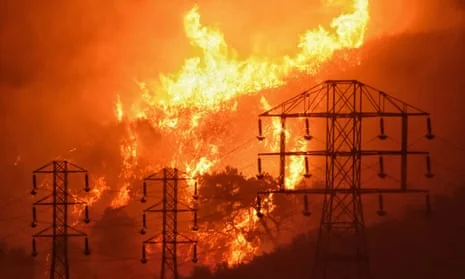
PG&E initiated the shutoffs just after 5:30 a.m. Sunday in response to a forecast of sustained winds and gusts that could reach up to 60 mph in higher terrain. The utility warned that energized power lines could easily spark a wildfire under such conditions.
“The shutoffs were required because of high winds and dry conditions,” PG&E said in a statement. Meteorologists monitored the weather for an “all-clear” signal that would allow crews to begin restoring power where safe.
The National Weather Service issued a wind advisory for the Santa Cruz Mountains, North Bay interior mountains, East Bay hills, and eastern Santa Clara hills through Monday morning. Gusts of 30 to 40 mph remained possible in parts of the Central Valley and Northern Sierra foothills.
Bay Area and Central Valley Hit Hard
In the Bay Area, large outages appeared in Solano, Napa, Marin, Sonoma, and Santa Cruz counties throughout Sunday. A Solano County outage affecting an estimated 5,646 customers began just before 8 a.m. Sunday, followed by a Sonoma County outage impacting roughly 3,140 customers and a Santa Cruz County outage affecting about 2,249 customers.
Beyond PG&E’s territory, the Sacramento Municipal Utility District reported more than 26,000 customers impacted by 55 outages, with large clusters in Natomas and downtown Sacramento.
“Gusty winds in Northern California are bringing trees and large branches down,” CBS Sacramento reported, adding that unplanned outages compounded the impact of the safety shutoffs in areas like Davis and El Dorado Hills.
Why It Matters: Wildfire Season Expands in a Warming Climate
The scale of this shutoff event underscores a growing reality for millions of Californians: utility-initiated power outages are becoming a routine seasonal hazard. PG&E’s public safety power shutoff program, approved by the California Public Utilities Commission, is designed to prevent the utility’s equipment from igniting catastrophic fires, a risk that has resulted in billions of dollars in liability and bankruptcy proceedings in recent years.
This weekend’s event comes amid a broader pattern of extreme weather and rising temperatures. Earlier this month, a Global Heat Wave Spikes Records, Child Deaths, and Ocean Alarm highlighted the accelerating effects of climate change, which scientists say is lengthening wildfire seasons and intensifying drought conditions.
For residents, the shutoffs create cascading disruptions. Families lose refrigeration, lighting, and medical device power, while businesses face spoilage, lost revenue, and safety risks. For PG&E, the shutoffs represent a delicate balancing act between wildfire prevention and public inconvenience.
A Broader Warning
PG&E had originally flagged an elevated shutoff risk in seven counties earlier in the week. By Sunday, the utility upgraded its forecast to a “PSPS Warning — shutoffs required” for parts of 15 counties. The forecast kept the warning active through Monday.
The event mirrors a growing trend across the American West, where utilities from Oregon to Southern California are increasingly turning to planned outages as a fire prevention tool. Critics argue that the shutoffs disproportionately affect rural and low-income communities, while supporters say they are a necessary precaution until electrical infrastructure can be hardened or undergrounded.
Perspective: What This Changes for California’s Power Future
This weekend’s outages highlight a structural tension in California’s energy landscape: the same weather conditions that raise fire danger also strain power grids, increasing the likelihood of both planned and unplanned outages. As the state pushes toward renewable energy and electrification, the reliability of the grid remains a central concern.
For PG&E, the path forward includes vegetation management, grid modernization, and undergrounding power lines in high-risk areas. But these efforts are costly and slow. The utility faces ongoing scrutiny from regulators, lawmakers, and the public over both its wildfire safety record and the frequency of shutoffs.
For consumers, the takeaway is that power outages — both planned and unplanned — are likely to remain a fixture of California life, especially during dry, windy weather. Having backup power plans, emergency kits, and reliable information sources is increasingly essential.
While the current weather system is expected to ease by Tuesday, the underlying conditions remain. Low humidity and dry vegetation continue to elevate fire risk across the region, and PG&E has warned that more shutoff events may be necessary in the weeks ahead.
Residents can check their specific outage status using PG&E’s online outage map. For those experiencing service interruptions with other providers, tools like the Spectrum Outage Map Shows Widespread Internet and TV Disruptions Across US can help identify broader connectivity issues.
For now, tens of thousands of Northern Californians are bracing for an extended recovery, as PG&E crews await safe conditions to begin restoring power.
Comments