
Pentagon Drops 80 Years of UAP Files in Historic Disclosure
The U.S. Department of War on May 8 released more than 160 declassified files documenting decades of unidentified flying object (UFO) sightings, fulfilling a campaign promise by President Donald Trump to bring transparency to one of the government’s most secretive archives. The files, now accessible on a new Defense Department website, span from a farmer’s account of a hovering craft in 1947 Stockton, California, to military footage of erratic objects over the Middle East as recently as early 2024.
Secretary of War Pete Hegseth announced the release on social media, stating, “These files, hidden behind classifications, have long fueled justified speculation – and it’s time the American people see it for themselves.” The batch includes 161 documents, some never before seen by the public, covering reports from Navy fighter pilots, commercial aviators, and astronauts on Apollo and Gemini missions. One notable entry is a 1969 debriefing of Apollo 11 astronaut Buzz Aldrin, who described observing a “sizeable” object near the lunar surface and a “fairly bright light source” that the crew tentatively attributed to a laser.
A 1947 Farmer’s Tale and Modern Military Sighting
Among the earliest accounts is Leland Sammers’ 1947 report from Stockton, California. Sammers told investigators he saw a wobbling craft “fire belching out of it and sucking back in” above his farmhouse before it shot off into the sky. The file, like many others, offers no government explanation. More recent documentation comes from cockpit footage captured by U.S. Navy jets in 2022 showing a football-shaped object over the East China Sea, alongside videos from Iraq, Syria, and the United Arab Emirates depicting dots moving at varying speeds and making sharp, 90-degree turns that defy known aviation capabilities.
Why the UFO Disclosure Matters Now
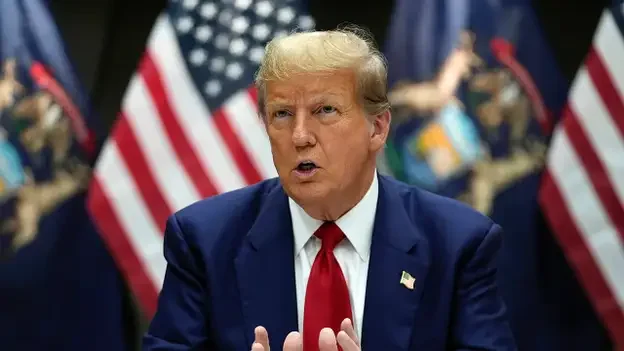
The release follows a February 2026 directive from Trump ordering the Pentagon and other agencies to identify and declassify files related to “alien and extraterrestrial life, UAPs, and unidentified flying objects.” The president cited “tremendous interest shown” by the public and pledged to shed light on decades of classified material that had nurtured conspiracy theories and speculation about government cover-ups.
This push for transparency comes amid a broader cultural and political shift. Former President Barack Obama said in a recent interview that aliens are “real, but I haven’t seen them,” adding that statistically, other life should exist. NASA Administrator Jared Isaacman has also fueled the momentum, telling NBC’s Meet the Press last month that “the odds that we will find something at some point to suggest that we are not alone are pretty high” and that the agency plans missions partly to investigate extraterrestrial possibilities. The release coincides with growing public appetite for answers, fueled by an expanding “UFO industrial complex” of YouTube channels, conferences, and film projects, including Steven Spielberg’s upcoming movie Disclosure Day.
Skepticism from Former Pentagon Officials
Despite the historic release, skepticism remains high. Physicist Sean Kirkpatrick, former director of the Pentagon’s All-Domain Anomaly Resolution Office, warned that the files lack analysis or context, which “will only serve to fuel more speculation, conspiracy and armchair pseudoscience.” Many of the documents, such as astronaut Frank Borman’s 1965 Gemini 7 report of “trillions of little particles” outside the spacecraft, have been known to space historians for decades and previously published in other forms. Critics argue the government’s barest-possible disclosure—offering no analysis or validation—may do more to inflame imagination than to satisfy it.
Broader Implications: Transparency vs. Spectacle
The Pentagon release underscores a persistent tension between government openness and the risk of fueling unverified claims. For decades, UFO advocates have demanded full disclosure of alleged crash retrievals and non-human intelligence contacts. The current batch of files offers little concrete evidence of extraterrestrial technology, yet it feeds a cycle of speculation that the government is releasing only the “least alarming” content, with more sensational documents still hidden. As journalist David Whitehouse wrote in The Spectator, the release “is the latest example of UFO activity that began with a controversial 2017 New York Times article” and has since metastasized into a full-blown entertainment complex of speaking tours, book deals, and cable news segments.
What This Changes for Public Discourse
For the public, the files provide a rare window into how military and intelligence agencies have logged unexplained sightings over nearly a century—but they leave all conclusions to the viewer. The Pentagon explicitly states that “the public can ultimately make up their own minds” about what the objects might be. In that sense, the release may change little for those already convinced of alien visitation, while adding minor historical footnotes for skeptics. However, the very act of declassifying 80-year-old secrets signals a shift in government posture: from denial toward a more open—if still cautious—acknowledgment that something unexplained has been observed.
For industries reliant on secure airspace, like commercial aviation, the public release of military UAP data could eventually inform safety protocols. As jet fuel shortages loom in Europe, any new information about aerial hazards remains operationally relevant.
Conclusion: A New Chapter for UAP Research
Whether the files represent a watershed moment or a political gesture, they mark the most extensive public release of government UFO records in history. With more files promised in the coming months, the debate over what—if anything—the U.S. government knows about extraterrestrial life is far from settled. For now, the documents serve as a reminder that the sky, both above farms and over the moon, has held mysteries that even the Pentagon cannot explain.
Comments