
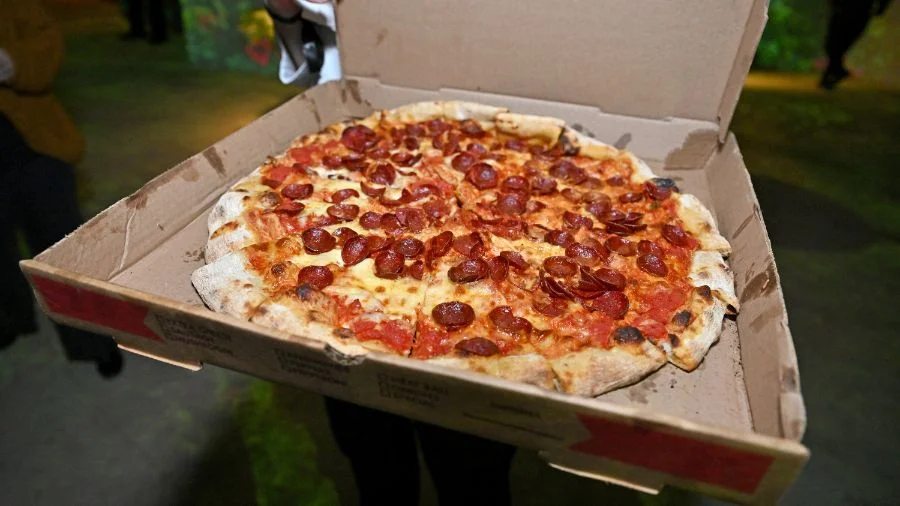
Papa Murphy’s Confirms Dozens of Store Closures Starting This Week
Papa Murphy’s, the nation’s largest take-and-bake pizza chain, has confirmed it will close up to 50 corporate-owned locations across the United States as part of a major restructuring by its parent company, MTY Group. The closures, announced during MTY’s second-quarter fiscal 2026 earnings call on July 10, are set to begin the week of July 13 and continue over the next six to nine months.
MTY Group CEO Eric Lefebvre told investors that the company plans to shutter 68 underperforming corporate restaurants across its entire portfolio, with the majority—up to 50—being Papa Murphy’s locations. The remaining closures will affect other MTY-owned brands, which include Cold Stone Creamery, Wetzel’s Pretzels, TCBY, and more than 80 other restaurant concepts.
The decision comes after a detailed review of each store’s financial performance and local market conditions. According to Lefebvre, the locations targeted for closure collectively generated more than CAD 10 million in losses. “Where we saw a path to improve, we chose to continue investing efforts into making our existing assets as productive as they can be,” Lefebvre said. “Where the fundamentals no longer support that path, we made the decision to close.”
Closures Begin During Week of July 13
Lefebvre confirmed that some restaurants would close permanently as early as the week of July 13, though he emphasized a measured approach to minimize disruption for employees, landlords, and suppliers. “We don’t want to rush into any of these decisions and cause further damage,” he said. “We will do things in order to protect the staff also that’s in the store and take the time to negotiate properly with the landlords, handle all the distribution issues that might arise from closing a certain number of locations.”
MTY did not specify which individual stores would close or provide a full list of affected locations. The company indicated that additional closures or sales of underperforming stores could occur in the future if other locations continue to struggle.
Why Papa Murphy’s Is Struggling
Papa Murphy’s operates on a unique take-and-bake model: customers order custom-made pizzas in-store, then take them home to bake in their own ovens. While this concept carved a distinct niche in the $145 billion pizza industry, it has increasingly faced headwinds.
Lefebvre pointed to several factors driving the chain’s decline, including rising operating costs, shifting consumer spending habits, and an intensely competitive pizza market. Papa Murphy’s has seen its total store count shrink to roughly 1,000 locations, down from 1,437 in 2018, a decline of more than 30 percent in less than a decade.
“Papa Murphy’s, certainly in the U.S., has been struggling more than our other brands as of recent,” Lefebvre said during the earnings call. “So that’s a significant weight on QSR. We have some other brands also that have been exposed, where we have various initiatives that are coming, but nothing of the magnitude of the struggles we have with Papa Murphy’s.”
The Take-and-Bake Model Under Pressure
The chain’s business model, once seen as a clever differentiator, may now be a liability. In an era of instant delivery and convenience, requiring customers to bake their own pizza adds an extra step that many may find unappealing. Competitors like Domino’s, Pizza Hut, and Little Caesars offer hot, ready-to-eat pizza delivered in 30 minutes or less, often for prices comparable to Papa Murphy’s.
Moreover, Papa Murphy’s has not kept pace with digital ordering and delivery trends that have become table stakes for pizza chains. While Domino’s has invested heavily in its app, tracker technology, and delivery network, Papa Murphy’s has relied primarily on in-store pickup. The chain did offer delivery through third-party platforms like DoorDash and Uber Eats in recent years, but the model still required customers to bake the pizza themselves, limiting the appeal.
Broader Industry Turmoil
Papa Murphy’s is far from alone in its struggles. The broader pizza industry is undergoing a wave of consolidation and closures as brands grapple with the same economic pressures. Pizza Hut has shuttered hundreds of locations in recent years, and Papa Johns announced significant closures earlier in 2026. Even fast-casual and sit-down chains have felt the pain: Red Lobster, On The Border Mexican Grill & Cantina, Romano’s Macaroni Grill, and Dairy Queen have all closed dozens of locations this year alone.
The restaurant industry as a whole has been hammered by rising labor costs, food inflation, and shifting consumer behavior. According to industry analysts, many chains expanded too aggressively in the 2010s and are now paying the price as demand fails to keep pace. For pizza chains specifically, the market has become saturated, with limited differentiation between brands and price wars that squeeze margins.
MTY Group’s Broader Strategy
MTY Group acquired Papa Murphy’s in 2019 for $190 million, betting that the brand’s unique concept and 35-year history could thrive under its corporate umbrella. The acquisition added nearly 1,500 locations to MTY’s portfolio, making it one of the largest pizza operators in North America. But the bet has not paid off as expected.
Lefebvre framed the closures as a necessary step to strengthen the overall portfolio. “This is an important step for MTY,” he said. “The decision will reduce our store count in the near term, but we believe it is the right long-term action for the business. It will allow us to reduce losses, improve the quality of the corporate store portfolio, and focus our resources on locations and brands with stronger return potential.”
The company has said it will continue to evaluate its corporate-owned stores for potential closure or sale. MTY also franchises many of its brands, and the closures announced are limited to corporate-owned locations, meaning franchise-owned Papa Murphy’s stores are not affected by this round of cuts.
What This Means for Pizza Lovers and the Industry
For consumers, the immediate impact will be the loss of local Papa Murphy’s stores, particularly in areas where the chain has a strong presence. The take-and-bake model has a loyal following among families who appreciate the ability to customize pizzas and bake them fresh at home. However, with fewer locations, the convenience of the model diminishes further, potentially accelerating the brand’s decline.
For the pizza industry, Papa Murphy’s troubles highlight the difficulty of competing in a market dominated by a few large players with deep pockets. Domino’s, Pizza Hut, and Little Caesars control a significant share of the market and can afford aggressive pricing, delivery infrastructure, and marketing spend. Smaller chains like Papa Murphy’s struggle to keep up.
A Cautionary Tale for Take-and-Bake
The closures also raise questions about the viability of the take-and-bake segment as a whole. Other take-and-bake concepts, such as grocery store pizza counters and frozen pizza brands, have also seen pressure from rising costs and changing consumer preferences. Papa Murphy’s was the largest dedicated take-and-bake chain in the U.S., and its downsizing could signal that the concept is no longer sustainable at scale.
Still, the brand is not vanishing entirely. MTY has not announced plans to exit the pizza business, and the remaining Papa Murphy’s locations will continue to operate as normal. The company may also explore sales of certain stores to franchisees or other operators, which could preserve some locations under new ownership.
Looking Ahead: More Closures Possible
Lefebvre did not rule out further closures if other stores continue to underperform. “We’ve been slowly but gradually disposing of some stores where it makes sense for us,” he said. “It’s not fire sale, but we’re also in the process where we can reduce the corporate store portfolio.”
The next six to nine months will be a critical period for Papa Murphy’s and MTY as they implement the closures and attempt to stabilize the remaining business. Investors and industry watchers will be closely watching to see whether the restructuring yields the desired financial improvements, or whether Papa Murphy’s will become the latest pizza chain to succumb to the industry’s mounting pressures.
For now, the message from MTY is clear: the take-and-bake pizza chain is shrinking, but not disappearing. Whether the brand can find a sustainable path forward in an increasingly competitive market remains to be seen. For loyal customers, the time to grab a favorite pizza may be now, before their local store becomes one of the 50 to close.
Comments