
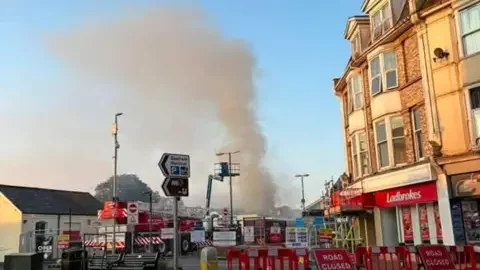
Three Teens Arrested as Arson Probe Follows Paignton Station Fire
British Transport Police have arrested three teenagers on suspicion of arson following a devastating blaze that swept through Paignton railway station in Devon, crippling train services and forcing major road closures in the town centre. The suspects – aged 13, 15, and 16 – were taken into custody on Tuesday evening, just hours after the fire was brought under control by seven fire crews.
The fire, which broke out at approximately 5:45 a.m. on Tuesday, July 21, 2026, caused significant damage to the station’s roof, signalling equipment, and surrounding infrastructure. While no injuries were reported, the inferno has effectively severed rail links on one of South Devon’s busiest commuter and tourist routes. The three boys have been released on conditional bail while detectives continue their inquiries, according to a statement from British Transport Police.
"Detectives are still appealing for anyone with information that could assist their ongoing investigation to come forward," the force said, urging members of the public to text 61016 or call 0800 40 50 40, quoting reference 73 of 21 July.
Travel Chaos Continues as Repairs to Signalling and Infrastructure Underway
The immediate impact on rail services
The fire has effectively shut down the railway between Newton Abbot and Paignton, hitting services operated by both Great Western Railway (GWR) and CrossCountry. All lines to and from Paignton remain closed as of Wednesday, July 23, leaving thousands of passengers scrambling for alternative travel arrangements.
National Rail confirmed that the blaze has damaged the signalling system and railway infrastructure around the station, making it unsafe for trains to operate. Great Western Railway’s network operations director, Daryn McCombe, described the station as "a familiar landmark at the heart of the town" and said specialist teams must "carry out detailed inspections of the station building and surrounding railway infrastructure before trains can return."
What travellers need to know
Right now, trains between Newton Abbot and Paignton remain suspended. Great Western Railway has advised passengers that services will not resume until safety checks are completed. From Wednesday, the operator plans to resume limited services between Newton Abbot and Torquay, but Paignton itself – a key seaside destination – will remain inaccessible by rail for the foreseeable future.
CrossCountry services, which usually link Paignton with Manchester Piccadilly and Birmingham New Street, are terminating at Newton Abbot. A limited rail replacement bus service is operating between Newton Abbot, Torre, Torquay, and Paignton, though it is not running to a formal timetable. GWR has confirmed that passengers can use their tickets on these buses at no extra cost.
Road closures compound the disruption
The impact has not been confined to the railway. Road closures were enforced across Paignton town centre during the height of the fire, as emergency services cordoned off streets to allow fire crews to operate and to ensure public safety. While many roads have since reopened, motorists are advised to expect residual delays as cleanup and inspection work continues near the station.
Firefighting Operation: How Crews Battled the Blaze
Devon and Somerset Fire and Rescue Service responded swiftly to the alarm at 5:45 a.m., deploying seven fire appliances from stations across the region, including Paignton, Torquay, Brixham, Newton Abbot, Totnes, and Honiton. At the height of the blaze, crews worked to prevent the fire from spreading to adjacent buildings and to protect the railway infrastructure.
Firefighters successfully extinguished the fire by mid-morning, but thermal imaging cameras have been used throughout Tuesday and Wednesday to monitor hotspots and ensure the site is safe for investigators and repair crews to enter.
The cause of the fire has not yet been officially confirmed, but the arrest of three teenagers on suspicion of arson strongly indicates that police are treating the incident as deliberate. Investigators are expected to examine the scene in detail once the fire service declares the area fully safe.
The Stakes for Devon’s Transport and Tourism
Paignton as a vital transport hub
Paignton station is more than just a stop on the line. It serves as the southern terminus of the Riviera Line, the key rail corridor connecting the English Riviera – including Torquay and Paignton – to the national rail network via Newton Abbot and Exeter St Davids. The station is heavily used by tourists during the summer season, as well as by daily commuters, students, and local businesses.
The timing of the fire could hardly be worse. Late July is peak holiday season in Devon, and Paignton is a popular destination for families visiting its beach, pier, and attractions like the Paignton Zoo and the Dartmouth Steam Railway. The loss of rail services is likely to deter some visitors and put additional pressure on already congested roads.
Local businesses in Paignton town centre, many of which rely on footfall from train travellers, are bracing for lost revenue. The station itself is a familiar landmark, and the damage to its roof and structure will require significant repairs before it can fully reopen.
Network Rail and GWR face pressure to restore services
Daryn McCombe acknowledged the sense of loss felt by the community, stating: "We share that sense of loss and are determined to do everything we can to restore services as quickly as possible."
The repair effort is complicated by the extent of the damage. Signalling equipment must be repaired or replaced, the station building needs structural assessments, and the track itself must be inspected for any heat-related damage. Specialist teams from Network Rail are working alongside GWR to expedite the work, but no timeline has been given for a full resumption of services.
For now, the priority is to restore partial service between Newton Abbot and Torquay, which would at least reconnect much of the Riviera Line while Paignton remains closed.
Broader Implications: Arson and Rail Infrastructure Vulnerabilities
A worrying trend?
The Paignton fire is the latest in a series of incidents that have exposed the vulnerability of railway infrastructure to deliberate damage. Arson attacks on transport hubs, while relatively rare, can cause disproportionately severe disruption. A single fire at a small station can paralyse an entire regional network for days, as the combination of damaged signalling, power cables, and structural damage creates a complex repair challenge.
British Transport Police have not disclosed a possible motive, and the investigation is ongoing. However, the ages of the suspects – 13, 15, and 16 – raise questions about youth involvement in such serious incidents. Community leaders and youth services in Devon may look to increased engagement and preventative measures to address the root causes.
The cost of disruption
The economic impact of the Paignton fire will be felt across the region. Transport for the South West, the regional body that coordinates infrastructure planning, previously highlighted the fragility of the rail network along the Devon coast. A single point of failure – such as a fire at Paignton – can cut off the entire southwestern peninsula from the national rail network, forcing passengers onto already congested roads.
In related environmental news, the UK is currently experiencing unusually warm weather, and while the Paignton fire was not linked to climate conditions, the 2026 Super El Niño Forecast: Strongest on Record Could Reshape Global Weather may influence weather patterns in the region in the coming months, potentially complicating outdoor repair work.
What this means for the railway industry
This incident may prompt renewed calls for better security at smaller railway stations. While major hubs like London Paddington or Birmingham New Street benefit from extensive CCTV, patrols, and access controls, many branch-line stations have limited surveillance, making them easier targets for vandalism or arson.
Network Rail and Great Western Railway will likely face scrutiny over their contingency plans. While the rail replacement bus service has been activated, the lack of a formal timetable has frustrated passengers. Transport campaigners argue that more robust alternative transport plans should be in place for worst-case scenarios, especially during peak tourist periods.
What Happens Next: Investigation, Repairs, and Recovery
The criminal investigation
Police have not ruled out further arrests. The three boys currently on bail are expected to be questioned further as forensic evidence from the scene is analysed. CCTV footage from the station and surrounding area will be reviewed, and witness statements are being collected. Anyone with information is encouraged to contact British Transport Police or Crimestoppers anonymously.
The road to recovery
The immediate focus for rail operators is safety. Until the station building is declared structurally sound and the signalling system is fully operational, trains cannot run to Paignton. Once repair work begins in earnest, the process could take several days – or even weeks – depending on the availability of specialist parts and engineering teams.
For commuters and holidaymakers, the message is clear: avoid travelling to Paignton by train for now, and check National Rail and GWR websites for the latest updates before setting out. Road users should also allow extra time if travelling through the town centre.
In the longer term, the Paignton station fire will likely become a case study for the rail industry in emergency response, infrastructure resilience, and the consequences of arson. For the local community, the sight of the burned station roof is a stark reminder of how quickly everyday normality can be upended.
As Devon and Somerset Fire and Rescue Service continues to monitor the site, and as detectives piece together the events of the early hours of July 21, one thing is certain: Paignton’s railway station will never look quite the same.
Comments