
Earth's New Mini-Moon: Asteroid 2026 QQ8 Begins Temporary Orbit
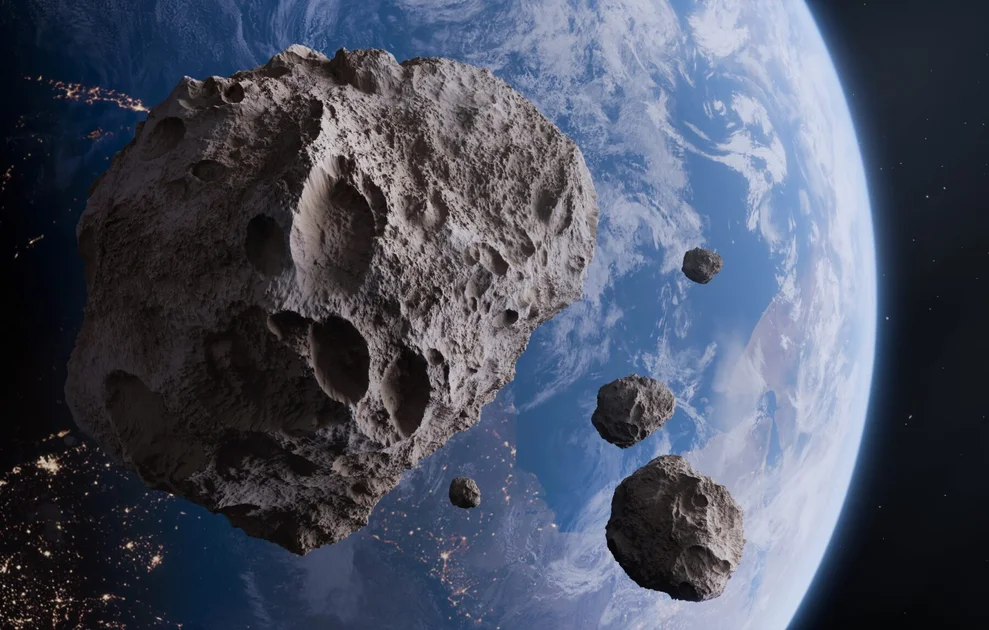
Earth has a new, temporary companion in space. Asteroid 2026 QQ8, a small near-Earth object roughly two meters in diameter, was captured by Earth's gravity in April and has entered a looping orbit around the planet, making it the latest in a series of temporary mini-moons. The object was first spotted by Hungarian astronomer Krisztián Sárneczky on August 20, but its status as a natural body was only recently confirmed by the International Astronomical Union's Minor Planet Center after follow-up observations using the University of Hawaii 2.2-meter telescope and the Lowell Discovery Telescope. Initially mistaken for space debris, the asteroid is now officially classified as a temporary satellite.
A Brief but Fascinating Visit
2026 QQ8 will complete about one and a half revolutions around Earth before escaping its gravitational grip in 2027—likely around December, according to current estimates. At its closest approach, the mini-moon will be approximately 568,000 kilometers (353,000 miles) from Earth, about 1.5 times the average distance between Earth and the Moon. Despite its proximity, the asteroid poses no threat: with a diameter of only about two meters, it would burn up in Earth's atmosphere if it were on a collision course. The object typically orbits the Sun every 359 days and makes a close approach to Earth roughly once every decade. It passed near Earth in 1965 and is expected to make another close approach in 2058, though neither encounter brought it close enough to be captured. This time, however, 2026 QQ8 crossed into Earth's Hill sphere—the region where our planet's gravity dominates—and became temporarily bound.
Context: Why Mini-Moons Matter
The capture of 2026 QQ8 is not an isolated event. A study published last year suggested that up to six temporary mini-moons could be orbiting Earth at any given time. These small space rocks offer astronomers valuable opportunities to study near-Earth objects (NEOs) up close. Many mini-moons may originate from the Moon itself, ejected into space following impact events. One such object, Kamoʻoalewa, discovered in 2016, is a 40-meter asteroid that became a quasi-satellite of Earth. Its spectrum closely resembles that of space-weathered lunar samples, suggesting a lunar origin. "The lunar origin of Kamoʻoalewa implies that the impacts on the Moon have scattered substantial fragments into the Earth-Moon system, which is crucial for understanding the origins of NEOs, the formation of terrestrial planets' satellites, and their potential hazards to Earth," researchers noted. NEOs typically have lifespans of between 1 and 10 million years, though some persist for up to 150 million years. Studying temporary mini-moons like 2026 QQ8 helps scientists better understand the population of small bodies in our cosmic neighborhood and their potential risks—or lack thereof—to our planet.
A Growing Catalog of Temporary Companions
The discovery of 2026 QQ8 adds to a growing list of known temporary mini-moons. These objects are notoriously difficult to detect due to their small size and brief tenure in Earth's vicinity. The fact that Sárneczky, a prolific asteroid hunter who has discovered hundreds of asteroids, spotted this one only in August—despite its capture in April—highlights the challenges of identifying such faint objects. The confirmation process involved ruling out artificial origin, a common hurdle since space debris can mimic the motion of natural objects. The Minor Planet Center's eventual classification underscores the importance of follow-up observations and international collaboration in tracking near-Earth objects.
Perspective: What This Means for Planetary Science
The temporary capture of 2026 QQ8 is a reminder that Earth's gravitational influence extends far beyond the Moon. While this mini-moon will soon depart, its visit provides a natural laboratory for studying the dynamics of small bodies in the Earth-Moon system. Such events also raise questions about the frequency of these captures and whether any could pose future hazards. For now, 2026 QQ8 is harmless, but the study of mini-moons contributes to broader efforts to catalog and characterize NEOs, which is essential for planetary defense. As astronomers continue to survey the sky, more temporary companions are likely to be found, each offering a fleeting glimpse into the chaotic and dynamic nature of our solar system. The event also captures public imagination, reminding us that space is not a distant, static void but a dynamic environment where objects constantly drift in and out of our planet's sphere of influence. For scientists, each mini-moon is a new data point; for the rest of us, it's a celestial reminder that Earth is not alone—even if our new companion is only two meters wide and won't stick around for long.
In related news, NASA recently confirmed that a fireball over North Carolina and Tennessee was a small asteroid fragment, highlighting the ongoing influx of space debris into Earth's atmosphere. Such events, along with the arrival of mini-moons like 2026 QQ8, underscore the importance of monitoring near-Earth objects and understanding their origins and trajectories.
Comments