
NASA: Fireball Over North Carolina and Tennessee Was a Tiny Asteroid Fragment
A brilliant fireball that streaked across the evening sky over parts of North Carolina and Tennessee last Thursday was a small piece of an asteroid burning up in Earth's atmosphere, NASA has confirmed. The object, roughly 2 inches in diameter and weighing about 6 ounces, was first spotted at 7:45 p.m. ET on Nov. 5, 53 miles above Robbinsville, North Carolina, traveling a little south of west at approximately 47,000 mph. Less than 10 seconds later, it disintegrated 25 miles above East Ridge, Tennessee, just southeast of Chattanooga.
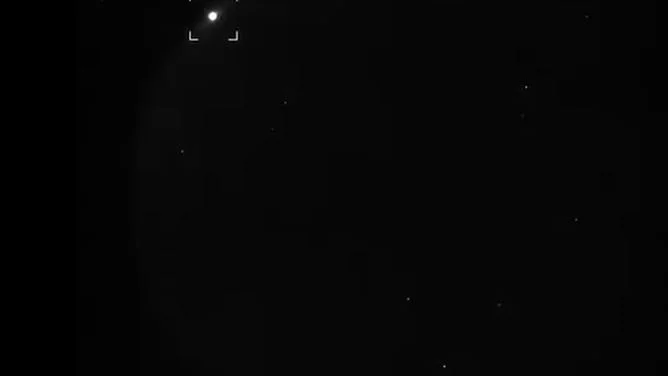
The event was captured by four NASA All Sky cameras in the region, including one near Tullahoma, Tennessee, and others at the Tellus Science Museum in Cartersville, Georgia, in Huntsville, Alabama, and near the Tennessee-North Carolina border. NASA's analysis of the camera footage determined the object's size, speed, and trajectory. The agency also confirmed that the fireball was not part of the Taurid meteor shower, which is active through much of November and is known for producing bright meteors.
Eyewitness Reports and Social Media Response
Residents across East Tennessee and western North Carolina reported seeing the brilliant streak of light, and many shared photographs and videos on social media. The fireball was visible over a wide area because of its brightness, a characteristic that led astronomers to classify it as a fireball rather than a standard meteor. NASA's sky cameras, which are designed to continuously monitor the sky for such events, provided the data needed to trace the object's path and determine its origin.
What Is a Fireball and Why Was This One Special?
Meteors, commonly called "shooting stars," are the visible paths of asteroid fragments or other space debris that enter Earth's atmosphere and burn up due to friction with air molecules. A fireball is simply an exceptionally bright meteor, often defined as one that appears brighter than the planet Venus. The object over North Carolina and Tennessee fits that description, though it was relatively small compared to some fireballs, which can measure three feet or more in diameter.
The fact that NASA was able to determine the object's size, weight, and speed so precisely is a testament to the growing network of all-sky cameras deployed across the United States. These cameras are part of NASA's efforts to track meteors and fireballs, both for scientific research and for planetary defense purposes. By triangulating observations from multiple locations, researchers can calculate an object's trajectory and sometimes even predict where meteorites might have landed.
Not a Taurid Meteor
NASA's confirmation that the fireball was not associated with the Taurid meteor shower is significant because the Taurids are currently active and are known for producing bright fireballs. The Taurid shower is created by debris from Comet Encke and occurs annually from late October through November. Because the timing of the Nov. 5 event coincided with the Taurid period, some observers initially speculated that the fireball might be a Taurid. However, NASA's analysis showed that the object's trajectory and speed were consistent with an asteroidal origin rather than a cometary one.
The Growing Interest in Meteor Sightings and Planetary Defense
The Nov. 5 fireball is the latest in a series of high-profile meteor events that have captured public attention in recent years. From the 2013 Chelyabinsk meteor over Russia, which injured more than 1,000 people and caused widespread damage, to the 2022 fireball over the United Kingdom, these events serve as reminders that Earth is constantly being bombarded by small space rocks. Most of these objects burn up harmlessly in the atmosphere, but the larger ones can pose a significant threat.
NASA and other space agencies have ramped up their efforts to detect and track near-Earth objects (NEOs) that could potentially impact the planet. Programs like the Planetary Defense Coordination Office and the Double Asteroid Redirection Test (DART) mission, which successfully altered the orbit of a small asteroid moonlet in 2022, are part of a broader strategy to protect Earth from future threats. While the Nov. 5 fireball was far too small to cause any damage, it highlights the importance of monitoring the skies for larger objects.
The Role of All-Sky Cameras
The four NASA All Sky cameras that recorded the Nov. 5 event are part of a network of more than 100 cameras deployed across the United States. These cameras are operated by NASA's Meteoroid Environment Office at Marshall Space Flight Center in Huntsville, Alabama, and are designed to provide continuous coverage of the sky. When a bright meteor appears, the cameras capture its trajectory, brightness, and other data, which are then analyzed by scientists. This network has been instrumental in determining the origin of meteorites and in studying the composition of asteroids and comets.
Public Fascination with Space Rocks
Fireballs and meteor showers have long captured the public imagination, and social media has made it easier than ever for eyewitnesses to share their experiences. The Nov. 5 event generated numerous posts on platforms like X, where users posted photos and videos of the bright streak. NASA itself shared images of the fireball on X, along with a detailed explanation of the object's characteristics. This kind of public engagement is valuable for science communication, as it helps raise awareness about astronomy and planetary science.
Looking Ahead: The Taurid Meteor Shower
Although the Nov. 5 fireball was not a Taurid, skywatchers can still look forward to the Taurid meteor shower, which peaks in early November. The Taurids are known for producing a higher-than-average number of bright fireballs, so observers may have more opportunities to see spectacular meteors in the coming weeks. NASA encourages anyone interested in watching meteor showers to find a dark location away from city lights and to give their eyes time to adjust to the darkness.
Conclusion
The fireball that lit up the skies over North Carolina and Tennessee on Nov. 5 was a harmless but spectacular reminder of the dynamic nature of our solar system. Thanks to NASA's all-sky camera network, scientists were able to quickly identify the object as a small asteroid fragment and rule out any connection to the Taurid meteor shower. As interest in meteor sightings continues to grow, events like this one underscore the importance of monitoring the skies and engaging the public in the wonders of space.
For those who missed the fireball, NASA's website offers a wealth of information on upcoming meteor showers and other celestial events. And while the Nov. 5 fireball may be gone, the memories—and the photographs—will last a lifetime.
Comments