
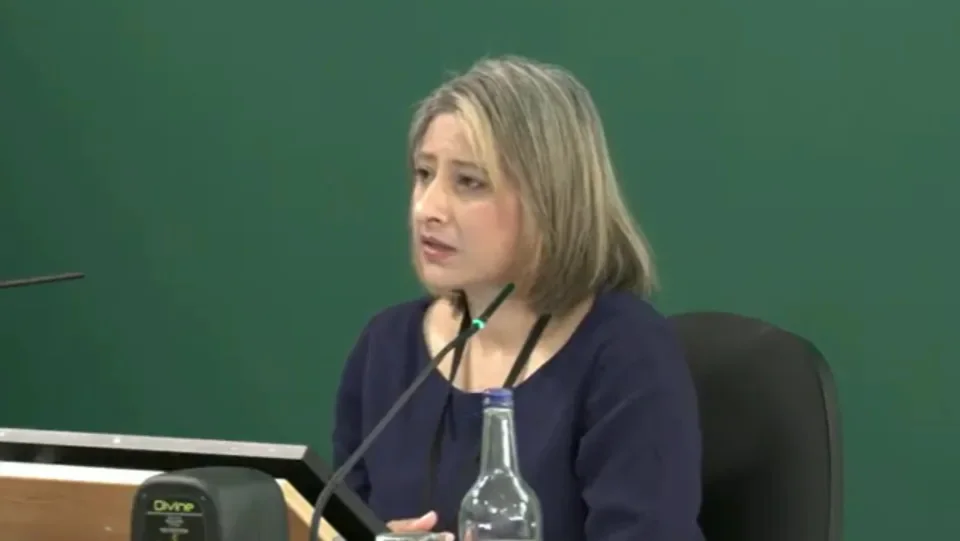
Nottingham Attacks Public Inquiry Concludes: A Chronicle of Systemic Failure and Unanswered Questions
The long-awaited public inquiry into the Nottingham attacks — which saw Valdo Calocane stab three people to death and attempt to kill three others on June 13, 2023 — officially concluded its hearings on Friday, June 5, 2026. Over 14 weeks, 164 witnesses gave evidence before the judge-led inquiry at Mary Ward House in London, laying bare a cascade of missed opportunities and institutional failures that allowed a known, violent, and seriously mentally ill individual to remain at large.
Calocane, who was diagnosed with paranoid schizophrenia in 2020, pleaded guilty in January 2024 to three counts of manslaughter on grounds of diminished responsibility and three counts of attempted murder. He was sentenced to a hospital order. But for the families of victims Barnaby Webber, 19; Grace O'Malley-Kumar, 19; and Ian Coates, 65 — and for the three survivors, Wayne Birkett, Sharon Miller, and Marcin Gawronski — the judicial process was only the beginning of a painful quest for answers.
Key Findings: A Killer Who Should Have Been Stopped
Perhaps the most damning revelation from the inquiry is the fact that an outstanding warrant for Calocane's arrest existed at the time of the attacks, yet was never executed. The warrant was issued in September 2022 after Calocane failed to appear in court for assaulting Police Constable Barnaby Pritchard — an attack that occurred while Calocane was being detained under the Mental Health Act. Despite police having nine months to execute that warrant, no arrest was made.
Kate Meynell, the former chief constable of Nottinghamshire Police, admitted in her evidence that Calocane should have been arrested before the June 2023 attacks. Meynell described the failure as a "serious and systemic and operational failure." Several police personnel were challenged on the suggestion that executing the warrant would not have prevented the tragedy. Dr. Sanjoy Kumar, Grace O'Malley-Kumar's father, called it "perhaps the biggest missed opportunity."
Meynell told the inquiry that Nottinghamshire Police had "completely changed" the way warrants are managed since the attacks, with daily reviews now in place.
A History of Violence Ignored
The inquiry also heard that Calocane had a significant history of police interactions connected to violent incidents, dating back to 2020. At his sentencing, the court had been told he had no previous convictions — a statement that the inquiry revealed was deeply misleading. Among those interactions was the assault on PC Pritchard in 2021, as well as other incidents during psychotic episodes.
Leicestershire Police also came under scrutiny. Officers failed to arrest Calocane just weeks before the Nottingham attacks when he assaulted two people at a warehouse. The inquiry heard that had those officers acted, the killings might have been prevented.
Mental Health Services Under Fire
Calocane had been sectioned multiple times under the Mental Health Act and had been treated for paranoid schizophrenia since his diagnosis in 2020. Yet the inquiry revealed a pattern of inadequate care, poor information-sharing between agencies, and a systemic failure to treat his illness with the intensity required.
The families have repeatedly described the system as "broken." The inquiry heard that Calocane was in hospital when he was due to appear in court on one occasion, raising questions about the absence of robust coordination between the NHS and the criminal justice system.
Mother's Testimony: 'A Hideous Revelation Each Day'
Emma Webber, the mother of Barnaby Webber, became one of the most powerful voices throughout the inquiry. Speaking to BBC Breakfast on the final day of evidence, she said she felt "mentally exhausted" after nearly five months of hearings. "I don't think there's been a single day of evidence from anyone who was involved in Calocane… where there hasn't been some new hideous revelation, and something that we had never found out before," she said.
Mrs. Webber also revealed a particularly grotesque detail: a WhatsApp message sent by a Nottinghamshire Police officer that referred to her son's wounds, describing the teenage victim as "properly butchered." She called the message "disgusting and grotesque." The Independent Office for Police Conduct (IOPC) launched multiple investigations into the conduct of officers from both Nottinghamshire and Leicestershire Police in connection with the case.
Rachel Watson, the director general of the IOPC, admitted that the watchdog had "let down" the families by being "too slow" to probe officers' actions across the investigations.
Trust in Institutions Shaken
The gravity of the findings has shaken public trust in the agencies meant to protect the vulnerable. The inquiry has illustrated that the failures were not the result of a single error but a systemic breakdown spanning police, mental health services, and the oversight bodies meant to hold them accountable.
In a separate development, Nottingham University Hospitals NHS Trust (NUH) confirmed in May 2026 that it had sacked 11 members of staff for inappropriately accessing medical records of the stabbing victims after the attacks — a further sign of institutional disrespect for the victims and their families.
Parallels to Other Cases and a Call for Systemic Change
Emma Webber was asked whether the failings in the Nottingham case paralleled the murder of Henry Nowak, an 18-year-old who was stabbed to death in Southampton in 2026 and died handcuffed by police who ignored his pleas. Mrs. Webber said there were "absolutely" parallels.
"That's one of many, if we start to delve into our agencies and systems in this country a little bit deeper, it's replicated in every city, in every part of the UK," she said. She urged people not to use the tragedies "to incite any more hate and any more rioting," referencing the protests and violent scenes that followed the Henry Nowak case in Southampton.
The families of the Nottingham victims have consistently called for systemic reform, not political point-scoring. They have urged an end to what they see as a cycle of public outrage followed by inaction.
The Broader Implications: A Reckoning for Mental Health and Policing
The Nottingham attacks public inquiry does not mark the end of the families' fight — it may mark the beginning of a wider reckoning. The final report from the inquiry, expected later in 2026, is likely to recommend sweeping changes to how police handle arrest warrants for mentally ill individuals, how mental health trusts share information with law enforcement, and how oversight bodies like the IOPC investigate failures.
The case has also reignited debate about the treatment of those with serious mental illness in the UK. Calocane's paranoid schizophrenia was known to multiple agencies, yet he fell through every crack in the system. His ability to buy a rucksack full of weapons and carry out a 90-minute rampage without being stopped remains a devastating indictment of that system.
For the families, the fight continues. At a press conference outside the inquiry, Emma Webber stood alongside Ian Coates's sons, Darren and Lee Coates, and Dr. Sanjoy Kumar. They expressed a grim determination to ensure that the lessons of the Nottingham attacks are not forgotten. "For Barney, we have to be here and we will be here," Mrs. Webber said. "Whatever it takes for as long as it takes."
What Happens Next
While the hearings have ended, the inquiry itself is not yet over. The chair of the inquiry will now draft a final report, expected to be published later this year. That report will include recommendations aimed at preventing a similar tragedy. Whether those recommendations lead to actual, meaningful reform — or become yet another document gathering dust in a government department — remains to be seen.
In the meantime, criminal investigations into individual officers and trust executives may follow. The IOPC has already signalled that its own reviews are ongoing, and the sackings at NUH suggest that internal accountability is, at least, beginning.
The Nottingham attacks — and the inquiry that followed — have exposed a system in deep distress. The victims' families have shown extraordinary resilience in forcing those in power to listen. The question now is whether the rest of the country will finally pay attention.
For more on how institutional failures can lead to tragic outcomes, read our coverage of emergency landing incidents that highlight issues of safety and sovereignty. You can also follow the latest political developments, including Mexico’s Sheinbaum accusing the US far right of orchestrating attacks on her government.
Comments