
Provost Exit Rocks Northeastern Leadership
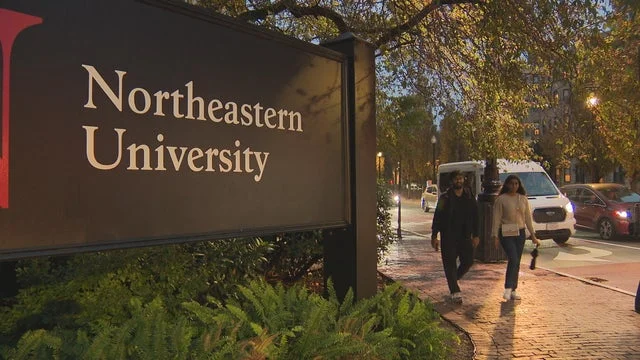
Northeastern University is navigating a sudden leadership shakeup less than a year after appointing a new top academic officer. Beth Winkelstein, who became provost and senior vice president for academic affairs in fall 2025, has vacated her role, the university confirmed on May 28. Executive Vice Provost Tom Sheahan, who previously served as interim provost during the last hiring process, has been appointed to a two-year interim term. The university did not disclose the reason for Winkelstein’s departure.
Winkelstein, a longtime leader at the University of Pennsylvania, was the first woman to hold the provost position since the office was created in 1948. She oversaw Northeastern’s 10 colleges and schools and its global campus network. Her exit—less than nine months into the role—raises questions about administrative stability at a university that has aggressively expanded its footprint both domestically and internationally.
A Second Year of Embedded Reporting
Meanwhile, on the academic front, Northeastern’s School of Journalism is earning praise for its continued commitment to immersive, community-based reporting. For the second consecutive year, the university partnered with DCReport, a nonprofit news outlet, to embed student journalists in a community still grappling with a disaster that has faded from national headlines.
The project, titled “Caught in the Current: Helene Recovery in Asheville and Beyond,” sent students to western North Carolina in early March—18 months after Tropical Storm Helene devastated the region. The reporting examines the cultural, economic, and environmental aftermath of the storm, long after the news cameras departed.
“We wanted to go to Asheville and its surrounding area to examine what happens to a community after the nation’s attention turns away,” said Professor Carlene Hempel, who leads the project. “We found that many residents are still grappling with the fallout—of loss, of continuing trauma, of recovery and of healing.”
The collaboration follows last year’s “Flint Unfiltered: Stories from An American Water Crisis” project, where students reported a decade after Flint’s water disaster. Both projects are dual-published on DCReport.org and Northeastern’s multimedia magazine, and the organizations plan to co-host a panel discussion soon.
The Stakes for Northeastern’s Reputation
The contrast between these two developments—a high-level administrative departure and a celebrated student journalism effort—highlights the dual challenges facing Northeastern as it tries to balance institutional growth with academic excellence.
Winkelstein’s exit comes at a time when faculty morale has been under scrutiny. A recent survey, reported by The Huntington News, revealed grievances from faculty about university administration, with one respondent stating, “Northeastern has truly lost its way.” In May, Boston City Council also held a hearing on Northeastern’s transparency, with students calling for increased cooperation from the administration.
Sheahan, who now steps in as interim provost for two years, previously held the same interim role during the hiring process that brought Winkelstein to Boston. The decision to appoint him for a full two-year term suggests the university may be seeking stability while it re-evaluates its long-term academic leadership.
A Broader Trend in Higher Education
Winkelstein’s brief tenure is not unique in higher education. Provosts and other senior academic officers have increasingly short tenures as pressures mount from budget constraints, enrollment challenges, and political headwinds. A 2025 study by the American Council on Education found that the average provost tenure has dropped to under four years, with many leaving before implementing meaningful reforms.
For Northeastern, the leadership change occurs as it continues to expand its global campus network—adding locations in Toronto, Seattle, and London—and invests heavily in interdisciplinary research, including a new focus on AI leadership. The university recently announced a global summit in London titled “Leadership in the AI Age,” signaling its ambition to shape the future of technology and education.
Yet administrative instability can undermine those ambitions. Faculty and students alike watch for signals about priorities, and a revolving door in the provost’s office often creates uncertainty around curriculum development, research funding, and faculty hiring.
What This Means Going Forward
The juxtaposition of the journalism partnership’s success with the leadership vacuum underscores the complexity of running a sprawling, innovation-focused university. Northeastern’s School of Journalism continues to punch above its weight, offering students real-world, long-form reporting opportunities that many peer institutions cannot match. The “Caught in the Current” project reinforces the value of experiential learning, a cornerstone of Northeastern’s mission.
But the broader implications of the provost’s departure may affect how the university navigates its next chapter. If Sheahan can bring steady, collaborative leadership, the institution may weather this transition without major disruption. If, however, the forces that led to Winkelstein’s exit remain unaddressed, the university could face deeper challenges—both internally and in its public perception.
For now, students continue their work. On Boston’s campus, life goes on: students walk between classes, play on seesaws near EXP, and prepare for summer co-ops. In Natick, co-op students are helping improve IVF technology. And in Asheville, the fruits of Northeastern’s embedded reporting are reaching readers, reminding the world that some stories refuse to fade.
For more on how universities are adapting to leadership transitions and market pressures, read about Michael Sheen Balances Good Omens Finale, Welsh Theatre Row, and BBC Hosting Gig or explore Florida Launches 'Save Our Homes' Calculator as DeSantis Property Tax Plan Advances.
Comments