
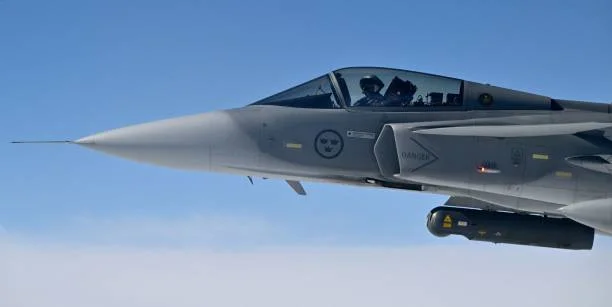
Sweden Authorizes Meteor Missiles for Ukraine’s Gripen as Canada Reconsiders Fleet Mix
Sweden has authorized Ukraine to use its long-range Meteor air-to-air missiles from Gripen fighter jets against Russian aircraft operating over Russian territory, Defense Minister Pål Jonson confirmed on July 15, 2026. The decision, reported by Militarnyi, allows Ukraine to strike Russian planes with greater reach, leveraging the Meteor’s ramjet engine for effective engagement at ranges exceeding 120 kilometers.
This authorization comes as Ukraine finalizes a major Gripen acquisition. Under a roughly $2.54 billion deal announced by Saab, Kyiv will receive 16 advanced Gripen E jets, with deliveries starting in early 2029. Sweden will also send 16 older Gripen C/D fighters early next year, providing an immediate boost to Ukraine’s air force, which currently operates F-16s, Mirages, and Soviet-era jets.
Simultaneously, Canada is reconsidering its fighter procurement strategy. Ottawa signed a 2023 program for 88 Lockheed Martin F-35A fighters, with first deliveries to Canadian soil expected in 2028. However, a government review has kept the door open to adding Saab’s Gripen, creating a potential mixed fleet.
Why the Gripen’s Design Makes It a Strategic Fit
The Gripen’s resurgence is rooted in its unique operational philosophy. Designed during the Cold War to counter Soviet Su-27 and MiG-29 threats, the Gripen was built for dispersed operations from austere airstrips and even highways. This doctrine, inherited from the Saab 37 Viggen, allows aircraft to operate from short, rough strips, avoiding the vulnerability of fixed bases that adversaries would target first.
Tim Robinson, a military aviation specialist at the UK’s Royal Aeronautical Society, told Business Insider that the Gripen was “designed around austere, agile and dispersed operations and quick turnaround times,” directly matching Ukraine’s successful strategy of keeping aircraft mobile to survive Russian strikes.
For Canada, the argument for a mixed fleet hinges on dividing roles. The F-35 excels in high-end stealth missions—NORAD integration, coalition strike packages, and scenarios requiring sensor fusion. The Gripen, with its lower cost per flying hour and road-capable design, could handle homeland defense and softening the operational bill. But as 19Fortyfive notes, the challenge is funding two separate training, maintenance, and supply chains, especially with Ottawa already legally committed to the first 16 F-35s.
The Bas 90 Legacy: From Viggen to Gripen
The Gripen’s road-operable capability is a direct evolution of Sweden’s Bas 90 doctrine, perfected with the Viggen. During the Cold War, Sweden assumed its air bases would be destroyed in the first strike. Under Bas 90, fighters dispersed to reinforced highway strips, taxiing into forest conceals for refueling and rearming by small teams. The Viggen’s canard-delta design, thrust reverser, and rugged landing gear made short-field operations possible. The Gripen, smaller and more advanced, continues this philosophy, making it ideal for a conflict where airfields are prime targets.
Broader Implications: Reshaping Global Fighter Procurement
The concurrent developments signal a shift in the fighter market. For decades, the F-35 dominated Western procurement, but its high maintenance and operating costs have sparked interest in complementary platforms. Canada’s review reflects a wider trend: nations are questioning the one-size-fits-all model and seeking mixed fleets that blend high-end stealth with cost-effective, resilient platforms.
Ukraine’s deal also demonstrates the strategic value of the Gripen. At $2.54 billion for 16 advanced jets, the cost is comparable to the F-35, but the operational savings and adaptability for dispersed warfare offer a compelling alternative. The Meteor missile authorization gives Ukraine a critical edge, forcing Russian pilots to react earlier to air threats, increasing interception chances.
A Potential Catalyst for NATO and European Defense
NATO’s interest in Swedish defense technology extends beyond fighters. At the July summit in Ankara, the alliance discussed acquiring up to ten additional Saab GlobalEye airborne early warning aircraft. This could further entrench Swedish defense firms in NATO logistics, boosting Saab’s industrial base.
For Canada, the outcome of its review will be watched closely by other F-35 operators. If Ottawa finalizes a mixed fleet, it could set a precedent for countries like Finland, Norway, or the Netherlands, which face similar trade-offs between stealth capabilities and budget constraints.
Conclusion: A Moment of Pivot for the Gripen
From Swedish authorization of advanced munitions for Ukraine to Canada’s fleet review, July 2026 marks an inflection point for the Saab JAS 39 Gripen. The aircraft’s design—proven in concepts from the Viggen era—is now being tested in a real wartime scenario and re-evaluated in peacetime procurement. Whether Canada remains committed solely to the F-35 or embraces a mixed fleet will shape the fighter landscape for years. For Ukraine, immediate deliveries of older Gripens and the strategic use of Meteor missiles may provide a near-term battlefield advantage, while the arrival of advanced E models later this decade promises a more durable air force.
As defense analysts debate the costs of dual systems, the Gripen’s resurgence reminds the market that in modern warfare, resilience and adaptability can be as valuable as stealth.
Comments