
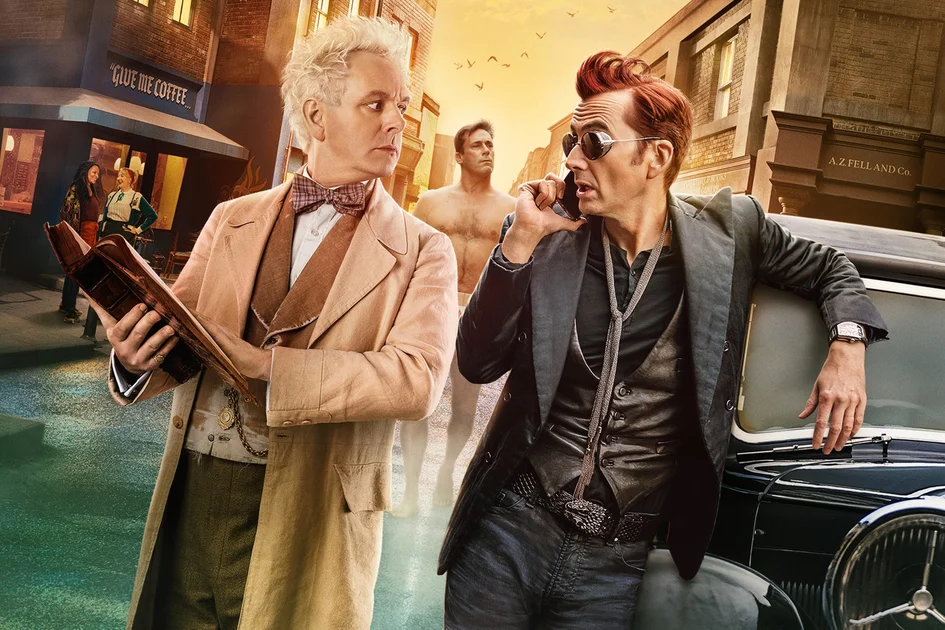
The Week Michael Sheen Commanded the Headlines
Michael Sheen is having a moment that few actors can claim. On May 29, 2026, the third and final season of Good Omens premiered, bringing a bittersweet conclusion to the beloved fantasy series. The same week, Sheen found himself at the center of a heated debate in the Welsh arts community after critics accused his newly founded Welsh National Theatre of receiving preferential treatment from funding bodies. And if that were not enough, the BBC confirmed that Sheen will step in as the new host of House of Games later this year, replacing Richard Osman after the latter’s nine-year tenure.
Sheen’s sudden ubiquity is not accidental. Over the past year, the 57-year-old actor has leveraged his star power to launch a national theatre company, cap a decade-long television saga, and secure a prime-time hosting gig. Together, these developments paint a portrait of an artist who is not just riding a wave of popularity but actively reshaping the cultural landscape of the UK. As the Good Omens finale draws both praise and lament for its rushed narrative, the conversation around Sheen’s career is as much about the business of celebrity as it is about the art.
Good Omens Season 3: A Bittersweet Farewell
The final season of Good Omens, released on May 29, 2026, is a single feature-length episode that attempts to wrap up the sprawling story of Aziraphale (Sheen) and Crowley (David Tennant), the angel and demon who have become unlikely allies and, in the eyes of many fans, star-crossed lovers. The episode picks up with Aziraphale caught in the machinery of the Second Coming, tasked with orchestrating an apocalypse he hopes to soften. Jesus (Bilal Hasna) is sent to Earth after the Metatron is mysteriously disintegrated, and Aziraphale reunites with Crowley to track the culprit behind the theft of the Book of Life. The villain turns out to be the Archangel Michael (Doon Mackichan), whose motives remain frustratingly opaque even as she threatens to destroy most of creation.
Critics have praised Sheen and Tennant’s performances, calling the episode “fun” and “glorious” but also lamenting what was lost. Dr. Thomas J. West III, writing for the newsletter Omnivorous, noted that the episode “feels like a very rushed way to say farewell to a story and to a pair of characters who are so beloved.” The abbreviated runtime—90 minutes instead of the originally planned six episodes—is a direct consequence of the allegations against author Neil Gaiman, which forced a dramatic restructuring of the season. While Sheen and Tennant deliver their trademark chemistry, the plot feels compressed, with the villain’s motivations underexplored and key character beats skimmed over.
What the Finale Means for Fans
For the show’s devoted fanbase, the finale is both a gift and a frustration. On one hand, it gives closure to a story that might otherwise have been abandoned entirely. On the other, it leaves a lingering sense of what might have been. The episode includes a climactic confrontation in Aziraphale’s bookshop, featuring Satan (Toby Jones) and God (Tanya Moodie), but the pacing betrays the seams of a much larger narrative that was cut short. Still, the cultural impact of Good Omens—and of Sheen’s portrayal of the anxious, principled Aziraphale—remains significant. The show helped cement Sheen’s status as a beloved figure in genre television, a status that now fuels his ambitions beyond the screen.
The Welsh National Theatre Controversy
While Good Omens fans processed the finale, a different kind of drama was unfolding in Wales. Sheen founded the Welsh National Theatre last year, following the collapse of the National Theatre of Wales after it lost its funding. In just one year, the company produced Thornton Wilder’s Our Town, which was both a critical and commercial success. The production earned glowing reviews, with the Telegraph’s chief theatre critic Dominic Cavendish noting that it “felt very much like a collaborative effort.”
But not everyone is celebrating. In late May, The Stage reported that 50 Welsh creatives signed a formal letter to the Arts Council of Wales, arguing that Sheen’s celebrity has led to “preferential treatment” when it comes to grant funding. The letter claims that Sheen’s company received two separate injections of £200,000 that it was not eligible for. The Telegraph’s Ben Lawrence pushed back against the criticism, writing that “If there is anyone who can save Wales’s ailing theatre industry, it is Michael Sheen.” Lawrence argued that Sheen’s clout “has increased confidence in Welsh theatre more broadly and should ultimately boost an industry that is brimming with talent.”
The Debate Over Celebrity and Arts Funding
The controversy highlights a persistent tension in the arts world: can star power be a legitimate tool for institutional survival, or does it distort the allocation of scarce resources? Supporters of Sheen point to his track record of using his fame for public good. He has been an outspoken advocate for arts funding, and his decision to found the Welsh National Theatre came after the previous national company lost its public support. The company’s upcoming production, Owain and Henry, in which Sheen will play Welsh hero Owain Glyndŵr, is already generating significant buzz. Detractors, however, worry that the concentration of resources around a single celebrity figure could sideline smaller, less visible companies and artists.
Lawrence drew a parallel to Alan Cumming’s experience in Scotland. Cumming waived his salary as artistic director of the Pitlochry Festival Theatre to fund stage repairs, only to face criticism for setting “a dangerous precedent” regarding pay equity. Lawrence dismissed such complaints as “nitpicking, fuelled by a sense of resentment,” arguing that both Cumming and Sheen have used their positions to elevate regional theatre. The question remains whether the arts sector can afford to be choosy about where its saviors come from.
From Pointless to House of Games: Sheen’s TV Hosting Shift
Meanwhile, Sheen is preparing for a different kind of spotlight. The BBC confirmed on May 29, 2026, that Pointless Celebrities has been “shelved for the year,” while the non-celebrity version of the show continues. That announcement came alongside the news that Sheen will replace Richard Osman as the host of House of Games later in 2026. Osman, who also stepped down from Pointless three years ago, revealed on his podcast that he is developing a new ITV quiz show titled The Golden Elevators.
Osman’s departure from House of Games was announced in March 2026, with BBC daytime boss Rob Unsworth calling his contribution “impossible to overstate.” Sheen’s casting as the new host marks a significant shift. While he has appeared as a guest on countless panel shows and quizzes, this will be his first regular hosting role on a major network series. The move positions Sheen not just as an actor but as a television personality in his own right, capable of carrying a daily entertainment program.
What This Means for Sheen’s Brand
Sheen’s transition into hosting fits a broader pattern of actors taking the reins of game shows and talk shows. His quick wit and natural charisma make him a strong candidate for the role, and the House of Games gig will introduce him to a daytime audience that may not follow his theatre or fantasy work. It is a strategic expansion of his brand, ensuring that his face remains familiar across demographics. For the BBC, tapping Sheen is a safe bet: he is popular, respected, and currently generating vast amounts of positive press, despite the theatre funding controversy.
Broader Implications: Celebrity, Culture, and the State of UK Arts
The confluence of these three stories—Good Omens, the Welsh National Theatre row, and the House of Games hosting gig—speaks to a larger truth about the state of British culture in 2026. In an era of shrinking public funding, increasing fragmentation of audiences, and heightened competition from streaming platforms, celebrity has become one of the few reliable currencies. Sheen is not the first actor to try to rebuild a national theatre from scratch, but he may be one of the few who can actually pull it off.
The Good, the Bad, and the Inevitable
On one hand, Sheen’s involvement in Welsh theatre has already produced tangible results: a critically acclaimed production of Our Town and a slate of upcoming works that promise to draw audiences to a sector that desperately needs them. On the other hand, the controversy over funding eligibility raises legitimate questions about fairness and transparency. The Arts Council of Wales has not yet responded publicly to the letter from the 50 creatives, but the debate is unlikely to fade quickly.
Sheen’s ability to navigate these tensions will determine whether his legacy extends beyond his performances. The Good Omens finale may be his last major television role for a while, but his work as a producer and host positions him for a long second act. For now, he remains one of the most visible and versatile figures in British entertainment—and one of the most debated.
As the UK heatwave finally breaks and cooler temperatures arrive, the cultural climate around Michael Sheen remains decidedly warm. Whether he is saving the world as an anxious angel, saving Welsh theatre as a celebrity impresario, or saving daytime TV as a game show host, Sheen has become a force that cannot be ignored. The coming months will reveal whether that force can be harnessed for lasting change—or whether it will burn out in the glare of its own spotlight.
Comments