
Launch set for daring rescue of aging Swift Observatory
NASA is preparing to launch a robotic spacecraft this week on an unprecedented mission to rescue its Neil Gehrels Swift Observatory from falling back to Earth. The operation, which could launch as early as Tuesday from the Marshall Islands, marks the first American attempt to physically capture and reposition a satellite already in orbit.
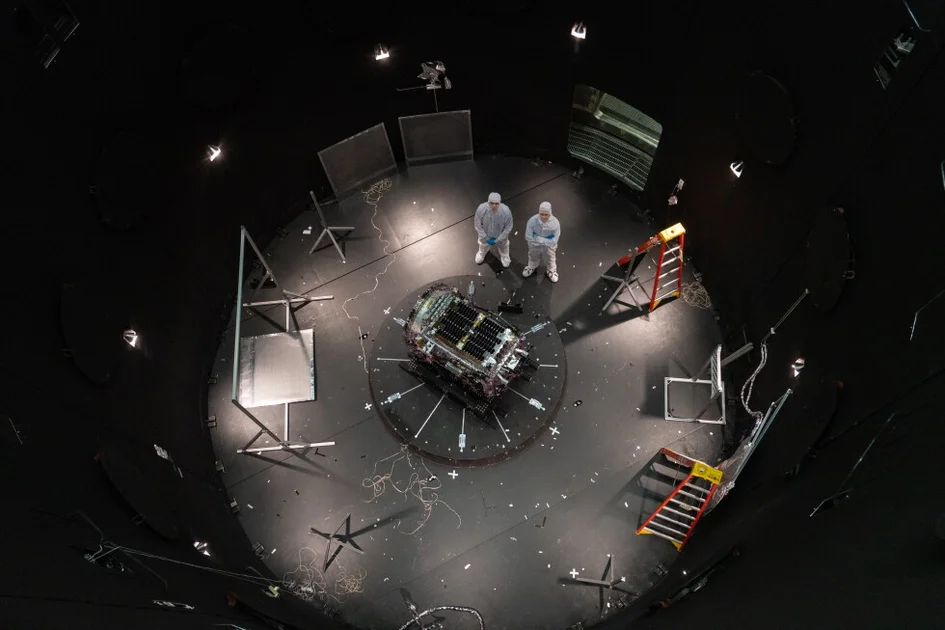
The U.S. space agency has partnered with startup Katalyst Space Technologies under a $30 million contract to boost the 22-year-old observatory to a higher, more stable orbit. The mission uses a three-armed robotic spacecraft called Link, which will chase down Swift, latch onto it, and gradually push it from its current altitude of about 360 kilometers to 600 kilometers above Earth.
"This is the first American space robot to go up and do anything like this," Katalyst Space CEO Ghonhee Lee told the Associated Press. "NASA has all these big senior observatories … all of them can benefit from a service like this."
The salvage operation comes as Swift sinks faster than expected due to increased solar activity during the current peak of the Sun's 11-year cycle. Stronger solar flares have heated Earth's upper atmosphere, causing it to expand and create greater drag on satellites in low-Earth orbit.
Why the rescue is urgent
Swift currently orbits at approximately 360 kilometers (224 miles). NASA says it must remain above 300 kilometers (185 miles) for a successful capture. If it falls below that threshold, expected around October, the spacecraft could descend too quickly for the robotic system to intercept.
To buy additional time, NASA shut down Swift's scientific instruments in February, reducing the satellite's drag and slowing its orbital decay. The agency is racing against a tight window to execute a mission that was conceived less than a year ago.
What Swift does and why it matters
Launched in November 2004, Swift has spent over two decades scanning the cosmos for some of the most powerful explosions in the universe. Its primary mission is detecting gamma-ray bursts, the catastrophic deaths of massive stars that are among the most energetic events known to science. The observatory also monitors supernovae, black hole activity, and neutron star collisions.
Swift is equipped with three multiwavelength telescopes that collect data in visible, ultraviolet, X-ray, and gamma-ray light. When it detects a burst, it rapidly alerts ground-based observatories and other space telescopes, enabling coordinated follow-up observations worldwide.
"Swift has been a key player in NASA's efforts to understand how the universe works," said S. Bradley Cenko, Swift principal investigator at NASA's Goddard Space Flight Center. "We're looking forward to getting back to that work after the boost is complete."
The mechanics of an unprecedented orbital rescue
The rescue mission represents a significant technical challenge. Katalyst Space Technologies developed the Link spacecraft specifically for satellite servicing operations. The vehicle features three robotic arms equipped with finger-like gripping mechanisms, autonomous navigation software, and advanced capture technology.
After launching aboard an air-launched Pegasus rocket from the Marshall Islands, Link will spend approximately one month catching up with Swift. Once positioned alongside the aging observatory, the robotic arms will carefully secure it before beginning a gradual boost to a higher orbit.
The operation is part of a broader trend in space operations toward in-orbit servicing and life extension. As global tensions rise around space governance, questions about orbital debris and satellite longevity have become increasingly urgent.
Only China has attempted a similar mission
Only China has previously executed a mission like this, successfully boosting a satellite into a higher graveyard orbit four years ago. If successful, NASA's Swift rescue would mark the first American demonstration of robotic satellite repositioning technology.
The mission's success could pave the way for servicing other major space observatories. NASA's Hubble Space Telescope, also launched decades ago, faces similar challenges as it loses altitude due to atmospheric drag. Hubble, however, is significantly larger than Swift and presents different engineering challenges.
Why Swift is falling faster than expected
All spacecraft in low-Earth orbit experience some atmospheric drag, which gradually pulls them to lower altitudes. Satellites without propulsion systems eventually deorbit and burn up in the atmosphere. Swift was designed to operate without onboard propulsion, relying on its initial orbital altitude to keep it aloft.
However, the Sun's current solar cycle has proven more active than anticipated. Solar maximum, the peak period of the 11-year cycle, produces more frequent and intense solar flares. These flares heat and expand Earth's upper atmosphere, increasing drag on satellites and accelerating their descent.
Since fall 2024, solar storms have pushed Swift lower faster than NASA models predicted. The agency faced a choice: let the observatory fall to its destruction or mount an emergency rescue mission. It chose the latter, awarding Katalyst Space Technologies a contract in what became a rapid development timeline.
The cost of rescue versus replacement
The $30 million mission cost represents a fraction of what it would take to build and launch a replacement telescope. NASA officials have emphasized the scientific value of extending Swift's operational life, particularly given the observatory's unique capabilities and the wealth of data it continues to produce.
What comes next: Hubble and beyond
While Swift is the immediate focus, the implications of this mission extend far beyond a single telescope. Katalyst Space Technologies CEO Ghonhee Lee has indicated that the company is already developing next-generation robots capable of servicing larger observatories.
Hubble, which has been operating since 1990, is also losing altitude due to increased solar activity. Unlike Swift, Hubble was designed for servicing by Space Shuttle crews, a capability lost when the shuttle program ended in 2011. A robotic rescue for Hubble could extend its life by years.
"What we're proving with this mission is this is a new playbook," Lee said.
The broader space industry is watching closely. In-orbit servicing has emerged as a priority for both government agencies and commercial operators, particularly as satellite constellations grow and older spacecraft continue to operate beyond their planned lifetimes.
The business case for satellite servicing
Katalyst Space Technologies is part of a growing ecosystem of companies developing in-orbit services. The market for satellite life extension, refueling, and repair is expected to grow substantially as operators seek to maximize returns on expensive space assets. NASA's investment in this mission signals confidence that robotic servicing has matured enough for operational use.
The mission also demonstrates the potential for public-private partnerships in space operations. NASA contracted the work to a startup rather than developing the technology in-house, reflecting a broader shift toward commercial partnerships for space services.
Potential risks and challenges
Despite careful planning, the rescue mission carries significant risks. The Link spacecraft must navigate autonomously to intercept a satellite that was never designed for docking. Swift lacks the grapple fixtures and navigational aids built into later satellites intended for servicing.
If Link fails to capture Swift, or if the boost maneuver goes wrong, the observatory could be damaged or lost entirely. NASA has not publicly discussed contingency plans for failure scenarios.
The mission's tight timeline adds pressure. Swift's orbital decay has accelerated faster than expected, leaving little margin for delays. Weather conditions in the Marshall Islands could affect the launch date, though the Pegasus rocket system is designed for air launch from a modified aircraft, offering some flexibility.
A new chapter for space operations
The Swift rescue mission represents a turning point in how humanity manages its assets in space. For decades, satellites were considered disposable—once launched, they operated until failure or atmospheric reentry. This mission challenges that paradigm, suggesting that even aging spacecraft can be given new life through robotic intervention.
If successful, the mission could reshape NASA's approach to its fleet of aging observatories. Rather than planning for replacement missions, the agency could consider servicing as a routine option. This would be particularly valuable for flagship missions that cost billions of dollars to build and launch.
The technology demonstrated by Link could also find applications beyond NASA. Commercial satellite operators, military space assets, and international space agencies might all benefit from in-orbit servicing capabilities. The mission's outcome will likely influence investment decisions and policy debates about orbital infrastructure.
As NASA prepares for launch this week, the space community watches with anticipation. With the world's attention on high-stakes events across sports and entertainment, a successful orbital rescue would mark one of the most significant achievements in space operations in years.
The Swift Observatory has spent more than two decades revealing the violent, dynamic universe beyond Earth. If all goes according to plan, it will continue that work for years to come.
Comments