
Monsoon Arrives with Mixed Blessings: Fire Risk in California, Flooding in India
The annual North American monsoon is finally surging into the southwestern United States, but its arrival brings a starkly different reality for California compared to the Four Corners region. While parts of Arizona and New Mexico anticipate life-giving rain, California is bracing for a more dangerous phenomenon: dry lightning that could ignite wildfires.
According to the National Weather Service, the monsoon—an seasonal shift that draws moisture-rich air from the subtropics—is expected to intensify sharply this weekend. High-pressure systems will channel humid air from the Gulf of California northward, reaching as far as eastern Oregon and Washington. However, for California, particularly the Bay Area, this moisture is likely to remain high in the atmosphere while low-level air stays dry. The result: thunderstorms that produce little to no rainfall but significant lightning.
Where the Storms Are Expected
The National Weather Service’s Rachel Kennedy told KQED that the most likely areas for dry thunderstorms include Monterey, San Benito, Santa Cruz, and Santa Clara counties, as well as the East Bay. The storms are expected to develop Sunday and continue through Monday. “Since we do still have some uncertainty about where and when thunderstorms are going to develop, I wouldn’t fully take thunderstorms off the table for the rest of the Bay Area too,” Kennedy said.
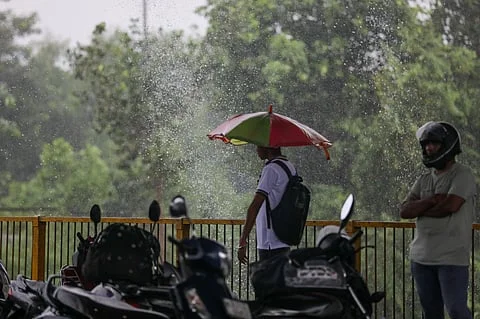
Meanwhile, in India, the southwest monsoon is causing widespread mayhem. The India Meteorological Department (IMD) has issued alerts for heavy to very heavy rainfall across Northwest, Central, and West Coast regions. States like Sub-Himalayan West Bengal, Sikkim, Arunachal Pradesh, and Assam are expected to experience intense downpours, with isolated extremely heavy showers and gusty winds threatening landslides, flooding, and road collapses. In Haryana’s Gurugram, a section of National Highway-48 caved in, while debris blocked the Yamunotri National Highway in Uttarakhand.
Contrasting Stakes: Fire vs. Flood
The diverging impacts of the same global monsoon system underscore the complex challenges facing forecasters and emergency managers. For California, the primary concern is wildfire. The National Interagency Fire Center warned that “current indications suggest this event may be more of the problematic variety, with faster-moving storms and less rainfall.” Lightning-sparked fires are especially dangerous when vegetation has been dried by warm, pre-storm conditions.
“If any lightning does strike the ground, we may see more, easier fires start, especially since we’re having warmer and drier conditions this week that are really serving to dry out our fuels,” Kennedy emphasized. This weekend’s setup mirrors past dry lightning events that have triggered massive wildfires, such as the 2020 lightning siege that burned millions of acres in California.
Monsoon Background: A Slow Start
Although the North American monsoon season officially begins June 15, much of the Southwest—including cities like Phoenix and Albuquerque—has seen below-average rainfall so far. Parts of Arizona and New Mexico typically receive more than half their annual precipitation from monsoon thunderstorms between June and September. This year’s slow start has heightened anxiety about water supplies and drought conditions. The arrival of the monsoon now offers hope for relief, but the pattern is expected to ramp up quickly, with periods of heavy precipitation likely in the Rocky Mountains and Desert Southwest.
Broader Implications: Understanding Monsoon Variability
Monsoons are not a single phenomenon but a complex shift in wind patterns driven by seasonal heating of landmasses. The North American monsoon draws moisture from the Gulf of California and the tropical Pacific, while the Indian monsoon is fueled by the Bay of Bengal and the Arabian Sea. Both are critical for water resources in their respective regions, but their impacts can be unpredictable.
Climate Change and Monsoon Intensity
Scientists have long warned that climate change could amplify monsoon extremes—making wet seasons wetter and increasing the likelihood of dry lightning events in places like California. The rare occurrence of a monsoon reaching the Bay Area highlights how shifting atmospheric patterns may be affecting historical weather norms. For residents in fire-prone areas, staying updated on forecasts is essential, as Kennedy recommended.
In India, the persistent rains have already caused significant disruptions. The IMD predicts widespread rainfall activity across the country, with thunderstorms and gusty winds compounding risks. Residents in affected areas are advised to avoid affected routes and follow safety advisories.
What This Changes
The current monsoon season is a stark reminder that the same global weather system can produce opposite outcomes depending on geography. For California, the immediate priority is fire prevention and public awareness of dry lightning risks. “Since we do still have some uncertainty about where and when thunderstorms are going to develop,” Kennedy said, residents should “stay up to date on the forecast and stay aware of their surroundings, especially if they live in more rural, fire-prone areas.”
For India, the focus remains on flood management and infrastructure resilience. The collapse of National Highway-48 in Gurugram and debris-blocked roads in Uttarakhand illustrate how monsoon rains can paralyze transportation and daily life.
As the monsoon season progresses, both regions will need to adapt to the challenges of extreme weather—whether it’s parched landscapes waiting for rain or saturated cities struggling with floods. In California, the hope is that the monsoon delivers precipitation where it’s needed most, rather than sparking new wildfires. But for now, the watchword is caution.
Comments