
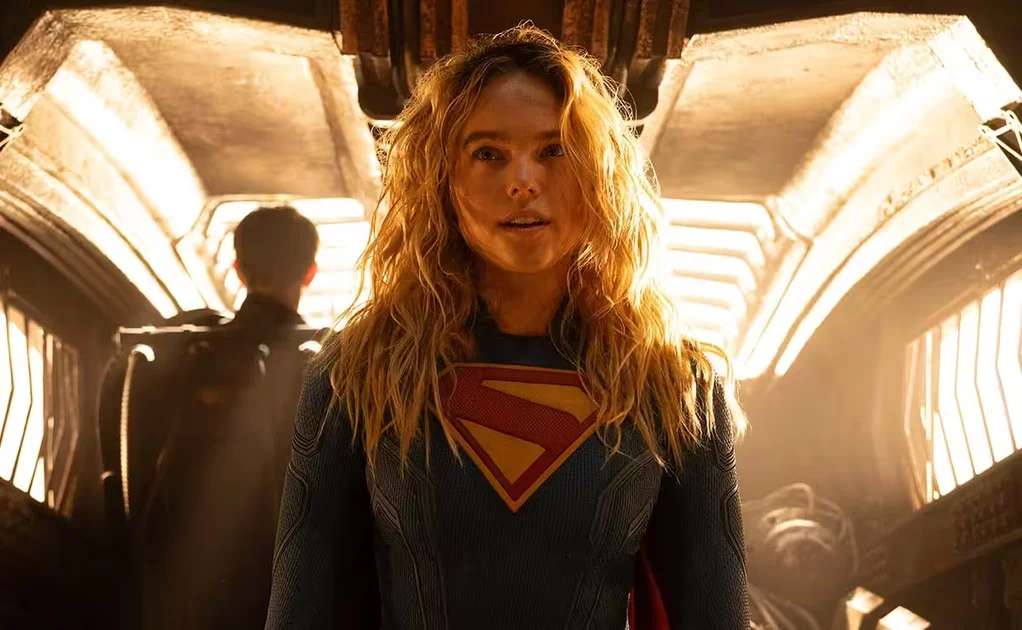
Supergirl Star Hints at Bisexuality, Film Faces Financial Storm
Milly Alcock, the 26-year-old Australian actress stepping into the cape of Kara Zor-El for DC Studios' Supergirl, has ignited a fresh culture-war conversation by suggesting the character is likely bisexual in the new DC Universe. In a recent interview with the Associated Press, Alcock said she believes Supergirl “would probably go both ways,” adding that the film’s beauty lies in its refusal to center on a male love interest—or any romance at all.
Released during Pride Month, the remark immediately ricocheted across conservative and progressive media outlets alike. Fox News’ OutKick framed the comment as part of a broader pattern of “questionable remarks” from the star, even as the site published a separate tracking report suggesting the film is on pace for a staggering $200 million loss at the box office. Conversely, outlets such as Autostraddle celebrated Alcock’s openness, noting that her version of Kara feels “queer” because she operates outside earthly expectations of gender and sexuality.
Alcock did not confirm whether this interpretation is official DCU canon. She stated she has not discussed the matter with writers or studio heads, leaving the door open for future development—or for the remark to remain a personal, offhand opinion.
The Film’s Story: Trauma, Legacy, and No Love Interest
Alcock’s comments come as DC prepares to release Supergirl, which follows her brief appearance in 2025’s Superman. In interviews with io9 and other outlets, Alcock and screenwriter Ana Nogueira have emphasized that this version of Kara is defined not by romance but by trauma. Unlike Superman (David Corenswet), who was sent to Earth as an infant and has no memory of Krypton, Kara lived on the dying planet for years. She knows Kryptonians. She carries the weight of a lost civilization.
“So much of the way we behave in the world is the things that have happened to us,” Alcock told io9. “It became the cornerstone of where to ground her.” Nogueira added that she focused less on cosmic lore and more on “the human relationship between her and her parents.” James Gunn, who oversees DC Studios alongside Peter Safran, reportedly steered the script away from overly complicated mythology, keeping the emotional core front and center.
The film reportedly centers on Kara’s relationship with her dog Krypto and her platonic bond with a character named Ruthye, steering clear of any romantic subplot. Alcock said that choice makes the story “so beautiful”—it is not about whom Kara loves, but about who she is.
Still, the question of her sexuality has become a flashpoint. In the comics, Supergirl has been portrayed as straight, with romantic relationships limited to male characters. On television, Melissa Benoist’s CW iteration was widely read by fans as queer, though never explicitly confirmed. Alcock’s comment now opens the door for a possible future storyline, even if it remains unofficial for now.
Why It Matters: Culture Wars, Box Office, and the New DCU
The stakes for Supergirl are enormous—and not just because of its projected financial outlook. The film is a cornerstone of Gunn and Safran’s rebooted DC Universe, which kicked off with Superman in 2025. A $200 million loss, as suggested by early tracking data cited by OutKick, would raise serious questions about audience appetite for the new direction. For context, that figure would place Supergirl among the biggest superhero flops in recent memory.
At the same time, DC is navigating an increasingly polarized media environment. Alcock’s bisexuality remark, however casual, has been weaponized by critics who see the studio as bowing to progressive activism. Supporters counter that superhero stories have always been about outsiders, misfits, and those who defy norms—making queer interpretations natural, even inevitable.
Alcock herself acknowledged this in a separate interview with Autostraddle, noting she has “a lot of queer friends” and understands why fans see Kara as a queer icon. “She’d do what she wants,” Alcock said. For many LGBTQ+ viewers, that defiance of categorization is precisely the appeal.
The conversation echoes broader trends in Hollywood, where actors and studios increasingly weigh in on social issues during press tours. Last year, the Barbie film’s marketing leaned heavily into feminist and queer readings of the toy franchise, while Marvel has slowly introduced more explicitly LGBTQ+ characters in projects like The Eternals and Doctor Strange in the Multiverse of Madness. DC’s approach under Gunn has been more deliberate: Superman included a prominent trans character, and the upcoming Waller series will feature a lesbian lead.
Perspective: What This Changes for Superhero Storytelling
Alcock’s comment, whether or not it becomes official canon, signals a shift in how superhero studios handle representation. Rather than waiting for a plot-driven coming-out story, they now allow ambiguity—and even offhand remarks—to carry the weight of identity. This can be a double-edged sword. For fans hungry for visibility, it feels like progress. For critics, it looks like virtue signaling.
The real question may be whether audiences care about Kara’s sexuality enough to buy tickets. If tracking projections hold and Supergirl underperforms, conservatives will likely blame “wokeness,” while progressives will point to marketing missteps or superhero fatigue. The truth is probably more mundane: a crowded release calendar, mixed early reviews, and a protagonist still unfamiliar to general audiences.
But if the film succeeds—if it connects emotionally with viewers tired of origin stories and predictable love triangles—it could prove that a female-led superhero movie can thrive without a romantic subplot. That, more than any Pride Month statement, would be the real revolution.
For now, Milly Alcock has done what any good actor does: she has made people talk about her character. Whether that translates into box office gold or a $200 million loss remains to be seen. One thing is certain: Kara Zor-El, the girl who remembers Krypton, has arrived—and she refuses to be put in a box.
Amid the chatter, extreme weather events are also dominating headlines. Extreme Heat and Violent Storms: Poland Braces for Crisis Weekend and Thunderstorms and 40°C Heatwave: London Braces for Extreme Weather Chaos show how climate volatility is disrupting daily life across Europe. Meanwhile, the Senate Passes Bipartisan Housing Bill to Curb Wall Street Buying and Lower Costs highlights a rare moment of cross-party cooperation in Washington.
Comments