
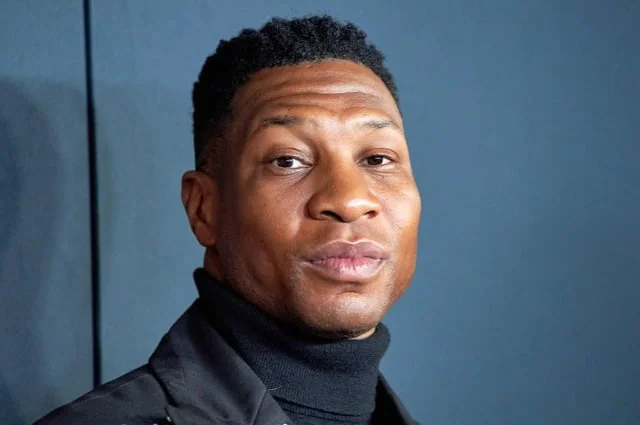
A Polarizing Return for Jonathan Majors
The first full trailer for Jonathan Majors' comeback vehicle, Run Hide Fight: Infidels, has arrived, and it is already igniting a firestorm of controversy. Released by Ben Shapiro's The Daily Wire on August 6, the film marks Majors' first major acting role since his high-profile exit from the Marvel Cinematic Universe. The trailer presents a high-stakes action premise: a group of "radical Islamic terrorists" seizes a liberal college campus, imposing Sharia law on students and executing "infidels." Majors stars as a Delta Force veteran who teams up with a ragtag group of students and a campus security guard to fight back and reclaim the campus.
The film, directed by Kyle Rankin, is a sequel to the 2020 thriller Run Hide Fight and is slated to premiere exclusively on the DailyWire+ streaming platform on September 16. The trailer wastes no time in establishing its confrontational tone, opening with real footage of the September 11 attacks and cutting through recent pro-Palestinian campus protests, Fox News broadcasts, and comments from Secretary of State Marco Rubio. It culminates in an ominous tagline: "Coming soon... Or already here."
Off-Screen Turbulence and On-Set Controversy
The film's production has been as turbulent as its subject matter. Filming in South Carolina was plagued by reported unsafe conditions, culminating in a crew strike supported by over 60% of the production team. A significant incident occurred when Majors and co-star JC Kilcoyne fell through an unsecured glass window, an accident that left Kilcoyne requiring stitches. Crew members also raised complaints about mold exposure and improper safety protocols, leading to an IATSE-backed strike.
Producer Dallas Sonnier has been unapologetic about the film's politically charged premise, telling Page Six that the goal is to mock the "anti-Israel, pro-Palestine movement." He stated, "If you’re afraid to put radical jihadis as your villains, then you’re a wimpy movie producer. We don’t have that fear." This combative stance has drawn sharp criticism from outlets like the Los Angeles Times, which has described the film as xenophobic and Islamophobic.
A Career Crossroads in a Changing Hollywood
Majors' return to acting comes at a critical juncture in his career. After being fired by Marvel Studios, where he played the central villain Kang the Conqueror, he has largely been absent from the industry's mainstream. The actor's new project signals a deliberate pivot toward independent, politically charged productions backed by conservative platforms. This move is a stark contrast to his previous career trajectory, which included award-winning performances in art-house films and a leading role in one of the biggest franchises in cinema history.
The decision to align with The Daily Wire has broader implications for how actors navigate post-controversy careers. With major studios hesitant to back him, the partnership provides a clear, albeit polarizing, pathway back to the screen. It also speaks to a growing trend in Hollywood where politically motivated studios and production companies are filling the void left by risk-averse mainstream studios. For Majors, the project is both a lifeline and a risk, as the film's inflammatory themes could further cement his status as a culture-war figure rather than a celebrated actor.
The trailer's release has also reignited questions about the ongoing debate over free speech, religious intolerance, and the role of art in a politically fractured climate. The film's use of real 9/11 footage mixed with contemporary protest imagery has been particularly criticized as a manipulative conflation of unrelated events. Regardless of one's politics, Run Hide Fight: Infidels is now undeniably a flashpoint, and its September 16 debut on DailyWire+ is certain to be watched as much for its box office performance as for its cultural shockwaves.
In the midst of this, Marvel's X-Men '97 season 2 introduced a Rama-Tut variant of Kang voiced by John de Lancie, explicitly distancing the franchise from Majors' portrayal. This parallel development underscores how quickly the entertainment landscape has moved on from the actor, even as he attempts to carve out a new identity. Whether this comeback will be seen as a bold act of defiance or a surrender to partisan opportunism remains to be seen, but it has certainly secured the spotlight.
The Broader Implications for Media and Politics
The release of Run Hide Fight: Infidels sits at the intersection of entertainment, politics, and social debate. It represents a growing wave of content produced explicitly to appeal to conservative audiences, challenging the long-held assumptions of Hollywood's liberal bias. The film's producer, Dallas Sonnier, has framed it as a counterattack against the "woke mind virus" and a new obsession with the pro-Palestine movement. This framing turns the movie itself into a political argument, where box office success would be a symbolic victory for its backers.
For audiences, the film forces a conversation about the ethical boundaries of art. Can a movie with such a charged premise be evaluated purely as entertainment? And what responsibility do actors, like Majors, bear for the political messages of their projects? The fallout from this release will likely influence how other actors and filmmakers approach politically charged material in the coming years, particularly in an election season where cultural issues are at the forefront.
As the September launch approaches, the film is already generating a level of discourse that most major studio releases only dream of. Whether it is a sign of a new era in filmmaking or a cultural aberration, Run Hide Fight: Infidels has successfully guaranteed that Jonathan Majors will not be forgotten any time soon. The question now is whether the film's brand of incendiary storytelling will resonate with audiences beyond its core political base, or if it will only deepen the country's existing divides.
Comments