
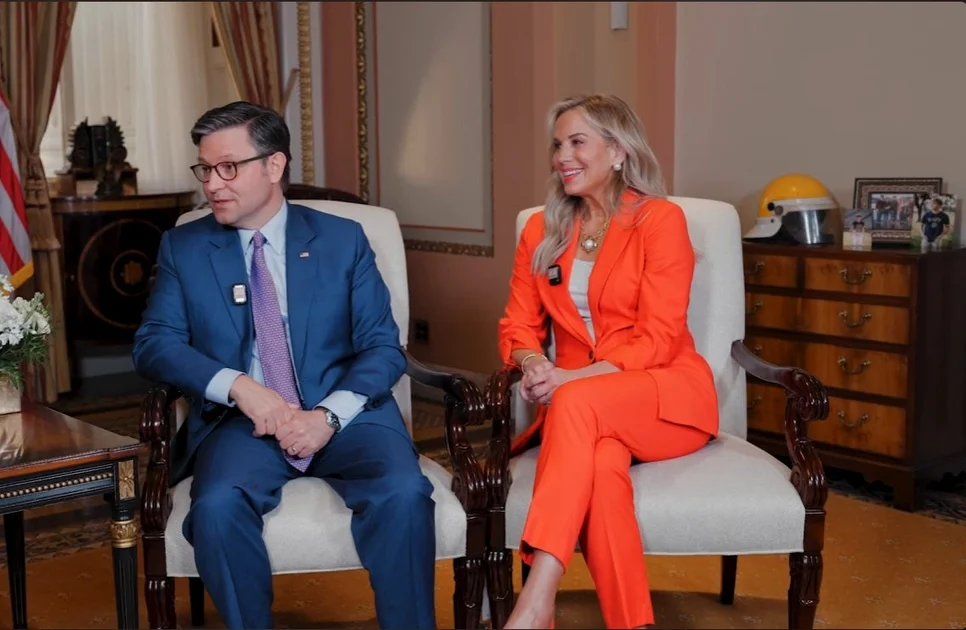
House Speaker Mike Johnson triggers debate with candid remarks on entitlement reform
House Speaker Mike Johnson (R-LA) has ignited a political firestorm by openly admitting that Republicans intend to pursue cuts to Social Security, Medicare, and Medicaid if they retain control of Congress after the 2026 midterm elections. During a radio interview aired on June 11, Johnson stated that mandatory spending programs—which he described as being on "autopilot"—must be "adjusted and fixed" to address the nation's $40 trillion debt. The comments, reported by multiple outlets including The Washington Post and Talking Points Memo, mark a rare instance of a top Republican leader publicly acknowledging what critics have long alleged: that the party's fiscal agenda targets the social safety net.
Johnson's remarks have drawn sharp criticism from Democrats and even some Republicans, who recognize the political peril of threatening popular entitlement programs. The speaker later attempted to walk back the comments, characterizing them as "fearmongering" and claiming they were taken out of context. However, the damage may already be done, as opposition researchers and Democratic campaign operatives seize on the quote to paint the GOP as a threat to retirement security.
A break from Trump's campaign vows
President Donald Trump has repeatedly pledged during his presidential campaigns to protect Social Security and Medicare, a promise that helped him win over older voters in key swing states. Johnson's admission directly contradicts that stance, exposing a potential rift between the White House and congressional Republicans. The Bulwark's Joe Perticone described Johnson's remarks as a "grave political error," noting that tampering with Social Security is widely considered a third rail in American politics.
The controversy comes at a particularly sensitive moment, with many forecasters predicting a Democratic wave in November. By foregrounding entitlement reform, Johnson has handed his opponents a clear and potent line of attack—one that could mobilize seniors and working-class voters who depend on these programs.
The stakes: What Johnson's plan might entail
Johnson has not provided specific details about what "adjusting and fixing" Social Security and Medicare would look like, but past Republican proposals offer clues. Project 2025, a policy blueprint drafted by allies of the Trump administration, called for raising the retirement age to 69 or 70, reducing disability benefits, and steering seniors toward privatized Medicare Advantage plans. The Heritage Foundation, a longtime advocate of entitlement reform, has similarly recommended allowing younger workers to opt out of Social Security, a move that critics say would bankrupt the system.
Democrats have been quick to highlight the hypocrisy in Johnson's position. While the speaker warns that entitlement spending is driving the debt, he helped shepherd through the "Big Beautiful Bill"—a massive tax cut package that the Congressional Budget Office estimates will add $3.4 trillion to the deficit over a decade. Similarly, the immigration enforcement bill passed by Republicans earlier this year is expected to increase the national debt by $72 billion, according to early CBO estimates. "Austerity only matters when Democrats are in charge," noted Nicole LaFond of Talking Points Memo, summarizing the double standard that many see in the GOP's fiscal messaging.
The politics of cutting popular programs
Johnson's gambit is particularly risky because Social Security and Medicare enjoy broad bipartisan support. A 2025 Pew Research poll found that 82% of Americans view Social Security as a top priority for government spending, and 76% say the same of Medicare. Older voters, who turn out at higher rates, are especially protective of these programs. By threatening them, Johnson risks alienating a key Republican constituency.
Moreover, the political landscape has shifted since the 2022 midterms, when Senator Rick Scott's proposal to sunset all federal programs—including Social Security—became a liability for the GOP. Democrats are already drawing parallels, using Johnson's comments to argue that the party has not learned its lesson.
Broader implications: A defining issue for 2026
The debate over entitlement reform is likely to become a central theme of the 2026 campaign. For Democrats, it offers a chance to rally voters around a popular issue and accuse Republicans of prioritizing tax cuts for the wealthy over the needs of ordinary Americans. For Republicans, the challenge is to convince voters that some form of reform is necessary to preserve the programs' long-term solvency—an argument that has historically fallen flat.
Johnson's remarks also highlight a deeper trend within the GOP: the tension between the party's deficit-hawk rhetoric and its willingness to embrace deficit-financed tax cuts. As the national debt climbs past $40 trillion, the pressure to address mandatory spending is likely to intensify. But as recent history shows, cutting entitlements remains one of the most perilous moves in American politics.
What comes next
Johnson and his allies will spend the coming weeks trying to contain the fallout, reiterating that no specific cuts have been proposed and that the party is committed to "saving" Social Security and Medicare. But the cat is out of the bag. Whether this proves to be a fleeting controversy or a defining moment of the midterm cycle depends on how effectively Democrats can weaponize it—and whether Republicans can offer a credible alternative that does not involve slashing benefits.
For now, Johnson's candid admission has done what few Democratic attacks could: it has put the GOP on the defensive over one of the most sensitive issues in American politics. As the campaign season heats up, the speaker's words are likely to echo in campaign ads and debate stages across the country, reminding voters of the high stakes involved.
Comments