
Meta's 'Watermelon' AI Model Catches Up to OpenAI's GPT-5.5, Internal Meeting Reveals
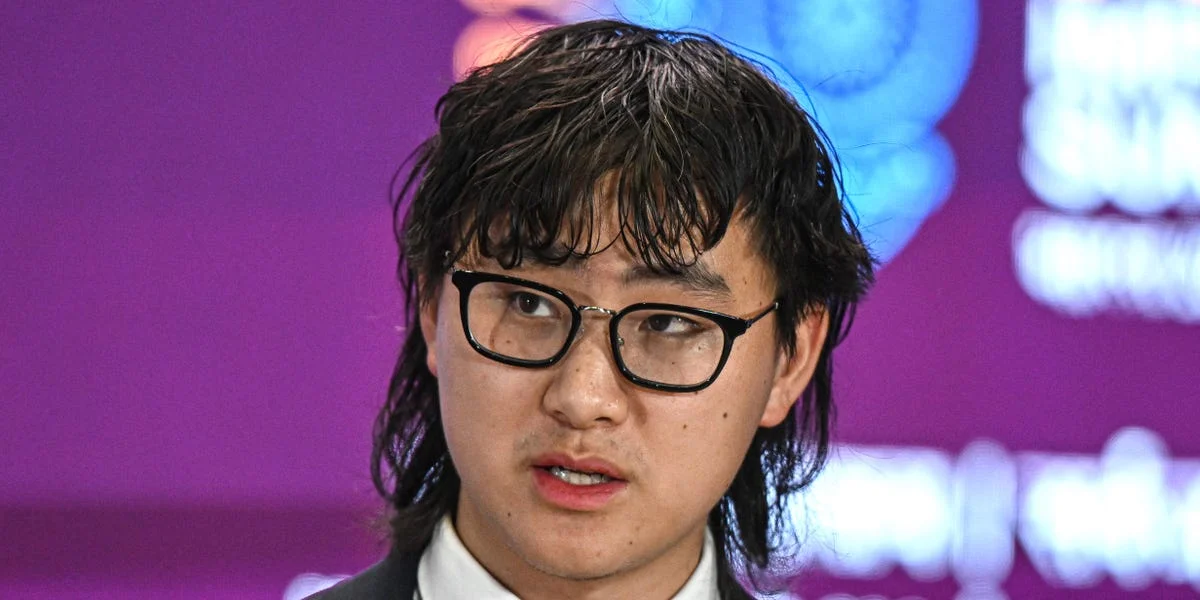
Meta's superintelligence chief Alexandr Wang told employees during an internal town hall on Thursday that the company's upcoming AI model, codenamed Watermelon, has reached parity with OpenAI's flagship GPT-5.5 model, according to two sources familiar with the meeting. Wang cited closely followed AI model benchmarks as the basis for the claim, though he did not specify which ones.
Wang described Watermelon as the successor to Avocado—the codename for Muse Spark, Meta's first model family released in April 2026. He emphasized that Watermelon uses an order of magnitude more compute than its predecessor. The internal announcement aligns with a post Wang made on X on Thursday, where he hinted at an upcoming update to Muse Spark that would deliver major improvements in coding and agentic capabilities.
When asked by a user when Meta would produce a coding model competitive with Anthropic's Claude Opus, Wang replied that it would happen "pretty soon" and that users would appreciate what the company has "cooking." Meta declined to comment on the town hall details, and OpenAI did not respond to a request for comment.
The Stakes: Meta's Long Game to Catch the AI Leaders
Meta's AI ambitions have long centered on closing the gap with OpenAI, Google, and Anthropic—a goal that has proven elusive despite massive investments in chips, data centers, and talent. The company has struggled to convince developers and enterprise customers that its open-source models belong at the cutting edge. If Wang's assessment is accurate, Watermelon represents the clearest signal yet that Meta's aggressive strategy is beginning to pay off.
OpenAI's GPT-5.5, released in April 2026, is considered a highly capable flagship model. Just last month, OpenAI debuted an even more powerful model, GPT-5.6, but has not yet released it to the public at the request of the U.S. government. This means that while Meta may have matched GPT-5.5, the frontier continues to shift rapidly.
The timing is critical. As July 2026 unfolds, the AI industry is watching for signs of which company can sustain the pace of improvement. Meta's approach—open-source, massive compute, and aggressive talent acquisition—mirrors the strategy CEO Mark Zuckerberg has championed. At the same time, unusual weather patterns are affecting global events. For instance, extreme heat alerts blanket Europe and US as July 4 weekend begins, and the Tour de France faces historic heatwave threats as Tadej Pogacar chases a fifth title. These parallel crises highlight the increasingly interconnected challenges of climate and technology.
What the Watermelon Claim Means for the AI Race
If Watermelon truly matches GPT-5.5 on benchmarks, it would be a testament to the massive compute resources Meta is funneling into its AI division. Wang noted that Watermelon uses an order of magnitude more compute than Avocado, suggesting that Meta is scaling its infrastructure at an extraordinary rate. However, benchmarks are only one measure of success. Real-world performance, ease of deployment, and ecosystem adoption will ultimately determine whether Watermelon can shift developer loyalty away from OpenAI.
Meta's open-source philosophy could be a differentiator. Unlike OpenAI, which has increasingly locked down its models behind APIs and licensing, Meta releases its models freely. This approach has built a loyal community of developers who value transparency and customization. But it also means that competitors can potentially build on Meta's work, reducing the company's competitive advantage.
Broader Implications: A Market at an Inflection Point
The AI landscape is entering a new phase where multiple models approach similar benchmark performance. OpenAI, Google, Anthropic, and Meta all field models that are formidable in different areas. GPT-5.6 remains unreleased, and Anthropic's Claude Opus continues to be a standard for safety and reasoning. Meanwhile, the global context adds urgency: alongside technological leaps, the world is grappling with extreme weather. The Tour de France 2026 faces historic heatwave threat as Pogacar chases fifth title, a reminder that climate pressures require smarter tools for prediction and adaptation.
Investment and Talent Blitz
Meta's strategy has been capital-intensive. Zuckerberg's talent blitz has raided top labs from OpenAI, Google DeepMind, and Anthropic, offering premium compensation and the promise of working on open-source AI at massive scale. Wang's comparison between Avocado and Watermelon underscores that the compute budget is accelerating, likely into the billions of dollars.
This spending is not without risk. Meta's AI division is expected to become a major cost center, and the company must demonstrate that its models can power revenue-generating products. Meta is integrating AI into its social platforms, advertising systems, and virtual reality hardware. A model that matches GPT-5.5 could enhance these products significantly, potentially driving user engagement and ad revenue.
The Unreleased Frontier: GPT-5.6
It is important to note that OpenAI's GPT-5.6, which is more powerful than GPT-5.5, remains unreleased due to government requests. This creates a moving target. Meta's catch-up to GPT-5.5 is a milestone, but the race continues. If and when GPT-5.6 is released, the gap could widen again—unless Watermelon itself receives an update or Meta reveals an even more powerful model.
What This Changes for the Industry
For developers, the Watermelon announcement means more choices and potentially more competition among top-tier AI providers. For the first time, Meta has a credible claim to the leading edge, which could accelerate adoption of its open-source models in enterprise settings that previously relied on OpenAI or Anthropic.
For policymakers, the news underscores the rapid pace of AI development. With models advancing every few months, calls for regulation are growing louder. The U.S. government's request to delay GPT-5.6's release shows an emerging but still nascent regulatory framework. If Meta's open-weight models become as capable as closed ones, safety and alignment challenges become more distributed, complicating governance efforts.
In the broader context, as the Northern Lights are forecasted to appear in 19 US states tonight, the week's headlines blend natural wonders with technological marvels. Meta's Watermelon model, if confirmed, is a significant achievement—but in the AI race, catching up is only the first step. Staying ahead requires relentless innovation, and every player knows the next breakthrough could come from any direction.
Comments