The Context Behind Macron's Submarine Speech
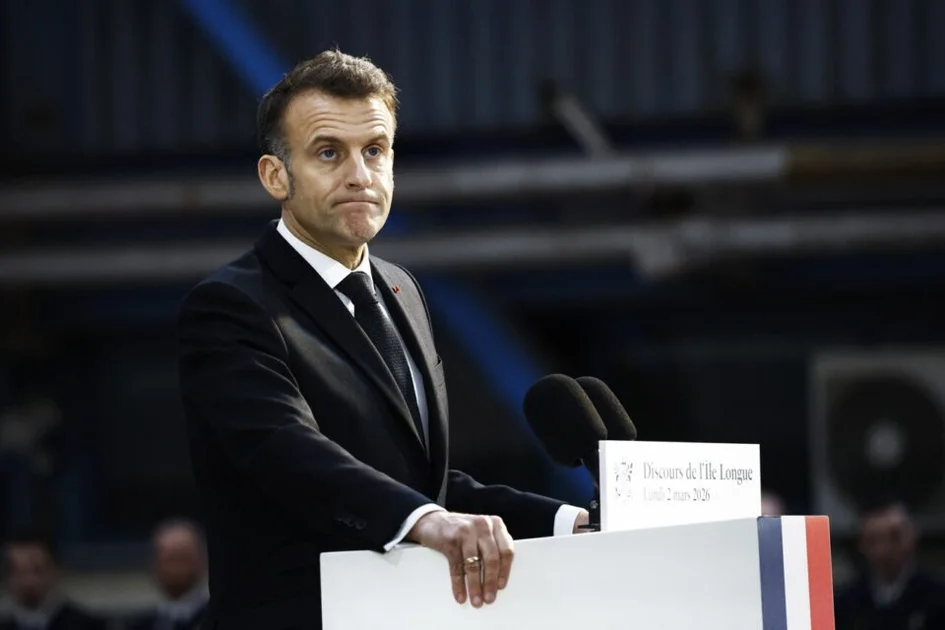
French President Emmanuel Macron has consistently used high-profile speeches to assert France's strategic autonomy on the world stage, and his address focused on submarine capabilities stands as one of the most significant defense policy statements of his presidency. Delivered against a backdrop of shifting global alliances and heightened maritime competition, the speech underscored France's determination to remain a top-tier naval power.
The geopolitical timing was far from coincidental. The announcement of the AUKUS partnership in September 2021 — a trilateral security alliance between Australia, the United Kingdom, and the United States — triggered a diplomatic earthquake in Paris. Australia's abrupt cancellation of a €56 billion submarine contract with France's Naval Group in favor of American nuclear-powered submarines left French officials furious. Macron's subsequent speech on submarines served as both a strategic reaffirmation and a diplomatic counter-offensive.
The AUKUS Fallout and France's Response
The AUKUS crisis represented one of the most serious ruptures in Franco-American relations in decades. France temporarily recalled its ambassadors from Washington and Canberra — an unprecedented diplomatic gesture — signaling the depth of Paris's anger. Macron's speech addressed this context directly, framing France's submarine program not merely as a commercial enterprise but as a cornerstone of national sovereignty and European strategic independence.
He emphasized that France's nuclear-powered submarine fleet, known as the Force Océanique Stratégique (FOST), remains central to the country's nuclear deterrence. With four Triomphant-class ballistic missile submarines (SSBNs) continuously patrolling the Atlantic, France maintains a second-strike capability that Macron described as non-negotiable and entirely sovereign.
Key Points of the Address
Macron's speech covered several interconnected themes that went beyond the immediate AUKUS controversy, addressing the long-term trajectory of French naval strategy and European defense cooperation.
Nuclear Deterrence and Submarine Modernization
A central pillar of the address was France's commitment to modernizing its submarine fleet. The third-generation SNLE (Sous-marins Nucléaires Lanceurs d'Engins), known as the SNLE 3G program, was highlighted as a generational investment in France's deterrence posture. These next-generation submarines are expected to enter service in the 2030s, incorporating advanced stealth technologies, new ballistic missiles, and enhanced communication systems.
Macron made clear that this modernization effort is not subject to budget compromises, reflecting a broader increase in French defense spending toward the NATO target of 2% of GDP — a goal France reached in recent years after sustained investment under the Military Programming Laws (Lois de Programmation Militaire).
European Strategic Autonomy
Perhaps the most politically charged section of the speech concerned European strategic autonomy. Macron reiterated his long-standing argument that Europe cannot rely indefinitely on American security guarantees, particularly in an era of growing transatlantic uncertainty. He called on European partners to consider how France's nuclear deterrent — the only one remaining in the European Union following Brexit — could contribute to a broader European defense architecture.
This was a carefully worded invitation, stopping short of proposing shared nuclear command but opening the door to deeper conversations about burden-sharing and collective security. Some European partners received the proposal cautiously, wary of the legal and political complexities surrounding nuclear doctrine.
Industrial and Economic Dimensions
Beyond the strategic narrative, Macron's speech carried important messages for France's defense industrial base. Naval Group, the state-controlled shipbuilder responsible for France's military submarines, employs tens of thousands of workers across facilities in Cherbourg, Brest, and Toulon. The loss of the Australian contract threatened not only revenue but also the skilled workforce pipelines essential for maintaining expertise in nuclear submarine construction.
Rebuilding Export Credibility
Macron acknowledged that France needed to rebuild its credibility as a defense exporter following the AUKUS shock. He pointed to ongoing negotiations with other nations interested in French submarine technology, including conventional Attack-class variants. Countries in Southeast Asia, South America, and the broader Indo-Pacific were cited as potential partners, reflecting France's global naval footprint and its network of overseas territories that give it a unique presence across multiple oceans.
The speech also referenced the importance of maintaining domestic industrial capacity, with Macron pledging continued state investment in research and development for underwater warfare technologies, including autonomous underwater vehicles and advanced sonar systems.
Diplomatic Aftermath and Strategic Lessons
In the months following the speech, France gradually restored diplomatic relations with the United States and Australia, though underlying tensions persisted. Macron's addresses helped reframe the AUKUS episode from a bilateral dispute into a broader debate about multilateralism, transparency among allies, and the future architecture of Western security cooperation.
Analysts noted that the speech successfully repositioned France as a principled actor defending not just commercial interests but a coherent vision of a multipolar, rules-based international order. By grounding his arguments in France's unique nuclear status and its global maritime presence, Macron reinforced the narrative that Paris brings irreplaceable assets to Western alliances — assets that should not be taken for granted.
The submarine speech ultimately stands as a defining moment in Macron's defense diplomacy: a blend of strategic ambition, industrial advocacy, and a pointed reminder to allies that France expects to be treated as an equal partner in shaping the security architecture of the 21st century.
Comments