
Death of a Whistleblower
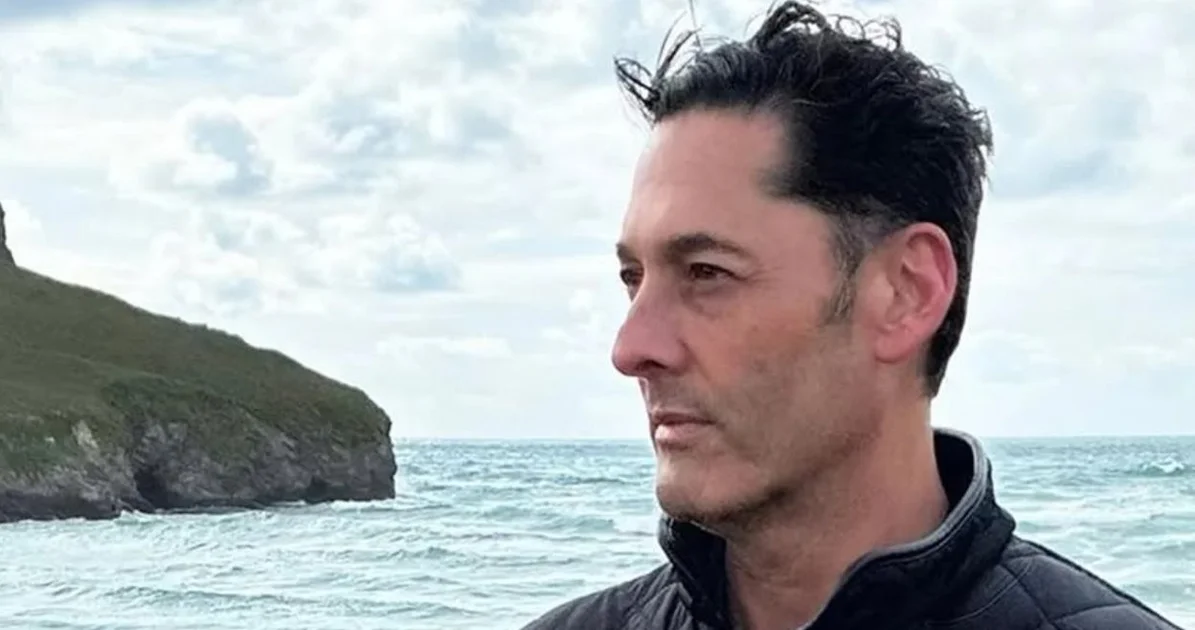
Simon Andriesz, a British former Wall Street banker who alerted Congress to Commerce Secretary Howard Lutnick's business ties to Jeffrey Epstein, was found dead last week in an apparent suicide. He was 57.
The death was confirmed by Andy Agathangelou, founder of the Transparency Task Force, a whistleblowing advocacy group that had hosted events with Andriesz. "It is with great sadness that we share the news that Simon Andriesz, a valued member of our community, passed away last week," Agathangelou said in a statement reported by The Banker and other outlets.
Andriesz, who lived in Cornwall, England, had spent more than 35 years in financial markets, including a stint as a managing director at BGC Group, the brokerage firm then led by Lutnick. He rose to public prominence earlier this year after providing House Oversight Committee lawmakers with a 2018 email chain in which Lutnick and Epstein discussed Adfin, a digital advertising startup they had both invested in.
According to multiple reports, Andriesz died by suicide. His body was discovered days after he posted a final message on X (formerly Twitter) that has since gone viral, in which he described the devastating personal toll of his whistleblowing and teased further revelations.
"I am the British whistleblower who reported evidence concerning Howard Lutnick, his links to Jeffrey Epstein, and Cantor Fitzgerald and BGC to the FBI in 2020–21," the post read. "The personal consequences of whistleblowing, and the retaliation I say followed, have been devastating for my family and me… I intend to share more of the evidence and the story behind what happened."
That post would be his last.
The Evidence That Shook Washington
Andriesz's decision to come forward was not impulsive. Years before he approached Congress, he had alleged to the FBI that Lutnick maintained undeclared business ties to Epstein. According to the BBC, the FBI did not investigate those accusations.
His breakthrough came when he searched the Justice Department's massive release of Epstein-related files for "HWL," Lutnick's initials. Andriesz knew from his years at BGC Partners that executives there often used initials in internal communications. The search yielded a 2018 email chain between Lutnick and Epstein discussing Adfin — correspondence that appeared to contradict Lutnick's public statements about the timeline of their relationship.
Lutnick had previously told a New York Post podcast that he first met Epstein in 2005 after moving next door to him in Manhattan, but said he soon cut off contact after being disturbed by Epstein's massage room during a tour of his townhome. The email chain, however, showed the two men remained in friendly contact until at least 2018 — a decade after Epstein pleaded guilty to soliciting prostitution from a minor in 2008, and just a year before Epstein died in jail while awaiting trial on federal sex trafficking charges.
In February, Lutnick appeared before the Senate Appropriations Committee and acknowledged that he and his family had traveled to Epstein's notorious island in 2012. "I did have lunch with him as I was on a boat going across on a family vacation," Lutnick said. "My wife was with me, as were my four children and nannies… We had lunch on the island. That is true. For an hour."
During a May hearing before the House Oversight Committee, Lutnick claimed he had only learned that Epstein was an investor in Adfin when the Epstein files were released this year.
Andriesz's findings were featured in a July episode of the BBC's File on 4 Investigates titled "The Epstein Files: Lutnick, the Royals and the British Whistleblower." Shortly after the episode aired, Andriesz spoke at a Transparency Task Force event about what he described as the UK regulator's mistreatment of whistleblowers, detailing the personal cost of coming forward to his career, his health, and his family.
Lutnick has denied any wrongdoing and has not been charged with a crime. In a statement, he said: "I unequivocally condemn the conduct attributed to Jeffrey Epstein and everyone who participated in his illegal activities. The survivors of his crimes deserve our respect and support."
A Troubling Pattern of Banker Suicides
Andriesz's death is the latest in what critics describe as a disturbing pattern of suspicious deaths connected to the Epstein scandal. His passing immediately drew attention from conspiracy theorists and even some elected officials.
Rep. Thomas Massie (R-KY), a longtime advocate for transparency in the Epstein files, commented on the death, though he stopped short of alleging foul play. The final X post from Andriesz's account has only fueled speculation, with social media users describing its contents as "chilling" and pointing to the timing of his death so soon after he promised to publish more evidence.
Kirby Sommers, a writer who has covered the Epstein case extensively, noted on her Substack that there have been "an incredibly large number of banker suicides connected to the Jeffrey Epstein-linked power elite." She wrote that Andriesz's death was "another banker suicide" and promised to continue covering the story.
The circumstances of Andriesz's death remain under investigation. Authorities have not released an official cause of death, though multiple outlets have reported it as suicide. The lack of official details has done little to quell online speculation, which has been amplified by the timing: Andriesz died just months after his explosive testimony to Congress and days after teasing new disclosures.
The Human Cost of Whistleblowing
Beyond the political implications, Andriesz's death has renewed focus on the personal toll exacted on whistleblowers, particularly those who take on powerful figures in finance and government.
In his final months, Andriesz spoke candidly about the retaliation he said he faced. He claimed he was fired from BGC after raising internal concerns about accounting irregularities — a termination he believed was directly tied to his decision to flag Lutnick's Epstein connections to the FBI years earlier.
"He said the retaliation had already wrecked his life, and that he was about to publish more," wrote German author and journalist [name withheld], who had been in contact with Andriesz, according to Raw Story.
The Transparency Task Force, which confirmed his death, has long campaigned for stronger legal protections for whistleblowers in the UK. Andriesz had become a vocal advocate for reform, sharing his story at events and in interviews. His case highlights the precarious position of individuals who expose wrongdoing by the powerful, especially when the alleged misconduct involves figures at the highest levels of government and business.
Agathangelou, of the Transparency Task Force, described Andriesz as "a valued member of our community" and said his death was a profound loss. The group has called for a full investigation into the circumstances surrounding his death.
Political Fallout and Unanswered Questions
Andriesz's allegations have already had political consequences. The email chain he provided to Congress directly contradicted Lutnick's earlier statements about the extent and duration of his relationship with Epstein. While Lutnick has since acknowledged visiting Epstein's island in 2012, he maintains that he was unaware of Epstein's crimes at the time and cut ties once he learned of them.
But the 2018 emails suggest a business relationship that persisted well beyond that point. The Adfin startup, in which both Lutnick and Epstein invested, was reportedly active until at least 2014, and the email chain shows the two men still discussing it years later. That timeline has raised questions about whether Lutnick misled Congress during his confirmation hearings and subsequent testimony.
The House Oversight Committee has not announced whether it will open a formal investigation into the discrepancies. A spokesperson for Lutnick declined to comment on Andriesz's death, calling it a "personal tragedy" unrelated to the Commerce Secretary.
Meanwhile, the Justice Department has faced renewed criticism over its handling of the Epstein files and its failure to act on Andriesz's earlier FBI complaints. The agency has not commented on why it declined to investigate his allegations in 2020–21.
Broader Implications: Trust, Transparency, and the Epstein Legacy
Andriesz's death arrives at a moment of heightened public scrutiny of the Epstein network and the powerful individuals associated with it. The release of millions of pages of Epstein-related documents has led to a steady drip of revelations about business deals, social connections, and failed oversight.
For many observers, Andriesz's story encapsulates the challenges faced by whistleblowers who attempt to hold the wealthy and well-connected accountable. His case also underscores the limits of official investigations: despite providing evidence to both the FBI and Congress, his allegations have yet to result in any charges against Lutnick or others.
The online response to his death — a mix of grief, anger, and conspiracy theories — reflects a broader erosion of trust in institutions. The fact that his final post promised more evidence, only for him to die days later, has only deepened suspicions for some. Others caution against jumping to conclusions, noting that suicide is a complex personal tragedy and that no evidence of foul play has emerged.
Still, the questions remain. Why did the FBI decline to investigate Andriesz's initial complaints? Why did it take a BBC investigation to bring his findings to light? And what, if anything, will Congress do with the evidence he provided?
As of now, those questions have no clear answers. What is clear is that Simon Andriesz, a banker who spent decades in the financial industry, chose to risk everything to expose what he saw as a dangerous connection between a top government official and a convicted sex offender. In doing so, he became a symbol of both the power of whistleblowing and the heavy price it can exact.
His death has not silenced the story. If anything, it has amplified it, ensuring that the questions he raised will continue to be asked.
Comments