
Little Fire Erupts South of Pleasanton, Forcing Mass Evacuations
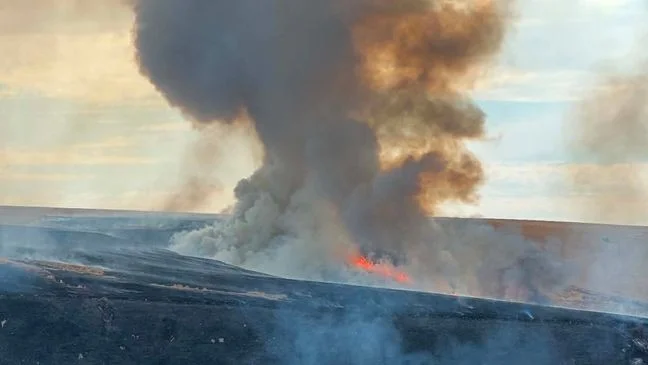
A rapidly spreading wildfire dubbed the Little Fire ignited Tuesday afternoon south of Pleasanton in Alameda County, exploding from a small vegetation fire to a 700-acre inferno within hours and prompting mandatory evacuation orders for several communities, including the exclusive Ruby Hill gated neighborhood. Cal Fire confirmed the blaze started before 3 p.m. on July 21, 2026, in the area of Little Valley Road and Hubbard Lane in the unincorporated community of Sunol, and as of 4:50 p.m. remained at zero percent containment.
Evacuation orders have been issued for zones ALC-072, PLS-079, PLS-080, PLS-081, PLS-082, and PLS-103, covering areas north of State Route 84/Vallecitos Road, east of Interstate 680, and extending north and east toward Isabel Avenue. The Ruby Hill community, home to The Club at Ruby Hill golf course, was placed under mandatory evacuation as flames advanced. The Pleasanton Senior Center at 5353 Sunol Blvd. has been established as a temporary shelter for displaced residents by the Alameda County Office of Emergency Services.
Multiple agencies are responding, including Cal Fire, the Alameda County Fire Department, and the Livermore-Pleasanton Fire Department. Firefighters have requested at least three air tankers and a helicopter to support ground crews. The fire is burning in steep, dry terrain, complicating containment efforts.
Why This Fire Matters: Stakes for the Tri-Valley Region
The Little Fire poses an immediate threat to one of the Bay Area's most affluent and densely populated suburban corridors. The Tri-Valley region, encompassing Pleasanton, Livermore, and Dublin, has seen rapid residential and commercial development over the past decade, pushing communities like Ruby Hill and Callippe Preserve closer to wildland-urban interface zones. The fire's location south of Pleasanton, near the decommissioned Vallecitos Nuclear Center and the Callippe Preserve Golf Course, places thousands of homes at risk.
Evacuation warnings have also been issued for areas north of the fire, extending to Vineyard Avenue and Shadow Cliffs Beach, urging residents to prepare for possible evacuation orders. The Pleasanton Police Department issued an alert urging immediate departure for those in mandatory zones. As of Tuesday evening, no structures have been reported lost, but the fire's rapid growth — from 150 acres to 700 acres in under two hours — underscores the danger.
This fire is the latest in a troubling pattern of early-season wildfires in California. While the peak of wildfire season typically arrives later in the summer and fall, dry conditions and above-average temperatures have fueled fires across the state. The Little Fire began during a heat wave that pushed temperatures into the triple digits in inland areas, further drying out vegetation. Climate scientists have warned that longer, more intense fire seasons are becoming the new normal, and the Little Fire is a stark reminder of that reality.
Firefighting Response and Challenges
Crews are battling the blaze from both air and ground, but the terrain presents significant challenges. The fire is burning in Sunol's rugged hills, which are difficult to access by vehicle. Air support has been critical, with helicopters making water drops and air tankers laying retardant lines. Cal Fire's incident command has established a unified command with local agencies to coordinate evacuations and suppression efforts.
By Tuesday evening, no containment lines had been established, and officials warned that shifting winds could push the fire toward more populated areas. A smoke plume visible for miles has drifted over Pleasanton, Livermore, and even into parts of the East Bay, prompting air quality advisories. The Alameda County Fire Department urged residents to stay indoors if smoke becomes heavy and to monitor local alerts.
The cause of the fire remains under investigation. No injuries have been reported, but dozens of fire engines, hand crews, and dozers are deployed. The Watch Duty app, which tracks active wildfires, reported that the fire's perimeter had expanded quickly, fueled by dry grass and oak woodland.
Broader Implications: A Community on Edge
The Little Fire is more than a local emergency; it is a test of the region's preparedness for wildfire season. The Tri-Valley has long been considered a relatively safe zone compared to the fire-prone hills of Napa and Sonoma, but recent fires have blurred those lines. The 2020 SCU Lightning Complex fire burned tens of thousands of acres in the same general area, and the 2022 Marsh Fire near Brentwood reminded residents that the East Bay hills are not immune.
This fire also highlights the emotional and logistical toll of recurring disasters. Many Bay Area residents have become accustomed to evacuation drills, go-bags, and air quality warnings. But each new fire brings fresh anxiety. The Ruby Hill community, with its mansions and manicured golf course, is now confronted with the same threat that has destroyed homes in Paradise, Santa Rosa, and Boulder Creek.
On a broader scale, the Little Fire fits into a growing national conversation about climate adaptation and the cost of inaction. California has invested heavily in fire prevention — clearing vegetation, hardening homes, and expanding early warning systems — but the volume and intensity of fires continue to rise. The Little Fire's rapid growth shows that even well-prepared communities can be caught off guard.
Looking Ahead: What's Next for Pleasanton and Sunol?
As night falls, the immediate priority is containment and evacuation. Crews will work through the night, aided by cooler temperatures but hindered by darkness. The evacuation order is likely to remain in place until containment lines are secured and the threat of spot fires is eliminated. Officials have not provided a timeline for when residents may return.
The Little Fire also raises questions about development in fire-prone areas. Ruby Hill and other gated communities are popular for their privacy and views, but they sit adjacent to wildlands that are primed to burn. Local governments may face renewed pressure to update zoning laws, enforce defensible space requirements, and invest in community-wide fire-resistant infrastructure.
For now, the focus is on protecting lives and property. The Pleasanton Senior Center shelter is accepting evacuees and their pets. Red Cross volunteers are on site. And the rest of the Bay Area watches closely — as it always does — knowing that the next fire could be just around the corner.
In related news, the challenges faced by communities on the edge of fire-prone areas echo those seen elsewhere, such as in Jeremy Clarkson's farm struggles with fire risk, a reminder that fire safety is a growing concern for both rural and suburban property owners. Meanwhile, broader policy debates continue: Senator Elizabeth Warren has revived a student loan bill to crack down on colleges over debt crisis, a separate but equally pressing issue for many Californians.
Stay tuned for further updates as this developing story unfolds.
Comments