
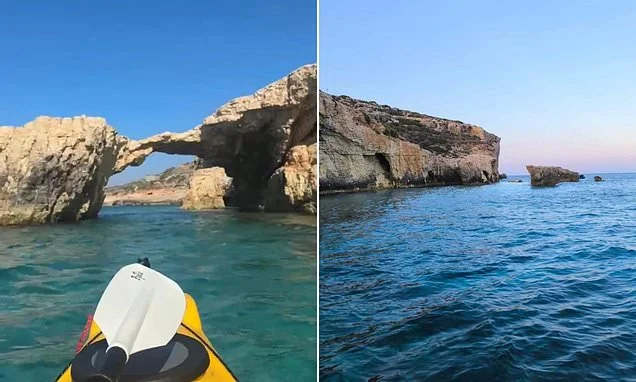
A Deadly Splash in the Blue Lagoon
The idyllic coast of Comino, Malta, became the scene of a horrific tragedy on Saturday evening when the iconic natural rock arch known as the “Kissing Elephants” collapsed, crushing a 26-year-old Chinese man riding a jet ski beneath it. The formation crumbled into the sea shortly after a 32-year-old American tourist leaped from its rocky ledge into the water.
Immediate Aftermath and Rescue Efforts
According to reports from the Times of Malta and corroborated by local authorities, the collapse occurred at approximately 7 p.m. local time on June 27. The victim, who has not been publicly identified, was pinned under a massive boulder on the seabed. His body was recovered the following day, Sunday, after an extensive search by the Armed Forces of Malta.
A 27-year-old Chinese woman who was a passenger on the same jet ski sustained serious but non-life-threatening injuries. She was pulled from the water by emergency services and transported to Gozo General Hospital, where she is expected to recover. The American tourist who jumped from the arch was rescued by a passing boat and was treated at the scene. He did not require hospitalization.
A Landmark Lost in an Instant
The collapsing arch drew immediate reactions from tour operators and officials. Outdoor Explorers Malta, a local tour group whose guests were reportedly involved in the incident, released a statement on Facebook expressing profound grief. “It is with deep sadness that we must report that one person has lost their life in this incident,” the group wrote. “We extend our deepest condolences to the family, friends, and loved ones of the victim. This is an immeasurable tragedy.” The group added, “The famous Kissing-Elephant Arch at Comino has collapsed. One of Malta's most iconic natural landmarks has changed forever. Nature is powerful, and today we witnessed another reminder that these beautiful rock formations are constantly evolving.”
Why the Kissing Elephants Mattered
The “Kissing Elephants” formation, located on the island of Comino between Malta and Gozo, was a beloved natural wonder. Named for its striking resemblance to two elephants touching trunks, the limestone arch stood as a dramatic coastal feature, drawing tourists from around the globe to photograph and dive from its elevated perch. The site’s proximity to the world-famous Blue Lagoon—a crystalline bay that attracts thousands of visitors annually—meant that the arch was frequently surrounded by boats, kayaks, and jet skis. Its collapse marks the loss of a geological treasure that had been a defining image of Malta's rugged coastline for generations.
Echoes of the Azure Window
This is not the first time a major natural arch in Malta has crumbled. In March 2017, the famed Azure Window on the island of Gozo collapsed into the sea during a storm. That formation, a soaring limestone arch made famous by its appearance in Game of Thrones, was a major tourist draw. While the Azure Window’s collapse was attributed to natural coastal erosion, the “Kissing Elephants” disaster introduces a shocking human element: the potential that a tourist’s leap may have directly triggered the rockfall.
A Warning Ignored?
As investigators piece together the sequence of events, a critical detail has emerged. Michelle Attard Tonna, a local kayaker, told the Times of Malta that she had noticed a visible crack in the arch approximately two weeks before it collapsed. She described the formation as appearing vulnerable, with the damage visibly weakening the structure. Her observation raises urgent questions about whether the site should have been closed or warnings posted, especially given that it was a popular swimming and diving location. However, no official limitations on access had been put in place.
Broader Implications and Ongoing Questions
A Maltese magistrate has now opened a formal inquiry into the incident. Investigators are expected to examine precisely what caused the arch to give way—whether the American tourist’s jump was the decisive trigger, a factor in a chain of cumulative stress, or simply coincidental timing. They will also probe whether any safety measures were lacking at the site, which, unlike the Blue Lagoon, was not a monitored beach but an open natural formation accessible by sea.
The tragedy has already sparked a wider conversation about the safety of natural landmarks that are heavily trafficked by visitors without structural supervision. Geologists and risk experts often caution that popular rock formations—from arches to sea stacks—are inherently unstable, subject to erosion, freeze-thaw cycles, and stress from human activity. While a single dive is unlikely to bring down a stable formation, a compromised structure may have been pushed past its limit. The incident parallels other cases worldwide where tourists have inadvertently triggered collapses of fragile sandstone or limestone features, sometimes with fatal consequences.
Calls for Better Monitoring
The death has prompted renewed calls from local environmental and tourism groups for better monitoring of Malta’s vulnerable coastline. The Mediterranean nation’s tourism economy relies heavily on its dramatic landscape, but disasters like this underscore the need to balance access with preservation and public safety. The outcry may lead to stricter regulations, including possible restrictions on diving from unstable rock faces or requiring boaters to maintain a safe distance from formations known to contain cracks.
A Family’s Grief and a Community’s Shock
The victim, described by authorities as a Chinese tourist on holiday, was reportedly part of a tour group. His companion, who was critically injured, remains hospitalized. Their identities have been withheld pending notification of next of kin. The broader tourist community on Comino and across Malta has been left in shock. Many locals who grew up around the “Kissing Elephants” expressed disbelief that a formation they had seen countless times could vanish so suddenly and with such a human cost.
Conclusion: A Changing Landscape
The collapse of the “Kissing Elephants” is a somber reminder that nature—and tourism—carry inherent risks. As Malta mourns a lost life and a lost landmark, the incident is likely to reshape how the island nation manages and communicates the dangers of its most beautiful but fragile natural attractions. The tragedy serves as a stark warning for travelers and local authorities alike: even the most serene scenes can turn perilous in seconds.
For ongoing coverage of world events and travel safety, check our report on France Braces for Second July Heat Wave Amid Record June Canicule Deaths. Additionally, learn about global infrastructure resilience in Asteroid Day Marks a Decade of Progress, But Scientists Warn of Gaps in Planetary Defense.
Comments