
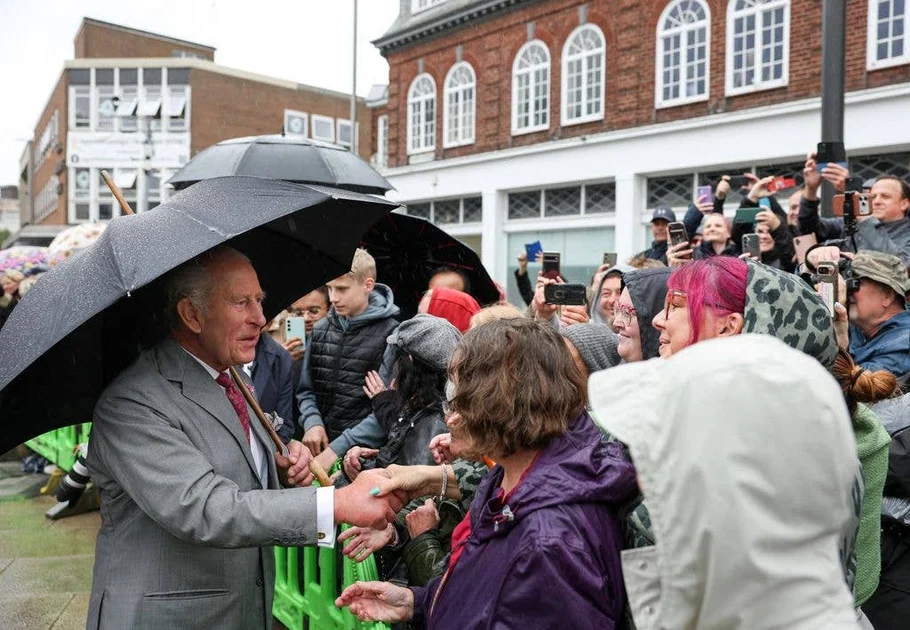
Hundreds Brave Rain for King Charles as He Tours Grimsby’s Community Hubs
King Charles III visited Grimsby and Cleethorpes on Thursday, June 11, 2026, drawing hundreds of well-wishers who stood in steady rain for a chance to greet the monarch. The visit, which lasted several hours, focused on the town’s grassroots efforts to revitalise its economy and social fabric through local leadership and a £20 million government grant.
His Majesty’s itinerary included three key stops: the Horizon Youth Zone, the CARE Hub, and Blundell Park, home of Grimsby Town FC. At each location, the King met with community leaders, business owners, residents, and young people who are actively shaping the town’s future. The tour underscored the royal family’s long-standing interest in social cohesion and regional regeneration.
According to reports from Grimsby Live and GB News, the King’s visit was marked by informal exchanges, including an impromptu walkabout where he apologised to onlookers for the wet weather. “I’m so sorry you got so wet,” he told the crowd, drawing laughter and cheers.
The King’s First Stop: Horizon Youth Zone
The King began his tour at the Horizon Youth Zone, a facility that opened in February 2026 and has rapidly grown to nearly 4,000 members. The centre offers out-of-school activities for young people aged 8 to 19, and up to 25 for those with additional needs. It features a climbing wall, a sports hall, a training kitchen, and spaces for creative and performing arts.
During his visit, Charles toured the facilities and unveiled a commemorative plaque. He watched teenagers prepare pizza muffins in the training kitchen and spoke with local schoolchildren, cadets, and scouts. When one girl mentioned she had missed a maths lesson to attend, the King quipped, “I have my uses.”
Sophia, a mother who attended with her 10-year-old daughter Rose, told the BBC: “It’s nice for him to see what we are trying to do for the younger kids.” Rose, who uses the youth zone, said she was “very excited” to see the King.
The CARE Hub: A ‘Public Living Room’ for Crisis Support
From the youth zone, Charles proceeded to the CARE Hub on Victoria Street West. The centre operates as a “public living room,” providing practical support for people in crisis, including help with housing, mental health, and debt. It also runs a food pantry and a furniture recycling project.
The King met staff and beneficiaries, including Liam Atkinson, 26, who turned to the hub after his marriage broke down. Atkinson said he lost his house and his job within a year, but the project helped him get back on his feet. He now has a flat for himself and his three-year-old son. “They changed my life. All the staff here are absolutely amazing,” he told reporters.
Charles listened intently to Atkinson’s story and spoke with other service users about the challenges they faced. The visit highlighted how local charities are filling gaps left by strained public services.
Blundell Park: A Shirt, a Mariner, and a Vision for the Future
The final stop of the day was Blundell Park, where the King met with the “Our Future” collective. This group of local organisations and residents is spearheading the “Grimsby Together” initiative, which uses a £20 million government grant to invest in long-term priorities such as urban greening and housing.
Before leaving, the King was presented with an official Grimsby Town FC shirt by the club’s mascot, the Mighty Mariner. Jason Stockwood, co-owner of the club, said: “For The King to come to Grimsby to see the way the town is developing is such an endorsement of everything Our Future is doing. It is a team effort and I feel extremely proud.”
Our Future chairman James Perry added: “Grimsby is full of talent.”
A Light Moment: ‘Alright Darling?’
One memorable moment came when Francine Orr, who works for the club, accidentally greeted the King with “Alright darling?” She immediately apologised, but Charles reportedly replied: “Oh no, that’s fine. I like it.” The exchange was widely shared on social media and captured the informal, approachable tone of the visit.
Why the Grimsby Visit Matters: A Royal Seal on Local Revival
King Charles’s visit to Grimsby comes at a time when many post-industrial towns in the UK are struggling to redefine themselves after decades of economic decline. Grimsby, once a major fishing port, has faced high unemployment, depopulation, and social deprivation. The town’s transformation efforts are being watched closely as a potential model for other communities.
The visit also coincides with a busy royal weekend. According to HELLO! magazine, Charles is preparing for Trooping the Colour, the annual ceremony celebrating the monarch’s official birthday. Other royals were also active: Princess Anne visited Vauxhall and Edinburgh, and Prince William was in Norfolk. The King’s Grimsby tour underscored his commitment to regional engagement even amid a packed schedule.
Additionally, the royal family is mourning the tragic death of Thailand’s Princess Bajrakitiyabha, who died at 47 after a three-year coma, as reported in HELLO!. The King sent condolences to the Thai royal family, but his own public duties continued without interruption.
Broader Implications: The Monarchy’s Role in Community Cohesion
The Grimsby visit reflects a broader trend in the modern monarchy: an emphasis on grassroots engagement and social impact. Under King Charles, the royal family has increasingly focused on issues such as sustainability, youth opportunity, and community resilience. This approach mirrors the late Queen Elizabeth II’s style, but with a more direct emphasis on local regeneration.
The event also highlights the continued public appetite for royal appearances. Despite debates about the monarchy’s cost and relevance, events like this draw large, enthusiastic crowds. The King’s ability to connect with ordinary people—whether by joking with a schoolgirl or accepting a casual greeting—helps maintain the institution’s popularity.
For Grimsby, the royal visit could provide a lasting boost. National media coverage drew attention to the town’s innovative projects, potentially attracting further investment and visitors. The “Grimsby Together” initiative, with its focus on urban greening and housing, positions the town as a test case for community-led regeneration.
Royal Engagement in a Changed World
King Charles’s choice of locations also signals a shift in the monarchy’s priorities. The Horizon Youth Zone represents investment in the next generation; the CARE Hub addresses immediate social needs; and Blundell Park symbolises civic pride and collaboration. Together, these stops painted a picture of a town that is not waiting for top-down solutions but is building its own future.
This approach aligns with broader trends in philanthropy and public policy, where localism and community power are increasingly emphasised. The King’s endorsement could lend credibility and momentum to such efforts across the UK.
In a time of economic uncertainty—with recession fears intensifying as consumer spending slumps—the visit also served as a symbolic gesture of support for a region working hard to overcome adversity. The King’s message was clear: the monarchy sees and values the work being done in communities often overlooked by Westminster.
Conclusion: A Day of Rain, Warmth, and Hope
King Charles’s visit to Grimsby and Cleethorpes was both a ceremonial event and a substantive engagement with the people and projects driving the town’s revival. From the excitement of children at Horizon to the heartfelt stories at the CARE Hub, and the civic pride on display at Blundell Park, the day showcased the best of local leadership.
As the King headed back to London to prepare for Trooping the Colour, the people of Grimsby were left with a sense of validation. Francine Orr’s “alright darling” moment captured the atmosphere perfectly: formal enough to honour the occasion, but informal enough to feel real. In a world of economic uncertainty, royal traditions, and the ongoing need for community cohesion, the visit offered a small but meaningful example of how connections—between monarch and citizen, town and country—are rebuilt, one handshake, one joke, one shirt at a time.
Comments