
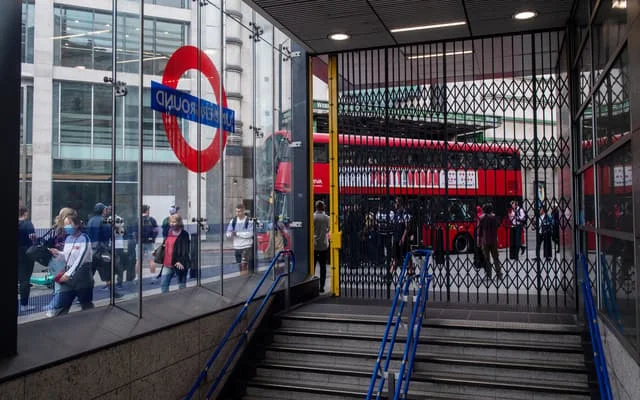
Eight 24-Hour Walkouts Announced as RMT Escalates Four-Day Week Dispute
London Underground drivers belonging to the Rail, Maritime and Transport (RMT) union will stage eight 24-hour strikes between late November 2026 and February 2027, the union announced today, escalating a long-running dispute with Transport for London (TfL) over proposed changes to working arrangements.
The walkouts are scheduled to begin at noon on each of the following dates: Thursday 26 November, Thursday 17 December, Saturday 19 December, Monday 4 January, Wednesday 6 January, Wednesday 17 February, Tuesday 23 February and Thursday 25 February. The action follows four days of strikes staged across April and June this year over the same issue.
At the heart of the dispute is TfL's proposed voluntary four-day working week for drivers. Under the plans, most drivers would see their contractual week reduced from 36 hours to 35 hours, with paid meal breaks introduced. The RMT argues that compressing hours into fewer days means longer shifts, earlier starts and later finishes, more unpredictable rostering and reduced staffing — and that drivers who decline the scheme face losing negotiated protections or being displaced from their depots.
Union Warns of 'Wholesale Attack' on Conditions
RMT general secretary Eddie Dempsey accused London Underground of disguising an attack on working conditions. "There is nothing voluntary about a scheme that forces drivers to give up existing protections whether they work four days or five, and threatens those who refuse with displacement from their depots," he said, adding that members were being asked to "spend more time driving trains, accept longer and more unpredictable shifts and surrender agreements that have been negotiated and defended over many years."
Dempsey called on London mayor Sir Sadiq Khan, who chairs TfL, to withdraw the proposals. The union has also raised fears that the changes could pave the way for hundreds of job cuts, citing published staffing plans for the Bakerloo line.
Context: Why the Strikes Matter
The timing is significant. The first walkout falls in late November, with two further dates immediately before Christmas and two more in the first week of January — periods when London's transport network is at its busiest with shoppers, commuters and seasonal visitors. Businesses dependent on footfall in the capital are likely to feel the impact directly.
A Network Half-Paralysed
The scale of disruption depends on participation. Only drivers belonging to the RMT — roughly half the total number on the network — would walk out. During June's action, TfL ran no service on the Circle and Waterloo and City lines, with major disruption on the Piccadilly, Metropolitan and Central lines, though 90% of Jubilee line services operated. Services started late and finished early, with no trains before 06:30 or after 21:00 on most lines.
TfL figures showed Tube journeys fell by 40% on the Thursday of June's strike, while bus usage rose 4%, London Overground journeys rose 4%, Elizabeth line journeys increased 18%, DLR journeys rose 7%, cycling increased 22% and roads were 10% busier. When Aslef joined last year's action alongside the RMT, almost all Underground services were halted.
A Split Union Movement
The dispute has exposed a division between the two unions representing drivers. Aslef, which represents many of the remaining drivers, has accepted TfL's deal and criticised the strike call. Finn Brennan, Aslef's full-time organiser on London Underground, said the union was "surprised that the RMT has, once again, decided to take strike action to try to prevent Underground drivers moving" to the new arrangements, arguing the voluntary scheme grants drivers 35 additional days off per year on a 34-hour week, with assurances that five-day workers will suffer no detriment.
Perspective: A Test Case for the Four-Day Week
The standoff has become one of the UK's most visible tests of how the four-day week is implemented across essential public services. TfL frames the policy as a voluntary flexibility offering fewer overall hours; the RMT frames it as conditionality that erodes hard-won protections regardless of whether drivers opt in. Both sides claim the scheme benefits staff — a sign that the argument is less about the principle of shorter weeks than about who controls the terms.
With eight dates now fixed through February, the dispute looks set to run well into the new year, keeping pressure on City Hall and raising questions about how London's transport authority balances service reliability, staffing costs and industrial relations. For commuters, the practical advice is familiar: check before you travel on strike days, expect late starts and early finishes on affected lines, and consider alternative routes — from the Elizabeth line to the bus network — where services remain busier than usual.
Comments