
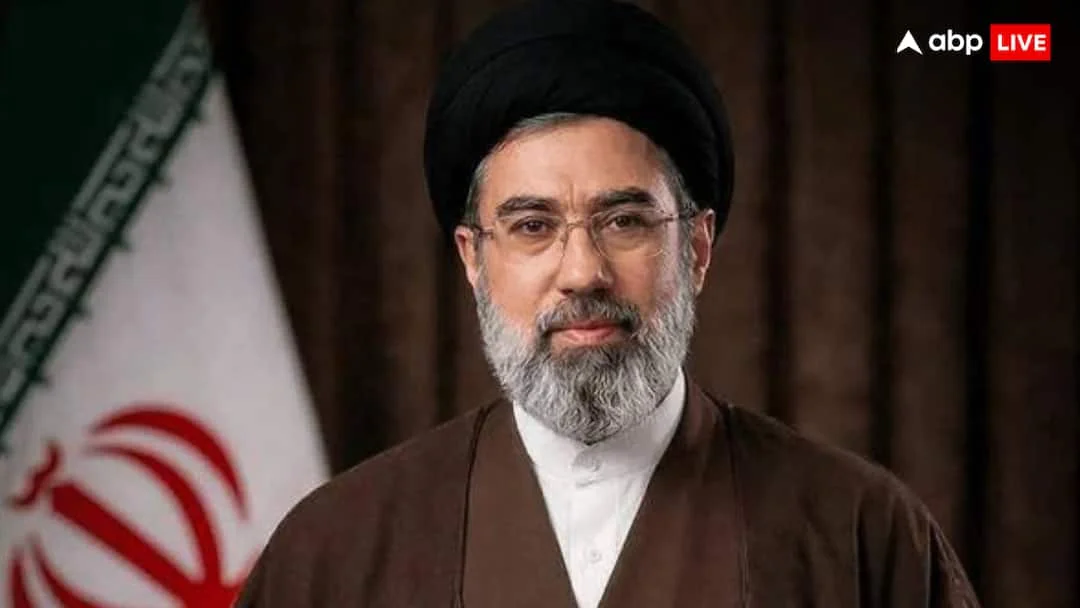
Khamenei Grants Approval for US-Iran Peace Deal with Conditions
Iran’s Supreme Leader, Ayatollah Mojtaba Khamenei, has publicly endorsed the recently signed memorandum of understanding (MoU) between Tehran and Washington, despite acknowledging that he held a fundamentally “different view” on the agreement. In a written statement carried by Iranian state media on Thursday, June 18, 2026, Khamenei confirmed that he granted his permission only after receiving firm assurances from President Masoud Pezeshkian and other senior officials that the deal would safeguard the interests of the Iranian nation and the broader “resistance front.”
The statement marks the supreme leader’s first formal reaction to the electronic signing of the MoU by US President Donald Trump and Iranian President Pezeshkian earlier this week. The agreement is intended to end the conflict that erupted after US and Israeli attacks against Iran on February 28, 2026. Khamenei’s remarks come as Iran’s leadership appears divided on the next steps, including whether to send a delegation to Switzerland for in-person talks scheduled for Friday.
Khamenei’s endorsement, while conditional, signals a significant step toward de-escalation, though he warned that Tehran would not accept additional demands from Washington. “If the American side wants to be greedy, they [Iran’s leadership] will not accept it,” the supreme leader stated. He also endorsed direct negotiations, clarifying that “face-to-face negotiations that will be held in the future will not mean accepting the enemy’s opinion.”
A Delicate Balancing Act
The supreme leader’s carefully worded statement reflects a delicate balancing act. On one hand, he acknowledges the necessity of the deal to end a devastating war that has cost thousands of lives and destabilized the region. On the other, he is keen to project strength and caution to domestic audiences wary of American influence. Khamenei described Trump as having “used all kinds of levers” to push through the agreement, characterizing the move as driven “out of desperation.”
According to Iranian state television, Khamenei said, “In principle, I had a different view (about the memorandum of understanding), but I issued my permission due to the commitment that the honourable (Iranian) president… gave me.” That commitment, he explained, was aimed at protecting “the rights of the Iranian nation and the Resistance Front.”
Context: The Urgency Behind the Deal
The US-Iran MoU represents a fragile ceasefire that ended nearly four months of open conflict. The war began on February 28, 2026, when US and Israeli forces launched coordinated attacks against Iranian military and nuclear facilities, triggering a broader regional crisis. The conflict quickly drew in proxies such as Hezbollah in Lebanon, leading to an Israeli ground invasion of southern Lebanon and severe disruption to global shipping through the Strait of Hormuz.
Under the terms of the MoU, there will be a 60-day negotiation period to seek a full settlement of the conflict. Key unresolved issues include restrictions on Iran’s nuclear program, the future of its near-bomb-grade uranium stockpile, sanctions relief, and the reopening of the Strait of Hormuz. US Vice President JD Vance confirmed on Thursday that the 60-day period had formally begun and that the US military had lifted its naval blockade of Iranian ports, a major demand from Tehran.
Uncertainty Over Face-to-Face Talks
Despite the supreme leader’s endorsement, uncertainty remains over whether Iranian officials will travel to Switzerland on Friday for the first round of face-to-face talks with the US. Iran’s semi-official Tasnim news agency, citing a source familiar with the matter, reported that Tehran had not yet made a final decision and that consultations were still ongoing. However, Switzerland’s Federal Department of Foreign Affairs stated that the talks were expected to proceed as planned.
The delay suggests lingering mistrust within Iran’s political establishment. While Khamenei has given his blessing, hardliners in the parliament and the Islamic Revolutionary Guard Corps (IRGC) remain skeptical of any engagement with the US, viewing it as a threat to the regime’s ideological foundations. Khamenei’s explicit warning against US “greed” was likely aimed at appeasing these factions while allowing the diplomatic process to move forward.
Regional and International Reactions
The deal has elicited mixed reactions across the Middle East and beyond. Israel, which was a direct participant in the original February strikes, has expressed deep concern over the terms of the agreement. A recent poll by Israel’s Channel 12 found that 71% of Israelis do not trust Trump to look out for their interests in the Iran deal, and only 11% believe Israel emerged victorious from the war. Furthermore, 52% of respondents said Prime Minister Benjamin Netanyahu’s conduct harmed Israel’s interests in the agreement.
The Israel-Hezbollah Ceasefire Holds as US-Iran Deal Faces New Strain, highlighting the fragility of the broader regional truce. The invasion of southern Lebanon by Israeli forces has further complicated the situation, with Hezbollah vowing to continue resistance until all Israeli troops withdraw.
On the economic front, the US-Iran deal has already begun to influence global markets. Mortgage Rates Hit One-Month Lows as Iran Peace Deal Boosts Bond Markets, as investors react to the reduced risk of a broader Middle Eastern conflict. However, uncertainty over the deal’s implementation continues to weigh on investor sentiment.
Perspective: What This Changes
Khamenei’s endorsement, however reluctant, represents a significant shift in Iran’s posture. For the first time since the Islamic Revolution of 1979, a supreme leader has publicly approved direct, face-to-face negotiations with the United States while explicitly acknowledging that he disagrees with the deal’s terms. This move sets a precedent that could reshape Iran’s foreign policy for years to come.
The Nuclear Question Remains Central
One of the most contentious issues in the upcoming 60-day talks is Iran’s uranium enrichment program. The MoU suggests Iran’s willingness to resolve the dispute over its near-bomb-grade uranium stockpile, potentially through “down blending” onsite under International Atomic Energy Agency (IAEA) supervision. However, the final decision on this matter is deferred to the full negotiations. For Washington, achieving verifiable limits on Iran’s enrichment capacity is a non-negotiable red line. For Tehran, the lifting of all sanctions—including those imposed by the Trump administration post-2018—is equally essential.
A Test for the New Leadership
This deal also serves as an early test for Iran’s new supreme leader, Mojtaba Khamenei, who succeeded his late father, Ayatollah Ali Khamenei, earlier this year. While he has largely continued his father’s hardline policies, the current crisis has forced him to adopt a more pragmatic approach. By granting permission for the deal while publicly expressing his reservations, Khamenei is attempting to have it both ways: preserving his hardline credentials while allowing the government to pursue a diplomatic resolution.
Analysts suggest that the supreme leader’s statement was designed to insulate himself from potential backlash if the deal fails. By placing the responsibility on President Pezeshkian and the negotiating team, Khamenei has created a political buffer. If the talks collapse, he can point to his initial skepticism; if they succeed, he can claim credit for authorizing the process.
Broader Implications for US-Iran Relations
The MoU and Khamenei’s conditional approval could pave the way for a broader normalization of US-Iran relations, though significant hurdles remain. The deep-seated mistrust on both sides, combined with regional rivalries and domestic political pressures, means that the 60-day negotiating period will be fraught with difficulty.
Moreover, the deal has already strained the US-Israel relationship. Trump and Vice President Vance have publicly criticized Israeli officials in recent days, signaling a rift that could have lasting consequences for Middle Eastern geopolitics. The US appears determined to secure a deal even at the expense of its traditional alliance with Israel, a calculation that has alarmed many in Tel Aviv.
Conclusion: A Fragile Step Forward
Khamenei’s endorsement of the US-Iran deal, despite his admitted reservations, is a pragmatic move born out of necessity. The war has exacted a heavy toll on Iran’s economy and military, and the lifting of the naval blockade offers immediate relief. However, the path to a comprehensive settlement remains uncertain. The face-to-face talks scheduled for Friday—whether they happen on time or not—will be the first real test of whether this fragile ceasefire can hold.
As the supreme leader himself acknowledged, approval of the MoU does not mean acceptance of the American position. The coming weeks will reveal whether both sides can overcome decades of animosity to forge a lasting peace, or whether this is merely a temporary pause in a longer conflict. For now, the world watches as Iran and the US take their first tentative steps toward dialogue.
Comments