
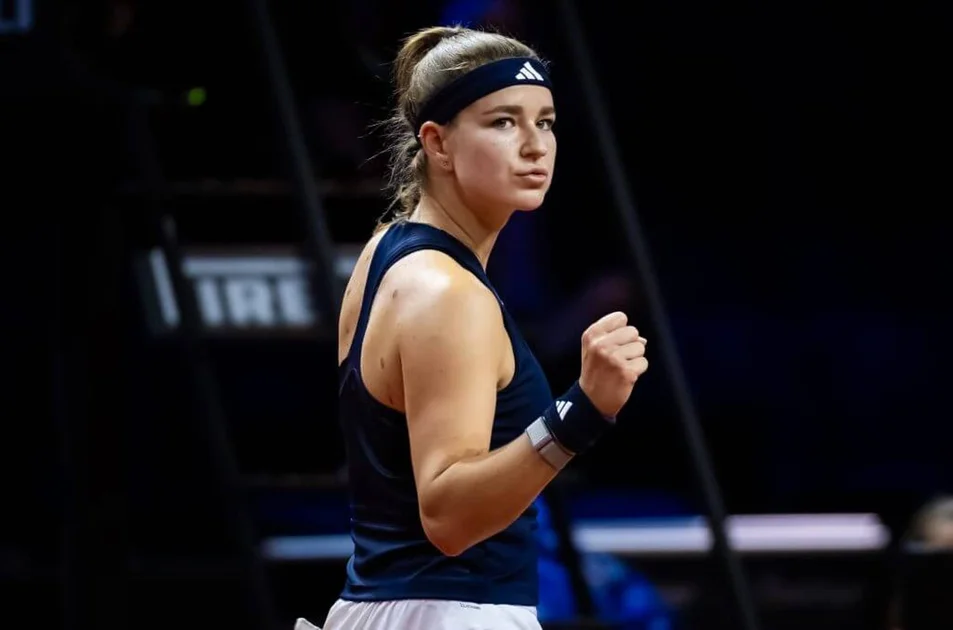
Muchová Breaks Through Against Gauff on Indoor Clay in Stuttgart
After six consecutive defeats and only one set won across all previous meetings, Karolína Muchová finally got the better of Coco Gauff at the Stuttgart Tennis Grand Prix on Friday, April 17. The Czech player, ranked 12th in the world, dispatched the third-ranked American 6-3, 5-7, 6-3 in a tightly contested quarterfinal lasting two hours and 24 minutes on the tournament's indoor red clay surface.
The result sends Muchová into the Stuttgart semifinals for the first time in her career, where she will face fourth seed Elina Svitolina, who earlier in the day defeated Czech compatriot Linda Nosková 7-6(2), 7-5 to claim her own place in the final four.
A Match Defined by Momentum Swings
Muchová controlled much of the opening set with consistent, creative shot-making and disciplined defense, winning it 6-3 with relative comfort. The second set told a different story. Gauff, who had repeatedly beaten Muchová by channeling heavy topspin forehands into her backhand and neutralizing her with elite foot speed, found a higher gear. She rallied from behind to take the set 7-5, turning the match on its head with a pivotal break at 2-2 following a marathon rally that left Muchová visibly winded.
But the Czech regrouped decisively in the third set. Relying on her trademark touch, angle play and clutch serving, Muchová wrapped up the match 6-3, denying Gauff what would have been another entry in a long record of dominance over her.
"It was a great fight. I'm just happy that I finally, finally beat her," Muchová said in her post-match interview. "This was actually our first match on a clay court. On clay we were 0-0 in the matches — I tried to keep it positive."
Why This Victory Carries Unusual Weight
A Lopsided Head-to-Head Suddenly Looks Different
Heading into Stuttgart, Muchová's record against Gauff stood at an uncomfortable 0-6. That losing streak included a particularly painful 6-1, 6-1 drubbing at the Miami Open just weeks earlier, in late March 2026, and a fourth-round defeat at the Australian Open earlier this year. The pattern in those matches was consistent: Gauff's physicality and footwork repeatedly cancelled out Muchová's finesse, turning her inventive shot selection into a liability rather than an asset.
The Stuttgart quarterfinal, however, introduced a new variable — clay. The slower surface blunted Gauff's ability to dictate pace through Muchová's backhand and gave the Czech more time to construct points on her own terms. Muchová herself acknowledged this openly: "She's obviously one of the best athletes, one of the best tennis players. This was actually our first match on a clay court, so on the clay we were 0-0 in our matches. I tried to take advantage of this surface."
For Gauff, the defeat extends a frustrating Stuttgart pattern. The American has now exited the WTA 500 tournament at the quarterfinal stage in three consecutive years, suggesting the indoor clay environment in Germany presents a recurring challenge for her game.
Svitolina's Resurgence Sets Up a Compelling Semifinal
Muchová's next opponent, Elina Svitolina, arrives in the semifinals in excellent form. The Ukrainian has reached five semifinals so far in the 2026 season, a run that she attributes to a mental reset following a difficult end to 2025. "I had a really difficult end of last year, struggling a bit mentally," Svitolina said after her win over Nosková. "I think my fighting spirit is back this year. I'm very pleased with that."
The Muchová-Svitolina semifinal pits two players known for their defensive tenacity and fighting spirit against each other, and both have demonstrated they can weather pressure on clay. For Muchová, reaching the Stuttgart final would represent a significant milestone at a tournament where she has historically not advanced deep into the draw.
What This Signals for the Clay Season Ahead
The timing of Muchová's breakthrough win is significant. The WTA clay swing is now in full motion, with the Mutua Madrid Open and Roland Garros on the horizon — events where surface dynamics will continue to shape results in ways that faster hardcourt tournaments do not.
Muchová has long been considered one of the tour's most naturally gifted clay court players, capable of constructing points with variety and creativity that few opponents can match over a sustained stretch. Her injury-interrupted 2023 and 2024 campaigns limited her ability to build momentum during clay season, making Stuttgart 2026 something of a statement: she is healthy, competitive, and capable of beating the very best.
For Gauff, the loss offers data points worth examining before Madrid and Paris. The forehand-into-backhand formula that has been so effective against Muchová on hard courts does not translate cleanly to clay, and tactically astute opponents will take note. The world number three remains one of the favorites for the French Open title — she won the tournament in 2025 — but her Stuttgart exit signals that vulnerabilities exist when conditions neutralize her primary weapons.
With the clay season intensifying across both the ATP and WTA tours — including concurrent action at the Munich Open — this period will be crucial in determining who arrives at Roland Garros with real confidence. For Muchová, Friday's win over Gauff may prove to be exactly the confidence-builder she needed.
Comments