
Judge Sweeney Finds ICE in Contempt
U.S. District Judge Charlotte N. Sweeney of the District of Colorado held Immigration and Customs Enforcement (ICE) and one of its officials in contempt of court on Wednesday, ruling that agents violated her order by immediately re-arresting a man she had ordered released. In a blistering 15-page order, Sweeney wrote that ICE’s new policy of instantly re-detaining petitioners after release “made a mockery of court orders” and that the practice “should—and, in the Court’s opinion, must—shock any reader.”
The case centers on Ramon Quintero Alvarez, a Mexican national who has lived in the United States for more than 30 years. Sweeney had ordered his release if the government failed to justify his detention by October 27. When the Trump administration did not respond, Quintero Alvarez was released on October 27—only to be re-arrested by ICE agents moments later as he walked into a public lobby area. According to testimony from Nichole Black, ICE’s assistant field office director in Denver, she received a “direct order” from Acting Field Office Director Nathan Rasper to re-detain released petitioners “that had some type of criminality.” Black acknowledged that her information about Quintero Alvarez’s criminal history was inaccurate; the charges tied to his most recent arrest had been dropped in April.
Sweeney held Black and the government in contempt but declined to impose further sanctions because Rasper testified at a November 4 hearing that ICE had ceased the practice in Colorado. She wrote that Rasper’s pledge “cured” the contempt and reminded the government that she considers his testimony legally binding. The ruling comes amid growing scrutiny of ICE’s detention practices under President Donald Trump’s immigration crackdown.
The Mechanics of the 'Instant Re-Arrest' Policy
According to court records and reporting from MPR News, the practice of instant re-arrests in Colorado was borrowed from Minnesota. Acting Denver Field Office Director Rasper said he ordered the re-arrests after hearing from “colleagues” in Minnesota that courts there had allowed it. The policy involved ICE agents waiting outside detention facilities and re-detaining individuals within minutes of their court-ordered release, often without new legal justification.
Sweeney’s order detailed the events of October 27: Quintero Alvarez walked out of the detention facility and into a public area, where officers met him outside and rearrested him. Black testified that she believed it was permissible to “escort someone to a public area and immediately re-detain them despite a court order to the contrary.” Sweeney rejected that interpretation, writing that “there is not a single word in this Nation’s Constitution that sustains or could plausibly give rise to Ms. Black’s ‘belief’ that ICE and ICE agents can walk out to the sidewalk and re-shackle a habeas petitioner within a minute of that petitioner’s court-ordered release.”
The judge also noted that government lawyers told the court they would not argue that Quintero Alvarez’s detention was lawful. The re-arrests have affected at least 18 people in Colorado in the past six weeks, according to CPR News, though immigration attorneys estimate the number could be higher because some immigrants represent themselves.
A Pattern of Defiance Across States
The Colorado case is not isolated. At least one other federal judge in Colorado has ruled against an instant ICE re-arrest. In a November 3 order, U.S. District Judge S. Kato Crews said ICE never really released a man it instantly re-arrested, writing: “Once again, the cruelty appears to be the point.” Crews cited decisions from two Minnesota judges who had confronted similar practices.
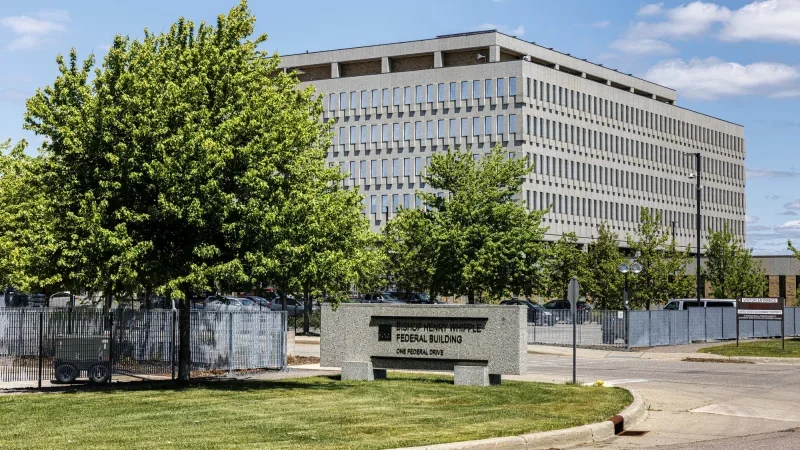
The Minnesota connection is significant. According to MPR News, ICE officials in Colorado explicitly borrowed the tactic from colleagues in Minnesota, where courts had previously addressed the issue. The Whipple Federal Building in Minnesota has been the site of multiple instant ICE re-arrests of immigrants ordered released by federal judges. This cross-state borrowing suggests a coordinated effort within ICE to test the boundaries of judicial authority, even as courts repeatedly reject the practice.
In a statement to MPR News last week, an unnamed ICE spokesperson wrote: “When appropriate, ICE will address the issues identified by the court and take further action consistent with applicable law and court orders, which can include rearresting an offender.” The statement did not address the constitutional concerns raised by Judge Sweeney.
The Human and Legal Stakes
The ruling underscores a broader tension between the executive branch’s immigration enforcement priorities and the judiciary’s authority to check those priorities. Quintero Alvarez, who has lived in the U.S. for over three decades, found himself at the center of that conflict. His case illustrates how the instant re-arrest policy can override individualized judicial determinations with blanket enforcement directives.
Sweeney’s order emphasizes that the practice targeted “petitioners”—individuals who had successfully challenged their detention in court. By re-arresting them immediately, ICE effectively nullified habeas corpus relief, the legal mechanism by which detainees challenge unlawful imprisonment. The judge’s language—calling the policy a “mockery” and expressing disbelief that any reader would not be shocked—signals deep concern about the rule of law.
Legal experts say the contempt finding, while symbolic because no sanctions were imposed, could have ripple effects. It establishes a judicial precedent that instant re-arrests are unconstitutional, and it puts ICE on notice that similar practices in other states could face fresh legal challenges. The fact that Rasper’s pledge to stop the practice was deemed sufficient to cure contempt also sets a template for how these cases might be resolved: swift court intervention followed by agency assurances.
Broader Implications for Immigration Enforcement
The case arrives as the Trump administration intensifies its deportation drive, which rights groups say has violated free speech and due process rights. ICE has become the face of that crackdown, and its tactics are increasingly subject to judicial review. The Colorado ruling is one of several recent court decisions rebuking the agency for overstepping legal boundaries.
For immigration attorneys and advocates, the ruling is a rare victory, but it also highlights the limits of judicial remedies. Because Sweeney declined to impose sanctions, the government faces no financial penalty for its contempt. The only consequence is the agency’s promise to stop the practice in Colorado—a promise that, as Sweeney noted, is legally binding but enforceable only through future litigation.
The ruling also raises questions about how ICE will adapt. If the agency ceases instant re-arrests in Colorado but continues the practice elsewhere, detainees in other states may need to bring their own challenges. The Minnesota cases cited by Judge Crews suggest that courts there have already pushed back, but it remains unclear whether ICE has fully abandoned the tactic nationwide.
Meanwhile, the political context looms large. President Trump’s immigration policies have been a flashpoint, and the 2026 midterm elections saw intense debate over enforcement practices. Cases like Quintero Alvarez’s are likely to fuel further scrutiny from lawmakers and advocates who argue that the administration is prioritizing enforcement numbers over constitutional safeguards.
What Happens Next
For now, ICE has pledged to stop instant re-arrests in Colorado, and Judge Sweeney has accepted that assurance. But the judge’s order leaves little doubt about her view of the practice. “ICE’s new ‘policy’ of immediately re-detaining petitioners following release made a mockery of court orders mandating petitioners’ immediate release,” she wrote. The ruling is a clear warning that courts will not tolerate efforts to circumvent their authority—even as the government insists it is acting within the law.
Quintero Alvarez’s fate remains uncertain. His case will continue, but he is no longer in ICE custody as a result of the re-arrest at issue. For other detainees and their attorneys, the ruling provides a legal roadmap: challenge instant re-arrests in court, demand evidentiary hearings, and seek contempt findings. Whether that roadmap leads to lasting change depends on how ICE and its leadership respond to judicial scrutiny in the months ahead.
Comments