
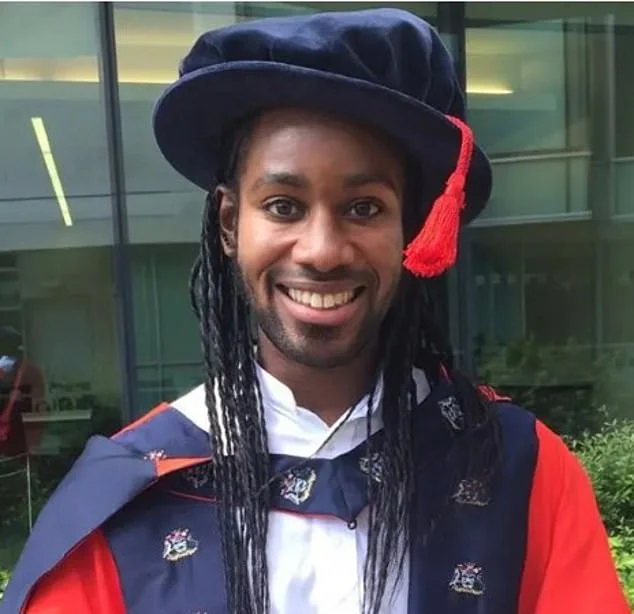
Jason Arday Cancels Book Events Amid Plagiarism Scandal and Memoir Release
Jason Arday, the former Cambridge University professor who resigned amid a widening plagiarism and academic misconduct scandal, has cancelled upcoming book tour events, including a September appearance at a Edinburgh bookshop and a fireside chat at the Royal Geographical Society. The cancellations come as his memoir, Great and Unfortunate Things, remains scheduled for release in the US on August 11 and in the UK on August 27, despite mounting questions about the veracity of his life story.
Events Pulled as Publisher Sticks by Memoir
According to event listings, Arday was due to appear at Topping and Company Booksellers in Edinburgh on September 18, but the event has now been cancelled. The Royal Geographical Society also confirmed that a planned "fireside chat" with Arday has been cancelled "on the request of the speaker." The cancellations follow a tumultuous week in which Arday resigned from his professorship at the University of Cambridge on Wednesday, after the university launched an investigation into his academic integrity.
Simon & Schuster, the publisher of Arday's memoir, has maintained it will proceed with the release, even going so far as to compare the book to Tara Westover's bestselling Educated. However, the publisher's stance has drawn scrutiny after the Washington Free Beacon obtained two advance proofs of the book, revealing that Simon & Schuster made selective edits during the early months of this year that appeared to soften potentially damaging claims and alter verbatim quotes.
The Rise and Fall of a 'Near-Mythic' Narrative
Jason Arday's story was nothing short of extraordinary—so much so that it captured global attention. In early 2023, at age 37, he became the youngest Black scholar ever appointed to a full professorship at Cambridge, a milestone that made international headlines. His rise from a working-class Ghanaian immigrant family, diagnosed with autism and developmental delays as a toddler, unable to speak until age 11 and not reading until 18, was presented as an "awe-inspiring tale of near mythic proportions" in his agent's cover letter to publishers.
That narrative made Arday perhaps the world's most famous living sociologist. Cambridge's head of faculty for education, Hilary Cremin, hailed him in a BBC clip: "We are so lucky to have you. You are the best in the world in terms of the research that you do." His memoir, Great and Unfortunate Things, was meant to be the literary victory lap, cementing his legacy as an improbable triumph.
But in the past two weeks, that fairy tale has unravelled. In July, philosopher Nathan Cofnas published a Substack post presenting evidence of widespread plagiarism in Arday's academic work. Cofnas identified 36 passages in Arday's 2015 dissertation that reproduced or closely tracked text from a 2009 dissertation by another scholar, Paula Zwozdiak-Myers, including copying and rearranging her title—and misusing an apostrophe in the process.
More seriously, Cofnas alleged that quotes from structured interviews Arday claimed to have conducted closely resembled those used by other researchers, and that parts of some interview responses reappeared across different studies under Arday's name, attributed to different people. If deliberate, that would constitute not just plagiarism but academic fraud. Retraction Watch reported that two of Arday's papers were quietly corrected.
Arday's graduate alma mater, Liverpool John Moores University, investigated complaints about the dissertation and cleared him, stating: "A confidential procedure was conducted. Professor Arday's PhD still stands." But Cambridge, where he held his prestigious professorship, announced it had "begun an investigation" into his work, prompting his resignation.
Publisher's Edits Raise Questions
The Washington Free Beacon's exclusive report indicates that Simon & Schuster may have been aware of potential credibility issues long before the public scandal broke. The publisher edited Arday's online biography as early as a year ago, and internal edits to the memoir itself appear designed to protect his reputation.
One notable edit effectively acknowledges the possibility that Arday might lose his professorship. In the earlier January proof, Arday recalls receiving his assistant professorship at Durham University in 2021, marveling: "I'm a professor." The later June edition revises that statement, allowing for the possibility that he would not be a "professor" indefinitely.
Other edits altered verbatim quotes, potentially to remove inconsistencies or reduce legal exposure. The Free Beacon's findings suggest that the publisher was not only aware of the allegations but took steps to mitigate their impact on the book's marketability—while still touting Arday as an inspirational figure.
Despite this, Simon & Schuster has publicly stated it is sticking with the memoir. The publisher's comparison to Educated indicates they expect strong sales, but the scandal could severely undermine consumer trust.
Broader Implications: Credibility, Race, and the Publishing Industry
The Arday case has sparked broader conversations about the pressures on academics to produce remarkable stories, the role of race in narratives of achievement, and the responsibility of publishers to verify claims. Arday's story was compelling precisely because it defied expectations, and his success was celebrated as a milestone for Black representation in academia. The allegations of fabrication strike at the heart of that narrative, leaving both his academic record and his personal credibility damaged.
The scandal also raises questions about the due diligence conducted by publishers and universities when faced with too-good-to-be-true biographies. The Atlantic noted that even before the resignation, Arday was "the world's most famous living sociologist"—a status built on a narrative that now appears to have been at least partially fabricated.
The cancellations of his book tour events signal a rapid fall from grace. For a figure who was once feted as a role model, the reality of public shaming and professional ruin is stark. The academic community, and the public at large, must now grapple with how to distinguish genuine achievement from manufactured success stories—a challenge that extends far beyond Arday himself.
As the US release date approaches, the question remains whether readers will embrace the book as a work of inspiration, or reject it as a cautionary tale. The publisher's decision to proceed may be financially motivated, but it will also be a test of whether the market can separate the book's content from the author's tarnished reputation.
What Changes: A Reckoning for Academic Celebrity
The Arday case could herald a broader reckoning in academia and publishing about the cult of celebrity academics. As institutions increasingly seek public intellectuals who can attract media attention and funding, there is a risk that the very traits that make a story compelling—unlikely origins, dramatic obstacles, spectacular success—may also make it more susceptible to embellishment.
Moreover, the selective editing by Simon & Schuster suggests that publishers may be complicit in polishing narratives to maintain marketability, raising ethical questions about their role in fact-checking and vetting authors. The comparison to Educated is telling: Westover's memoir was also scrutinized for accuracy, but it survived because her core story held up to verification. Arday's may not.
The resignation from Cambridge and the cancellation of events are just the first steps in what will likely be a long process of investigation and potential retraction of academic work. For the academic world, this is a stark reminder that integrity must be the foundation of scholarly achievement. For the publishing industry, it is a warning that the pursuit of inspirational stories must be tempered by rigorous verification.
As Arday's fairy tale collapses, the lesson is clear: in an age of viral narratives, the truth is more valuable than ever—and the cost of being caught in a lie is devastating. The events cancelled, the reputation shattered, and the legacy in question all serve as a powerful cautionary tale about the dangers of building success on sand.
For those tracking the fallout, the case may also impact other academic celebrity narratives, prompting publishers and universities to scrutinize claims more closely. Whether Arday's memoir becomes a bestseller or a footnote in the history of academic scandals, the impact on how we view extraordinary life stories is likely to be lasting.
Comments