
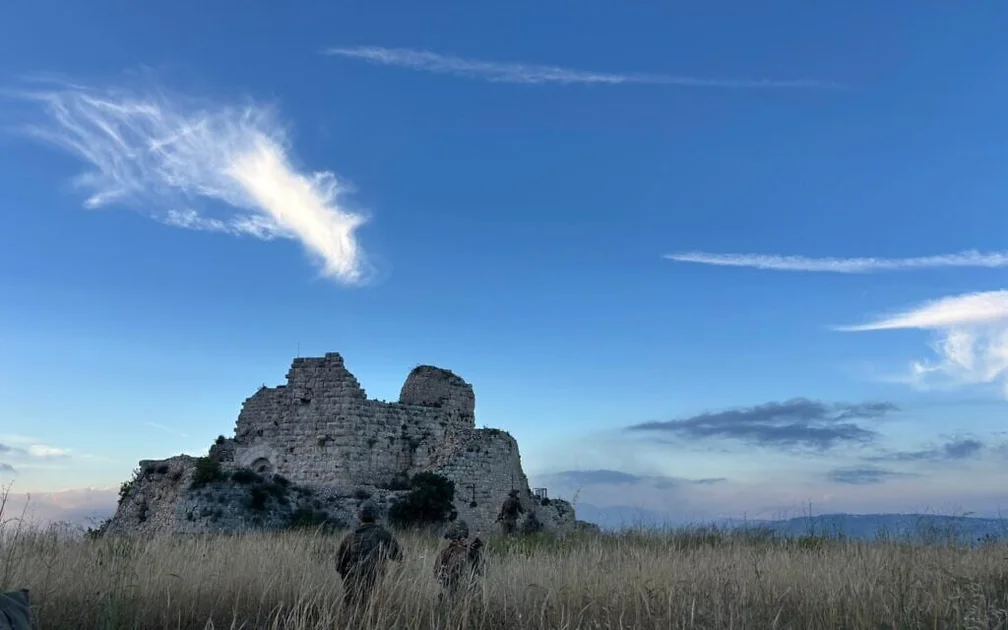
Israeli Forces Capture Beaufort Castle in Lebanon
Israeli troops have seized the strategic Beaufort Castle in southern Lebanon, the military confirmed on Sunday, marking a major advance against Hezbollah and the deepest Israeli incursion into the country since 2000. The 900-year-old Crusader-built fortress, which overlooks wide swaths of southern Lebanon and northern Israel, was captured during an operation focused on establishing control over the Beaufort Ridge and the surrounding Wadi al-Saluki area.
The military said its forces were targeting Hezbollah infrastructure and launch sites on the ridge, from which hundreds of projectiles had been fired toward Israeli civilians and soldiers. One Israeli soldier was killed in the operation. There was no immediate comment from Lebanon or Hezbollah.
The capture came after one of the heaviest days of Hezbollah rocket fire toward northern Israel since an April ceasefire, prompting school closures and movement restrictions in affected areas. Israeli airstrikes and artillery shelling were also reported near the town of Nabatiyeh, a Hezbollah stronghold, and near the city of Tyre, where an Israeli strike near Hiram Hospital wounded 13 hospital staff members, according to the Lebanese health ministry.
The Strategic Importance of Beaufort Castle
Located about nine miles from the Israeli border, Beaufort Castle has long been a symbol of military control over southern Lebanon. Israeli troops held the castle for 18 years until their withdrawal in May 2000. Now, Israeli forces have returned to the ridge, with Defense Minister Israel Katz stating that troops will remain in the area as part of a new security zone.
Israeli Prime Minister Benjamin Netanyahu described the capture as a "dramatic shift" in Israel's campaign against Hezbollah. "We have returned to Beaufort united, determined, and stronger than ever," Netanyahu said in a video statement. "We have broken the barrier of fear. We are taking the initiative, we are operating on all fronts – in Syria, in Gaza, in Lebanon."
The castle's position offers a commanding view of southern Lebanon and northern Israel, providing both defensive advantages and a launch point for attacks. For Hezbollah, the ridge had served as a key launch site for rockets and drones targeting Israeli residential areas, according to the Israeli military.
Regional Context and Ceasefire Breakdown
The escalation in Lebanon comes despite a ceasefire announced more than six weeks ago, which had temporarily paused hostilities between Israel and Hezbollah. The Iran-backed militia entered the broader U.S.-Israeli war against Iran on March 2, firing rockets and drones into Israel days after the Iran conflict began. Israel then launched a campaign to push Hezbollah away from its northern border.
Lebanon’s leaders have condemned Israeli strikes, accusing Israel of implementing a "scorched-earth" policy. Prime Minister Nawaf Salam said in a televised speech on Saturday that Israel was trying to "uproot Lebanon’s memory and erase the people’s history." He called for a ceasefire, an Israeli withdrawal from Lebanon, and the return of displaced residents to their homes.
France has requested a UN Security Council meeting on Lebanon, diplomatic sources said, as international pressure mounts to de-escalate the conflict. Meanwhile, Iran’s top negotiator stated that no deal with the United States would be possible until Iranian rights are secured, indicating that broader regional tensions remain unresolved.
Broader Implications of the Offensive
The capture of Beaufort Castle represents a significant territorial gain for Israel and a major setback for Hezbollah, which has used the area as a stronghold for years. The operation deepens Israel’s footprint in Lebanon and widens the conflict even as a parallel ceasefire in the wider Iran war holds in other areas.
For southern Lebanon, the offensive has brought renewed destruction. Israeli airstrikes and bulldozing operations have damaged homes and historic sites, including parts of the ancient castle itself, which has been heavily damaged in previous wars. The displacement of civilians continues, with evacuation warnings issued for more than a dozen villages.
A Historical Symbol in Modern Conflict
Beaufort Castle has stood as a silent witness to centuries of conflict—from Crusader battles to Israeli occupation to the current war. Its capture by Israeli forces echoes past occupations and raises questions about the future of southern Lebanon. The castle’s strategic perch makes it a prize for any military force seeking to control the region.
For readers interested in medieval fortresses and their modern roles, the recent recognition of cultural figures at similar historic sites offers a contrasting narrative. For instance, Cynthia Erivo was awarded an MBE at Windsor Castle earlier this year, highlighting how such structures can represent both heritage and diplomacy.
What This Changes
The seizure of Beaufort Castle shifts the military and psychological balance in the Israel-Hezbollah conflict. Israel now holds a strategic high ground that it last commanded 26 years ago, while Hezbollah loses a key launch site and symbol of its resistance. The move also signals that Israel is willing to escalate ground operations despite ongoing ceasefire talks.
As the conflict enters a new phase, the international community faces growing pressure to broker a sustainable ceasefire. The U.S.-brokered April ceasefire has failed to hold in Lebanon, and the capture of Beaufort Castle may either force Hezbollah to the negotiating table or provoke further retaliation. Meanwhile, talks between Lebanese and Israeli military officials at the Pentagon earlier this week showed rare direct engagement, but have yet to produce a breakthrough.
For now, southern Lebanon remains a flashpoint, with thousands displaced, historic sites damaged, and no end to the fighting in sight.
Comments