
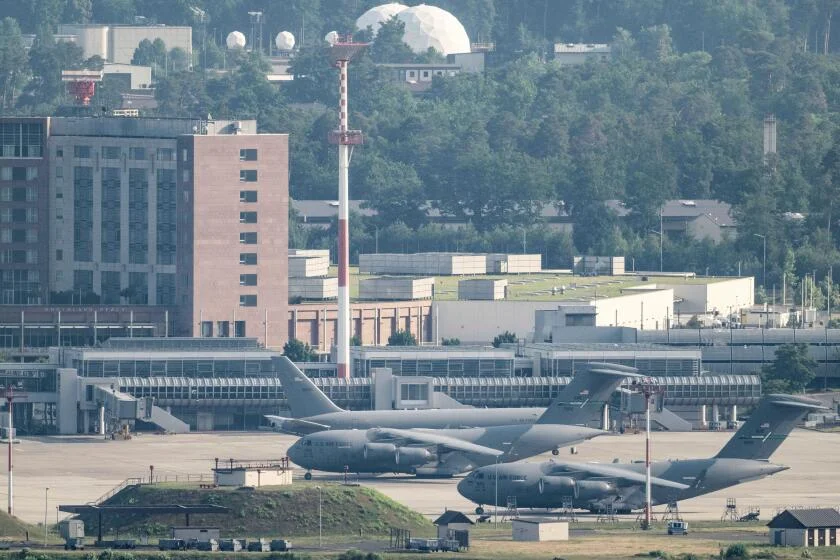
Iran Strikes US Bases in Bahrain as War Escalates
Iran launched a new wave of missile and drone strikes against U.S. military installations in Kuwait, Iraq, and Bahrain on June 2, 2026, targeting the strategic island kingdom that hosts the U.S. Navy's Fifth Fleet. Explosions were reported near Manama, the capital, as air defense systems intercepted incoming projectiles over Bahraini airspace, according to social media posts verified by security analysts.
The Iranian Revolutionary Guard Corps confirmed the attacks, calling them a response to ongoing U.S.-Israeli operations in the region. The strikes forced the temporary shutdown of Bahrain International Airport and triggered panic among residents already traumatized by months of conflict. The U.S. military has not yet released casualty figures, but witnesses reported debris falling in residential areas near the Juffair naval base.
The attack comes as the 40-day war between the U.S.-Israel alliance and Iran enters a new phase of intensity, testing the resilience of Gulf states that normalized ties with Israel under the Abraham Accords. For Bahrain, the strikes are the latest blow to a nation already grappling with deep internal divisions and economic instability.
Why It Matters: Bahrain's Fragile Stability Under Strain
Bahrain, an archipelago of fewer than one million citizens, is the most socially complex of the Gulf monarchies. The Sunni Al Khalifa dynasty rules over a majority Shi'ite population, a demographic fault line that has fueled periodic uprisings. The latest war with Iran has awakened these demons, as many Shi'ite Bahrainis express sympathy for Tehran, viewing the conflict as a proxy war against co-religionists.
The 2020 normalization with Israel, a cornerstone of the Abraham Accords, was always unpopular among Bahrain's Shi'ite majority. Many see it as a deal that abandoned the Palestinian cause in exchange for the ruling family's survival. Protests during the war have grown more frequent, with demonstrators demanding the expulsion of U.S. forces and the closure of the Fifth Fleet headquarters in Juffair. The site, once a British colonial base, is now widely viewed as a symbol of foreign domination.
Compounding these tensions is a severe economic crisis. Unemployment among Shi'ite communities remains disproportionately high, and the war has disrupted trade routes, oil exports, and tourism. The Bapco oil refinery on Sitra Island was struck in March, and while operations have partially resumed, the economic damage lingers. For many Bahrainis, the war has highlighted the gap between the ruling elite—who benefit from U.S. protection and Israeli partnerships—and ordinary citizens bearing the cost of the conflict.
A recent court case has further polarized the nation. On May 28, a Bahraini spy officer was sentenced to life in prison for the death of a detainee during wartime interrogations, an AP report confirmed. The trial exposed allegations of widespread abuse in the kingdom's security apparatus, which critics say has intensified since the outbreak of hostilities. Human rights groups argue that the monarchy is using the war as a cover to crack down on dissent.
Perspective: A Gulf Ally on the Brink
The Human Cost of War
More than 8,000 U.S. service members, contractors, and their families have been evacuated from Bahrain since the war began in mid-March. Many fled with little more than a suitcase, leaving behind homes, schools, and livelihoods. A Defense Department educator interviewed by Stars and Stripes described spending days sheltering in a bathroom, hearing explosions from the nearby base. Months later, she still suffers from nightmares. The uncertainty of return has strained families and finances, with many evacuees stuck in temporary housing in Germany and the United States.
The Geopolitical Tightrope
For Washington, Bahrain is indispensable. The Fifth Fleet is the linchpin of U.S. naval power in the Persian Gulf, critical for countering Iranian threats and protecting oil shipping lanes. But the base also makes Bahrain a prime target. The June 2 strikes demonstrate that Iran is willing to escalate despite the presence of U.S. forces, betting that domestic instability in Bahrain could undermine the American alliance structure.
Saudi Arabia, Bahrain's powerful neighbor, has already deployed troops across the causeway to help quell protests, a move that recalls the 2011 Arab Spring intervention. The kingdom sees Bahrain as its first line of defense against Iranian influence in the Gulf. But the intervention also fuels Shi'ite resentment, deepening the cycle of mistrust.
What This Changes
The war has accelerated a dangerous trend: the militarization of sectarian identity. Normalization with Israel, once promoted as a peace dividend, now looks like a liability. Bahrain's monarchy faces a stark choice—tighten security, risking further alienation, or pursue reforms that could empower the Shi'ite majority. Neither path is easy while missiles fly overhead.
The broader implication for the Gulf region is that the Abraham Accords, already fragile, may not survive the war. Bahrain, the first Gulf state to normalize ties after the UAE, could become the first to break them. The strikes on its bases may be the final straw that drives a wedge between the ruling family and its people, with consequences far beyond the archipelago.
For now, the evacuees wait, the missiles fall, and Bahrain holds its breath. The island may be small, but its fate could determine the shape of the post-war Middle East.
Comments