
Seth Moulton Makes His Case to Unseat Ed Markey: A New Generation or Incumbent Experience?
Challenger Pushes for Change on Affordability and Leadership
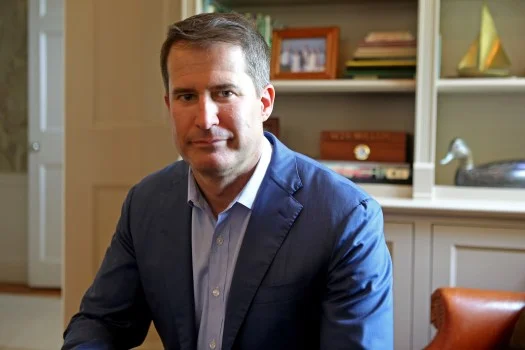
U.S. Senate candidate Seth Moulton is making a strong push to unseat incumbent Senator Ed Markey in the Massachusetts Democratic primary, set for September 1, 2026. In a joint interview with five Greater Boston nonprofit news organizations on July 13, 2026, Moulton defended his call for a new generation of leadership, arguing that the 80-year-old Markey represents an aging Democratic establishment that has failed to solve key challenges despite decades in office.
Moulton, a 47-year-old Salem native who currently represents Massachusetts' 6th District in the House, centered his campaign around an affordability agenda that links housing and transportation. "Costs are skyrocketing. MAGA Republicans and Trump control everything in Washington, so you can’t possibly say, ‘Hey, what Democrats are doing is working,'" Moulton said. He pointed to successful international examples like Tokyo, where efficient transit allows residents to live in affordable areas while accessing jobs across the region. "You cannot live on the North Shore and work on the South Shore, even though if you look at a map, they’re not that far apart," he added. "You can’t be married to someone who has a job in a different part of the state if you want to live together. That’s insane."
The Senate race comes at a time when Massachusetts—and the broader U.S.—faces a convergence of crises. Wildfire smoke from Canadian fires has swept across more than 20 states, including Massachusetts, where air quality alerts have been issued. Millions of Americans are being urged to stay indoors as smoke from over 180 active wildfires in northern Ontario blankets the Northeast and Midwest. In New York City, Mayor Zohran Mamdani warned that "everyone may feel health effects" at current pollution levels.
The Stakes: Generational Change vs. Progressive Credentials
Moulton Frames Markey as Out of Step with Current Challenges
Moulton has built much of his campaign around the theme of "generational change," casting Markey as a symbol of an aging Democratic establishment that has failed to resolve persistent issues like housing affordability, transportation inefficiency, and the rising cost of living. While Markey is a long-time progressive figure—having served decades in Congress—Moulton argues that the incumbent’s record is not enough to address today’s crises.
At the same time, the broader Democratic Party is grappling with internal divisions over foreign policy, particularly regarding Israel. On July 16, 2026, more than 100 House Democrats voted to cut off military aid to Israel—a seismic shift from just two years ago, when only 37 Democrats supported a similar measure. The amendment, which failed 314-104, underscored growing grassroots fury over the war in Gaza. Rep. Katherine Clark of Massachusetts, the House’s No. 2 Democrat, voted for the amendment, signaling the influence of progressive voters who have toppled incumbents in recent primaries by rejecting pro-Israel funding. Markey’s position on this issue could become a flashpoint in the race, as Moulton has yet to stake out a clear stance.
Money Race Heats Up: Democrats Hold Financial Edge
Meanwhile, the money race for Senate seats is intensifying. According to NBC News analysis of campaign finance reports filed through June 30, 2026, Democratic candidates in the 11 most competitive Senate races have amassed a huge financial advantage. They raised a total of $104 million to Republicans’ $35 million and ended the quarter with $129 million in the bank versus Republicans’ $61 million. In Georgia, Sen. Jon Ossoff has $43 million in his campaign account, while his GOP opponent, Rep. Mike Collins, has just $2 million. While this data is national, it reflects the broader trend of Democratic fundraising strength that could benefit Markey—but also makes Moulton’s challenge steeper.
What This Race Means for Democrats and the Nation
A Test for the Party’s Future Direction
The Massachusetts Senate race is more than a local contest—it is a bellwether for the Democratic Party’s soul. Moulton’s challenge to Markey represents the tension between institutional progressivism and a newer, more pragmatic approach focused on affordability and generational leadership. If Moulton wins the primary, it would signal that voters are willing to replace longtime incumbents with younger candidates who emphasize kitchen-table economic issues over ideological battles. But if Markey prevails, it would affirm that grassroots support for his progressive record, including on climate change and healthcare, remains strong.
Environmental Crisis Adds Urgency
The ongoing wildfire smoke crisis—which has now stretched from the Midwest to the East Coast—adds another layer of urgency to the race. Air quality has plummeted to unhealthy levels across 20 states, including Massachusetts, as smoke from Canadian wildfires spreads. The environmental disaster highlights the need for robust climate action, a top issue for Markey, who co-authored the Green New Deal. Yet Moulton argues that Democrats must also focus on immediate economic relief, including housing and transit reforms, to make the state more livable. Prince Harry’s Invictus Games Leadership Praised Amid UK Visit Challenges may seem unrelated, but the same principle—leading through challenges—applies to senators confronting overlapping crises.
Broader Implications for 2026
As the 2026 midterms approach, the Markey-Moulton race will be closely watched as a test of whether voters prefer experience or a fresh perspective in an era of rapid change. With environmental disasters, economic uncertainty, and shifting geopolitical alliances, the outcome could influence how other Democrats approach campaigns across the country. For now, Moulton is betting that voters are ready for a new playbook—one that treats housing and transportation as interconnected and prioritizes affordability over the status quo. Super El Niño 2026 Poised to Be Strongest on Record, Threatening Global Food Prices may further strain household budgets, adding resonance to Moulton's message.
Whether Markey can defend his seat will depend on whether Massachusetts voters believe his decades of service translate into solutions—or stand for a past that no longer fits their future.
Comments