
Father of Mackenzie Shirilla Will Not Return to Teaching Following Netflix Documentary Fallout
The father of convicted double-murderer Mackenzie Shirilla will not return to his position as a teacher at a Cleveland-area Catholic school after being placed on administrative leave last month, according to sources familiar with the situation.
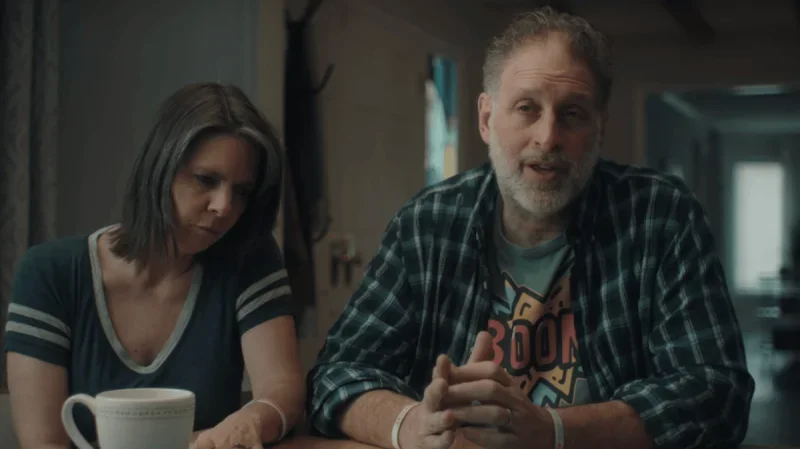
Steve Shirilla, who served as an art and digital media teacher at Mary Queen of Peace School in Cleveland, was suspended shortly after the May 15 release of the Netflix documentary "The Crash," which examined his daughter's 2022 fatal car crash and subsequent conviction. The school's diocese confirmed to 19 News that Shirilla would not be returning to the classroom.
The disciplinary action stemmed from comments Shirilla made during the documentary, in which he stated he was "happy" his daughter smoked marijuana as a teenager "instead of shooting up." The remarks were widely criticized as minimizing substance use and responsibility in the case that killed two people.
Shirilla confirmed to 19 News on May 18 that he was placed on administrative leave, telling reporters he was upset with the documentary's editing. He claimed that additional context he provided was left on the cutting-room floor, and reiterated his belief that his daughter is innocent of the murders she was convicted of.
"He says he's upset with the documentary and how the editing of it came out, saying there was more that he said that wasn't edited in," 19 News reported. "He also told 19 News he believes his daughter is innocent and that there is more to the story."
Bodycam Footage Reveals Father Calling Mackenzie a 'Dumb 18-Year-Old'
Compounding the public relations crisis surrounding the Shirilla family, newly surfaced bodycam footage obtained by People magazine shows Steve Shirilla berating police officers shortly after his daughter's arrest in November 2022.
In the footage, Shirilla arrives at the Strongsville Police Department less than an hour after Mackenzie, then 18, was taken into custody. The encounter, which lasts approximately three minutes, captures Shirilla demanding to speak with his daughter and questioning the officers' decision to arrest her on a weekend.
"It's unbelievable, I mean she's 18," Shirilla told officers.
When one officer informed Shirilla that his daughter could legally speak for herself as an adult, the father responded dismissively: "Yeah, but she's a dumb 18-year-old."
Shirilla insisted his daughter not speak to police without a lawyer present. "I need to speak to my daughter because you guys aren't allowed to speak to her at all," he said, adding, "That's from the lawyer, he does not want you speaking to her at all."
The interaction escalated when Shirilla accused police of having a "creeper out on the front lawn watching" his home, a claim officers denied. Officers also denied his request to see Mackenzie, citing her status as a legal adult who had not waived her rights.
"Well, I need to speak to my daughter so that she understands not to say anything to you guys," Shirilla responded before leaving, shouting, "Don't ask her any questions."
The bodycam footage has fueled the narrative that the Shirilla family was overprotective and dismissive of the severity of the crash, which killed Mackenzie's boyfriend Dominic Russo, 20, and his friend Davion Flanagan, 19.
The Netflix Effect: How 'The Crash' Reshaped Public Opinion
The Netflix documentary "The Crash" has reignited intense public interest in the case, transforming Mackenzie Shirilla into a cultural villainess across social media platforms. TikTok, YouTube, and Instagram have seen a flood of content dissecting the case, with prison phone calls, courtroom testimony, and Mackenzie's social media posts all being analyzed by true-crime enthusiasts.
In one heavily circulated clip, Mackenzie's mother Natalie addresses the court during sentencing and minimizes Davion Flanagan's death by saying "he was a new friend." The moment has been widely condemned as callous and emblematic of the family's perceived lack of remorse.
The case itself is harrowing: On July 31, 2022, Mackenzie, then 18, drove her 2018 Toyota Camry at speeds exceeding 100 miles per hour into a brick wall in Strongsville, Ohio. Dominic Russo was killed instantly, and Davion Flanagan died later at the hospital. In 2023, a Cuyahoga County judge found Mackenzie guilty of multiple charges, including two counts of murder and two counts of aggravated vehicular homicide, ruling that she deliberately drove into the wall.
She was sentenced to life in prison with eligibility for parole after 15 years served. Her subsequent appeals have been denied, including a recent bid to have the Ohio Supreme Court review her case after her appeal missed a filing deadline by one day.
Prison phone calls released since the documentary's premiere have revealed Mackenzie's apparent lack of remorse. In one call, she allegedly refers to herself as the "3rd victim" of the crash. Other calls detail her prison romances, her glee at the documentary's popularity, and her hope that Kim Kardashian might take an interest in her case. Reports also indicate she has been involved in disciplinary incidents at the Ohio Reformatory for Women.
Community Reactions and Legislative Response
The renewed attention has had consequences beyond the Shirilla family. The Russo family, led by Dominic's sister, has been active in pushing for legislative change. A proposed bill called "Dom's Law" would block convicted violent offenders from profiting off social media platforms, a direct response to Mackenzie's apparent attempts to monetize her notoriety behind bars.
Davion Flanagan's adoptive father, Steve Flanagan, has emerged as a moral counterweight in the public narrative. In the documentary, he is portrayed as seeking accountability while grappling with the tragedy of losing a son. His measured demeanor has drawn sympathy from viewers who find themselves torn between anger at Mackenzie and broader questions about prison reform and justice.
As Mother Jones noted in a recent essay on the case, the internet is struggling with a "mind-boggling thing" — how to hate Mackenzie Shirilla while also questioning the prison industrial complex that houses her. The magazine points out that the case has become "true crime catnip" precisely because of the contradictions it presents: an entitled young woman with a massive internet footprint, parents who enabled her behavior, a friend group described as "Euphoria come to life," and a legal system that handed down a life sentence but still leaves room for parole.
Broader Implications: True Crime, Responsibility, and the Limits of Documentary
The fall of Steve Shirilla highlights a growing phenomenon: the real-world consequences of documentary participation. As streaming platforms increasingly turn sensational criminal cases into binge-worthy content, the families of perpetrators and victims alike are finding themselves under unprecedented scrutiny.
True crime documentaries have long faced criticism for exploiting tragedy for entertainment, but "The Crash" represents a new frontier — one where the subjects themselves become accountable for their on-screen words. Steve Shirilla's belief that the documentary was edited unfairly echoes a common complaint among documentary subjects, but it has done little to shield him from professional consequences.
The case also raises questions about the limits of parental responsibility. Steve Shirilla's dismissal from his teaching position suggests that educators are being held to higher standards of moral judgment, particularly when their public comments reflect poorly on their ability to guide young people. His statement about being "happy" his daughter smoked weed has been viewed as incompatible with the values of a Catholic school environment.
Meanwhile, the bodycam footage showing him calling his own daughter a "dumb 18-year-old" paints a portrait of a family dynamic that many observers believe contributed to Mackenzie's sense of entitlement and lack of accountability. The footage suggests a pattern of parents intervening to shield their child from consequences, from the immediate aftermath of the arrest through the subsequent legal proceedings.
What Comes Next
As Steve Shirilla exits his teaching career, the focus shifts back to Mackenzie Shirilla, who will remain incarcerated until at least 2038, when she becomes eligible for parole. Her case continues to be litigated and discussed, with new revelations emerging regularly from prison records and phone calls.
The Russo family's push for "Dom's Law" may gain momentum in the Ohio legislature, particularly given the heightened public awareness. And the Flanagan family continues to mourn a young man whose death was all but dismissed by the mother of the person who killed him.
For the internet, the case shows no signs of fading. A new wave of reaction videos, deep dives, and commentary is expected as more prison recordings surface. The Shirilla case has become a Rorschach test for American attitudes toward crime, punishment, privilege, and justice — with no easy answers in sight.
In an era where true crime dominates streaming charts and social media feeds, the story of Mackenzie Shirilla may be remembered as a cautionary tale not just about reckless driving, but about how the digital ecosystem amplifies tragedy into entertainment, and how the families caught in the middle — whether victims or perpetrators — are left to face the consequences on a public stage.
Comments