
Jeffries Wins Democratic Nomination for Speaker
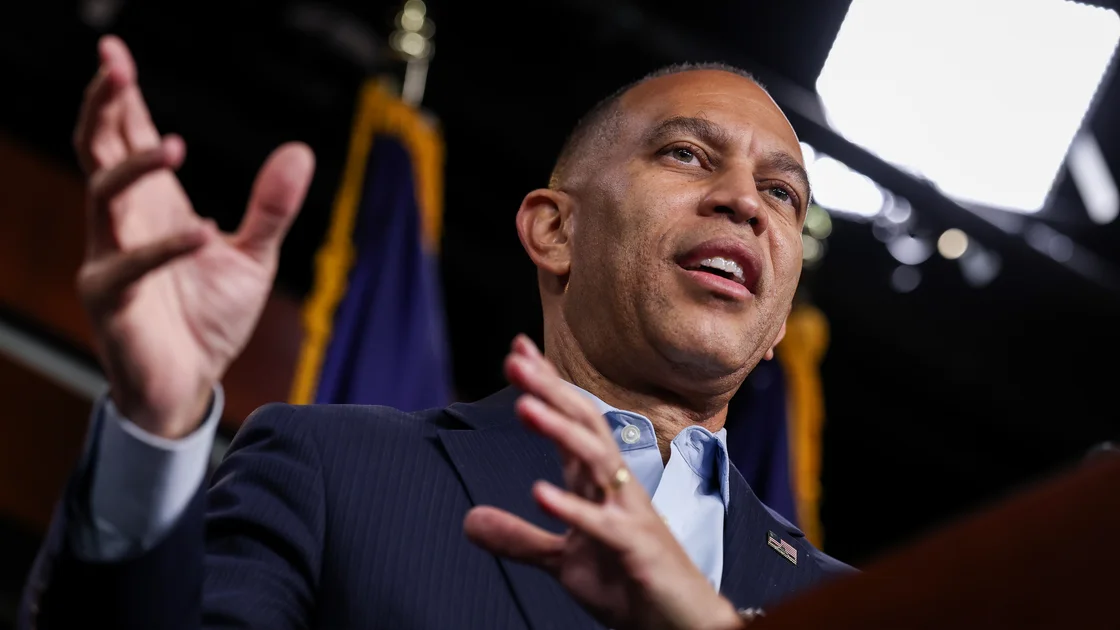
House Democrats formally nominated Rep. Hakeem Jeffries of New York to be the next speaker of the House in a closed-door, secret-ballot vote on Wednesday, putting him on a glide path to become the first Black speaker in U.S. history when the new Congress convenes in January. Jeffries defeated no challenger but secured 251 votes to 11, according to two sources in the room, a show of strength that underscores his firm grip on the caucus despite recent grumbling from progressive members and activists calling for new and bolder leadership.
The nomination came after Democrats won back the House majority in the midterm elections, a victory that has elevated Jeffries from minority leader to the brink of the speaker’s office. In a gesture of transparency, Jeffries requested a recorded vote rather than the acclamation some allies had pushed for, saying he wanted to give every member the opportunity to weigh in on who is best positioned to lead the party. “It certainly seems to me to be appropriate that we take exactly the same approach,” Jeffries told reporters Tuesday, referencing the 2018 vote that returned Nancy Pelosi to the speaker’s office amid calls for generational change. “To give every single person the opportunity to weigh in one way or the other on who the caucus feels is best positioned based on track record, experience, vision, to help move us forward in the new Congress.”
A Show of Strength Despite Dissent
The 251-11 vote margin belies some underlying tensions within the Democratic Caucus. Seven of the 11 Democrats who voted against Jeffries issued a joint statement explaining their opposition, citing a mandate from constituents on issues including Medicare for All, immigration enforcement, money in politics, and the situation in Gaza. The group—Reps.-elect Darializa Avila Chevalier of New York, Adam Hamawy of New Jersey, Frederick Haynes of Texas, Melat Kiros of Colorado, Donavan McKinney of Michigan, Chris Rabb of Pennsylvania, and Claire Valdez of New York—said they have had “good-faith conversations” with Jeffries and seen “meaningful progress,” but that “there is still work to be done to ensure that the direction our party takes this coming Congress reflects what our constituents are demanding of leadership.” They added that “those conversations are ongoing” and that their vote in caucus was “no.”
The dissent highlights the persistent divide between the party’s establishment and its progressive wing, even as Democrats project unity ahead of taking control of the House. Jeffries, who has led the caucus since 2023, has been careful to balance the demands of his diverse membership while maintaining a leadership style that emphasizes experience and institutional knowledge. His nomination was seconded by five colleagues representing the broad diversity of the caucus: Rep. Teresa Leger Fernández of New Mexico, Rep. Derek Tran of California, Rep. Mark Pocan of Wisconsin, Rep.-elect Rebecca Bennett of New Jersey, and former Majority Whip Jim Clyburn of South Carolina, one of Jeffries’ political mentors. Clyburn, a veteran of the Civil Rights Movement, called the moment “surreal.”
Context: A Historic Shift in Leadership
Jeffries’ nomination marks a significant milestone in American politics. If elected speaker in January, he will become the first Black lawmaker to hold the position, breaking a barrier that has stood since the founding of the Republic. The development comes after Democrats secured a majority in the House during the midterms, a victory that has been interpreted as a rebuke of Republican policies and a mandate for Democratic leadership. The party’s return to power also means Jeffries will have the opportunity to set the legislative agenda, oversee committee investigations, and serve as a counterweight to the Republican-controlled Senate and the Trump administration.
The nomination also signals a generational shift within the Democratic Party. Jeffries, 56, represents a new cohort of leaders who have risen through the ranks over the past decade. His ascension follows the retirement of Nancy Pelosi, the first woman to serve as speaker, and marks the end of an era dominated by leaders who came of age during the civil rights and anti-war movements. Jeffries has been a fixture in Democratic leadership since 2019, when he became caucus chair, and he has been known for his pragmatic approach and ability to navigate the party’s factions.
A Caucus United—Mostly
Despite the historic nature of the nomination, the 11 defections serve as a reminder that Jeffries will need to manage a diverse and sometimes restive caucus. The progressive members who voted against him have made clear that their support is conditional on commitments to their policy priorities. In their statement, they referenced “Medicare for All, stopping ICE terror, getting money out of politics, or ending the genocide in Gaza”—issues that have energized the party’s base but sometimes put them at odds with more moderate members. Jeffries has reportedly been engaged in ongoing conversations with the group, and his allies have expressed confidence that the party will unite behind him when the full House votes in January.
The nomination also comes amid a broader political landscape that includes the recent midterm elections, in which Democrats performed strongly. In Alaska, Democrat Mary Peltola won a historic victory, which Senate Democratic leader Chuck Schumer called “an exclamation point on a great election year.” The win in Alaska, a traditionally Republican state, underscores the party’s momentum heading into the new Congress. Meanwhile, the Senate is expected to see its own leadership battles, with Schumer expressing confidence that he has the votes to beat back a challenge from Sen. Chris Van Hollen.
Perspective: What Jeffries’ Speakership Means
Jeffries’ nomination is more than a symbolic milestone; it has practical implications for how the House will operate under Democratic control. As speaker, Jeffries will be responsible for setting the legislative calendar, referring bills to committees, and representing the House in negotiations with the Senate and the White House. His leadership style—described as calm, strategic, and inclusive—will be tested as he seeks to keep his caucus united on key votes, from government funding to judicial confirmations.
His elevation also signals a new chapter in the Democratic Party’s leadership, one that is more diverse and generational. The fact that his nomination was seconded by a mix of veteran lawmakers like Clyburn and newcomers like Bennett reflects the coalition he has built. However, the progressive dissent serves as a warning that the party’s left flank will not be silent. Jeffries will need to balance their demands with the political realities of governing in a divided government.
Broader Implications for Congress and the Nation
The speaker’s race is also a bellwether for the 2028 presidential election. Jeffries will become the face of House Democrats, and his performance will shape the party’s image going into the next election cycle. His ability to manage the House, communicate the party’s message, and counter Republican attacks will be closely watched. Moreover, his historic status as the first Black speaker could energize Democratic voters and inspire a new generation of political leaders.
The nomination also comes as the country grapples with a range of pressing issues, from immigration to the economy. Jeffries has signaled that his priorities include lowering costs for working families, protecting voting rights, and addressing gun violence. But he will have to navigate a divided Congress, where Republicans control the Senate and the White House, making legislative achievements difficult. His tenure will likely be defined by his ability to use the speaker’s office as a platform for oversight and messaging, much as Republicans did during their time in the majority.
In the end, Jeffries’ nomination is a moment of both celebration and challenge. It represents a historic breakthrough, but also a test of leadership. As he prepares to take the speaker’s gavel, all eyes will be on how he steers his party and the House through the coming years. For now, Democrats have sent a clear message: they are ready to move forward with Jeffries at the helm.
The formal election of the speaker will take place on January 3, 2027, when the new Congress convenes. With Democrats holding the majority, Jeffries is expected to win the necessary votes, barring any last-minute surprises. His nomination on Wednesday is the culmination of a career that began in the New York State Assembly and has now reached the highest echelon of American politics.
Comments