
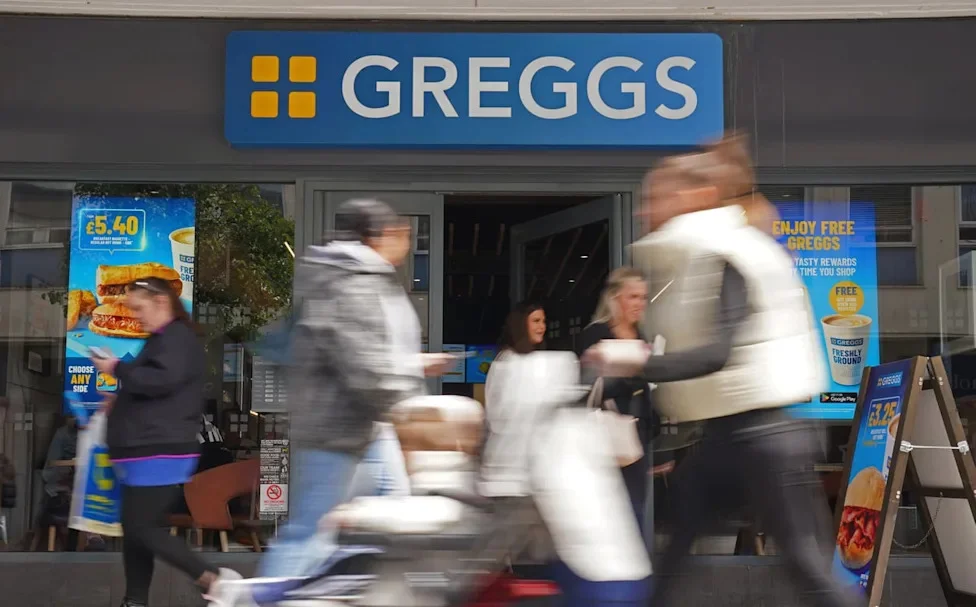
Greggs Shuts 11 Stores Including Flagship Leicester Square Branch as Heatwave Peaks
Greggs has temporarily closed 11 of its stores across England for Wednesday 24 and Thursday 25 June due to extreme heat, with temperatures forecast to hit 38°C or higher in some areas. The sausage roll chain said the decision was taken “to protect our customers and colleagues during the severe hot weather”.
The list of affected locations includes the company’s flagship branch in Leicester Square, London, as well as stores in Aldridge, Wolverhampton, Luton, Gosport, Trowbridge, Barnet, Marlborough, Wantage, Dudley, and Northampton. All are expected to reopen on Friday when temperatures are forecast to ease slightly.
Greggs is not alone. At least 1,000 schools and nurseries in England and Wales have either shut or introduced early finishes. Train operators have imposed speed restrictions and cancellations, and the Met Office has warned that the previous June record of 35.6°C – set during the infamous summer of 1976 – could be shattered as a heat dome settles over western Europe.
The extreme conditions have also prompted a surge in demand for cooling products. Lidl launches £149 portable air conditioner in UK stores as heatwave peaks, with many retailers reporting sell-outs of fans and portable units.
Which Greggs Stores Are Closed and Why
A company spokesperson confirmed the closures were precautionary, citing the safety of staff working in shops without adequate cooling. The baker said affected employees would still be paid. The list of shuttered branches includes locations in both city centres and smaller towns, underlining the breadth of the heatwave’s impact.
Rail services have been similarly disrupted. West Midlands Railway Passengers Told to Avoid Travel as Heatwave Buckles Rails, with Network Rail warning that tracks could kink in temperatures above 30°C. Speed restrictions are in place on several main lines, causing delays and cancellations.
Why This Heatwave Matters for Business and Public Safety
The closure of high-street staples like Greggs highlights how extreme weather is increasingly disrupting daily operations. For a chain that typically prides itself on convenience and consistency, shutting a flagship London store is a significant move. It reflects a growing trend among retailers to issue “heat policies,” adjusting opening hours or relaxing dress codes when temperatures exceed safe thresholds.
Public health officials have urged people to stay indoors, close curtains, and drink plenty of water. The elderly, young children, and those with pre-existing health conditions are at greatest risk. Some local authorities have opened cooling centres in community halls and libraries.
The heatwave has reignited political debate about the UK’s preparedness for climate extremes. Campaigners argue that the country’s infrastructure – from homes built to retain heat to an NHS already under strain – is not designed for prolonged high temperatures of 35°C or more.
Transport and School Disruptions Widen
Beyond Greggs, the knock-on effects are being felt across the travel and education sectors. Schools in several counties, including Hampshire, Oxfordshire, and the West Midlands, have closed or sent children home early. Exams scheduled for Wednesday and Thursday have been pushed back where possible.
On the roads, National Highways has issued warnings about surface melt and potential tyre blowouts. The AA reported a spike in breakdown calls related to overheating engines. Meanwhile, the rail network is experiencing what one operator called a “perfect storm” of heat-related failures.
Broader Implications: Climate Change and Retail Resilience
The June 2026 heatwave is the latest in a series of extreme weather events that scientists link to human-driven climate change. The Met Office has noted that UK summers are becoming hotter and longer, with the likelihood of 40°C days increasing even in the near term. For businesses like Greggs, which operate across thousands of outlets with standardised equipment and staffing models, the cost of reactive closures can run into millions.
Longer-term, retailers may need to invest in better ventilation, air conditioning, and heat-resistant supply chains. The current closures may be a short-term inconvenience, but they point to a structural challenge that will only grow if temperatures continue to rise.
A Moment for Reflection on Workforce Protection
The heatwave also reopens the question of statutory minimum temperatures in workplaces. Unlike maximum working temperatures – which are regulated in many sectors – there is no legal upper limit in the UK beyond which work must stop. The Trades Union Congress (TUC) has renewed its call for a law that would require employers to take “reasonable steps” to keep workplaces cool when indoor temperatures exceed 30°C (or 27°C for strenuous work).
Greggs’ decision to close stores voluntarily sets a precedent that other chains may follow. For now, Britons enduring the heat can take solace in the fact that temperatures are forecast to drop by the weekend, even as the broader climate trend continues to warm.
It is a reminder that, while a temporary closure of 11 stores may seem small in the scale of a global food giant, it is a canary in the coal mine for how the UK’s high street – and its workforce – must adapt to a hotter, more unpredictable future.
Comments