
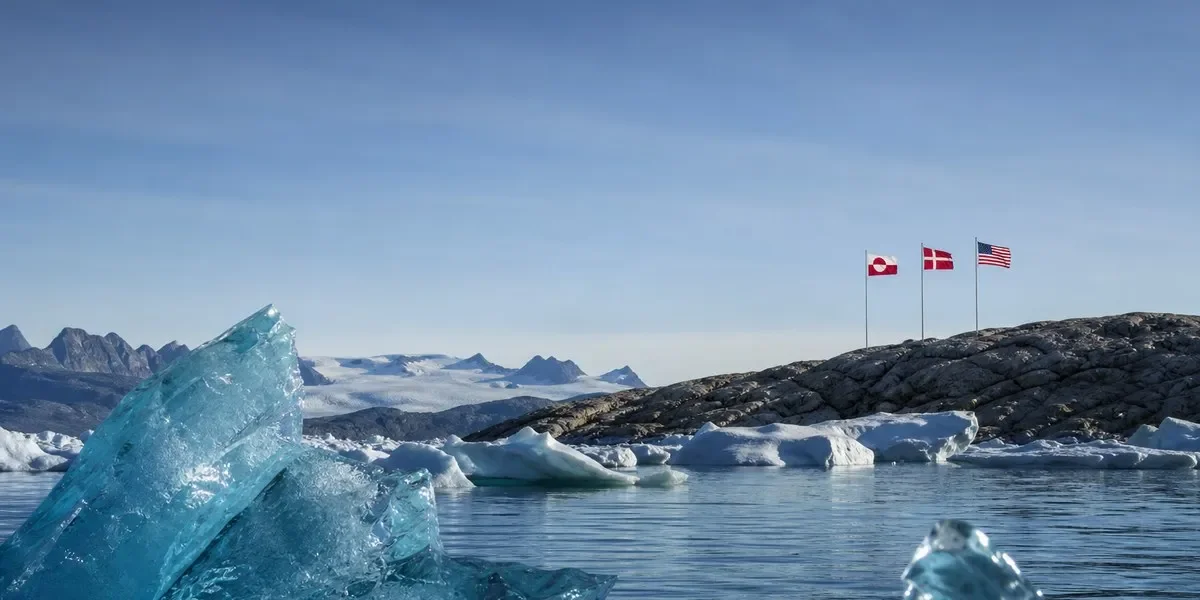
Greenland Parliament Ratifies Security Agreement with US, Denmark
Greenland's parliament on Tuesday approved a trilateral security and defence agreement with the United States and Denmark, marking a significant step toward stabilising the Arctic territory's geopolitical standing after months of tension over President Donald Trump's repeated threats to acquire the island.
The vote was 16-0 in favour, with seven abstentions, according to reports from Al Jazeera and the German news agency dpa. The deal, signed in September by Trump, Danish Prime Minister Mette Frederiksen and Greenlandic Prime Minister Jens-Frederik Nielsen on the sidelines of the UN General Assembly in New York, modernises and supplements a 1951 defence agreement between Denmark and the US.
Under the terms, the US is permitted to "modernise and expand" its activities at the Pituffik Space Base in north-western Greenland, a remote installation vital for missile defence and radar surveillance. The agreement also paves the way for additional US bases on the island. Crucially, it stipulates that Greenland remains under Danish control and would continue to apply if the island eventually chooses independence.
Danish lawmakers are scheduled to debate the pact on November 19, and no approval is required from the US Senate. Once both parliaments have completed their processes and the US has been notified diplomatically, the agreement can enter into force.
A Line Under the Annexation Threat
Greenlandic Foreign Minister Mute Egede described the ratification as a difficult but necessary step. "The road to this point has been a difficult one for us as a people. But we have stood firm on our fundamental principles, chosen dialogue and taken responsibility for our country's interests," he wrote on Facebook. "This is about all of us. The Greenland we love. About our security. And about our right to shape our own future."
The deal draws a line—at least for now—under the conflict triggered by Trump's refusal last year to rule out a military invasion. Opinion polls showed that a majority of Greenlanders rejected US control, and the threat caused widespread fear in the semi-autonomous territory of 57,000 people. From the Danish and Greenlandic perspective, the concessions are a small price to pay: sovereignty remains untouched, and the US already had considerable military freedom of action under the 1951 agreement.
Tourism Boom Meets Geopolitical Reality
The security pact comes as Greenland is experiencing an unprecedented tourism surge, driven by the opening of three new international airports. The latest, in Ilulissat—known as the "city of icebergs"—began offering direct flights from Denmark and Iceland this year, joining airports opened in Nuuk in 2024 and Qaqortoq in April.
The results have been striking. Greenland welcomed nearly 180,000 visitors in 2025—more than three times its population—and this year is set to surpass that record. Tourism accounted for 4.9% of GDP in 2024, and the government hopes the sector will help build the economic foundation for eventual independence from Denmark.
But the influx has not been universally welcomed. When Nuuk airport opened, locals voiced concern about the impact on a historically isolated population and pristine environment. A cruise ship was blocked from entering Ilulissat amid fears that foreign tour operators were reaping the benefits while locals saw little return. The ambivalence reflects a broader global trend: destinations from Spain to Italy are pushing back against mass tourism, and Greenlanders are wary of becoming the next flashpoint.
Economic Independence vs. Environmental Cost
Prime Minister Nielsen has framed tourism as central to Greenland's long-term ambitions. "If Greenland wants to be independent, we need to have a strong foundation, economically and in terms of industry and business," he said at the Ilulissat maiden flight. Yet the same climate crisis that is making Greenland more accessible—melting polar ice—is also existential for its traditional fishing industry.
The security agreement, meanwhile, could accelerate resource exploration. Trump has spoken of "massive" resource exploration in Greenland, and the deal's provisions for expanded US military presence may be accompanied by economic interests in rare earth minerals and energy reserves.
A Delicate Balance for the Arctic
Greenland now finds itself navigating between two powerful forces: a security arrangement that formalises US military reach in the Arctic and a tourism boom that could transform its society and economy. The ratification vote was overwhelming but not unanimous—seven abstentions signal lingering unease about deeper integration with the US.
The agreement's fate now rests with the Danish parliament, which is expected to approve it. For Greenlanders, the deal represents a pragmatic choice: accept a US military footprint in exchange for a measure of stability and a path toward economic self-sufficiency. Whether that path leads to independence—or to a new form of dependence—remains an open question.
As the Arctic warms and global powers vie for influence, Greenland's decisions will resonate far beyond its icy shores. The coming months will test whether the territory can balance security, sovereignty, and sustainable development—a challenge as formidable as its ice sheet.
Comments