
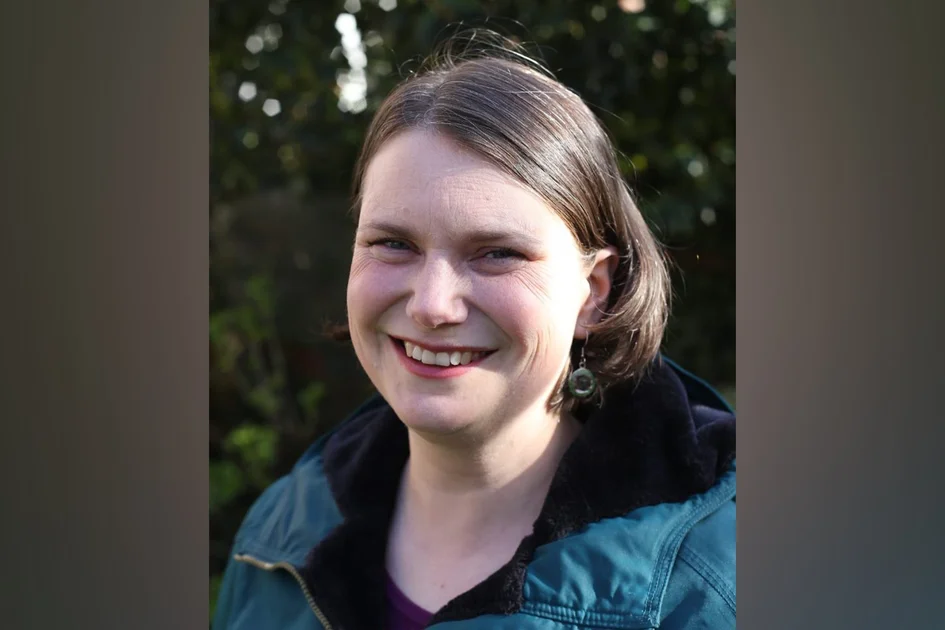
Green Party’s Sarah Wakefield Enters Makerfield Race with a Message of Hope
Sarah Wakefield, the Green Party candidate for the upcoming Makerfield by-election, is betting on a positive campaign in a race defined by anger and high political stakes. The 38-year-old newly elected Manchester city councillor was drafted into the contest after the party’s initial candidate, Chris Kennedy, was forced to step down within 24 hours over a controversial video posted online.
Appearing alongside Labour’s Andy Burnham, Reform UK’s Robert Kenyon, and other candidates at a BBC Question Time special on June 4, Wakefield presented herself as a contrast to what she describes as the weaponization of public anger. “I think politics should be about what the future we want to see for us and our children,” she told the Manchester Evening News, “and not just who we’re the most angry at at this moment in time.”
Wakefield is running her campaign while on maternity leave, balancing door-knocking in the constituency with her duties as a councillor for the Deansgate ward. She has acknowledged the significant ground she needs to make up, having only launched her campaign in earnest last week.
A By-Election That Could Reshape National Politics
The Makerfield by-election, triggered by the resignation of former Labour MP Josh Simons, is widely seen as one of the most consequential in recent British history. Polls suggest a tight race between Labour’s Andy Burnham and Reform UK’s Robert Kenyon. A Burnham victory would likely lead to a formal leadership challenge against Prime Minister Sir Keir Starmer, while a Reform win would signal a major shift in the political landscape and potentially pave the way for a Nigel Farage premiership.
Burnham has made clear his ambition to return to Parliament and enter any Labour leadership contest, telling BBC Question Time: “If I get your support, I would seek to represent you at the highest possible level.” He is being encouraged by former health secretary Wes Streeting, who wants a “proper contest with the best candidates on the field.”
Reform’s Kenyon, a local plumber and councillor, has positioned himself as an outsider against “career politicians,” warning voters not to treat Makerfield as a “stepping stone.” The race has drawn national attention, with the outcome likely to influence the direction of UK politics for years to come.
Wakefield’s Strategy: Refusing to Fight Anger with Anger
Wakefield says she has encountered significant anger on the campaign trail, but she refuses to respond in kind. “I can see that people are very angry… on all sides of the political spectrum,” she said. “There’s a small number of politicians that are weaponizing people’s anger to get elected and get into power in order to benefit them and their rich friends.”
Her campaign is built on climate politics, social justice, and a focus on local issues. She has emphasized the need for Westminster to pay attention to communities like Makerfield, echoing a sentiment shared by Burnham. However, the Green candidate faces an uphill battle in a constituency that has never elected a Green MP.
The party’s rocky start—losing its first candidate over an antisemitism row—has made Wakefield’s task even harder. Yet she remains optimistic, describing herself as a “perpetually sunny character” determined to run a constructive campaign. By focusing on hope rather than anger, she hopes to offer voters a different choice in a race dominated by Labour’s internal turmoil and Reform’s populist surge.
A Test of Whether Positivity Can Win in an Age of Political Rancour
The Makerfield by-election is more than a local contest—it is a bellwether for the national mood. While Burnham and Kenyon represent the two main narratives of Labour renewal versus Reform insurgency, Wakefield’s candidacy tests whether a positive, policy-focused message can break through.
Her approach mirrors a broader trend within the Green Party of positioning itself as a constructive alternative to the major parties. However, in a race where many voters feel left behind—Kenyon noted that “while Manchester thrives, we’re struggling to survive in Wigan”—anger may prove a more powerful motivator than hope.
If Wakefield can secure a respectable share of the vote, it could strengthen the Greens’ position as a viable alternative for disillusioned Labour supporters. But with the election just weeks away, and the national spotlight fixed on Makerfield, the pressure is on to turn her message into votes.
For more on the broader dynamics of the campaign, read our analysis on how Makerfield by-election: Voters put cost of living above party loyalty in key race. The result on June 18 will not only decide who represents this corner of Greater Manchester, but could also trigger a chain reaction that reshapes the leadership of both major parties and the future of British politics.
Comments