
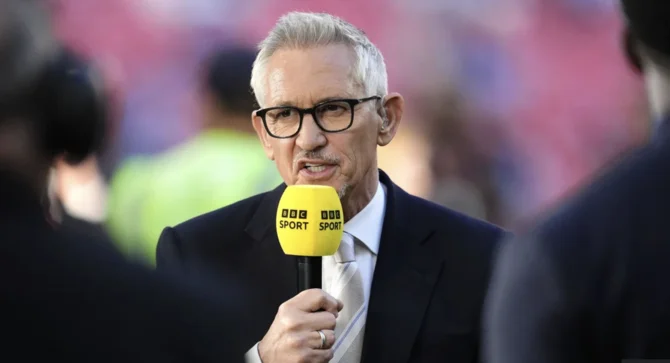
Gary Lineker signs open letter backing Southbank Centre chair Misan Harriman
Gary Lineker has joined Greta Thunberg, Tracey Emin and dozens of cultural figures in signing an open letter defending Southbank Centre chair Misan Harriman, following what the signatories describe as a “dishonest smear campaign” by sections of the media. The letter, published on May 13, 2026, pushes back against accusations that Harriman promoted antisemitic conspiracy theories and compared Reform UK voters to Nazis.
Harriman, who has chaired the Southbank Centre’s board of governors since 2021, faced heavy criticism after sharing a social media post that questioned the amount of media coverage given to Ishmail Hussein, a Muslim victim of the Golders Green attack. Critics, including Labour MP David Taylor, argued the repost risked minimising the antisemitic nature of the attack. The controversy escalated when the Telegraph ran a story with the headline “Southbank Centre chief ‘compares Reform victory to Holocaust’” after Harriman quoted Susan Sontag in a video reflecting on Reform’s historic local election results.
In the video, Harriman said: “She said when thinking about the Holocaust, 10% of people in any population are cruel no matter what, and 10% is merciful no matter what and the other – this is important – the other remaining 80% could be moved in either direction. It’s such a profound way to look at us. In the context of yesterday’s election result it is something which I think is really topical.”
Karen Pollock, chief executive of the Holocaust Educational Trust, strongly criticised the analogy, asking: “How on earth could yesterday’s election results ever be comparable to the Holocaust?” Reform MP Robert Jenrick called for Harriman’s removal, branding him a “crass moron” and arguing he should not be “anywhere near a taxpayer-funded organisation.”
Lineker’s decision to co-sign the open letter places him once again at the centre of a heated public debate over free speech, antisemitism and the accountability of public figures — themes that have dominated his own recent history.
Why Lineker left the BBC: The social media row that ended a 26-year tenure
Lineker’s involvement in the Southbank letter comes almost exactly a year after he dramatically severed ties with the BBC. The former England striker had intended to step down from Match of the Day in May 2025 but planned to continue fronting the BBC’s FA Cup and World Cup coverage. Those plans collapsed when he shared a video on Zionism that included a rat emoji — a symbol historically used as an antisemitic slur.
Lineker later explained that he had not noticed the emoji and would not have shared the video if he had, but acknowledged he should have been more vigilant. In a statement at the time, he said: “I would never consciously repost anything antisemitic – it goes against everything I stand for. However, I recognise the error and upset that I caused, and reiterate how sorry I am. Stepping back now feels like the responsible course of action.”
The fallout ended a 26-year association with the BBC and forced Lineker to walk away from two high-profile presenting roles: the FA Cup and the 2026 World Cup. Since then, he has moved to ITV and taken on projects with Netflix, including the launch of its Sports Club series.
Lineker’s fresh dig at BBC over World Cup coverage
The Southbank letter is not the only headline Lineker is generating this week. Speaking at the launch of Netflix’s Sports Club, the 65-year-old took a thinly veiled swipe at his former employer over its plans for the upcoming men’s World Cup in North America. The BBC has opted to keep most of its pundits in a studio in Salford, only sending television presenters stateside from the quarter-final stage onwards in a cost-cutting move.
Lineker said: “I was originally going to do it for the BBC this summer, but that didn’t transpire and I would have been in Salford in a green box and now I’m going to be in New York City overlooking Times Square with lots of great guests.”
The remarks underline a growing rift between Lineker and the corporation that was once his primary platform. They also come as the BBC faces mounting criticism over its approach to major sporting events, with some questioning whether the cost-saving measures risk diminishing the quality of its coverage.
Broader implications: Free speech, public funding and the limits of accountability
The twin stories surrounding Lineker this week — his role in defending Harriman, and his ongoing critique of the BBC — point to a deeper cultural shift. Public figures are increasingly caught between calls for accountability over controversial content and fears that legitimate debate is being stifled. The open letter in support of Harriman explicitly frames the criticism against him as an attempt to silence dissenting voices at a moment of heightened tension over antisemitism.
Yet critics argue that Harriman’s position at a major publicly funded institution justifies intense scrutiny. The Southbank Centre receives significant taxpayer support, and Harriman’s role as chair of its board of governors places him in a position of considerable public trust. Figures such as Karen Pollock and Robert Jenrick maintain that comparing an election result to the Holocaust — even indirectly — is an unacceptable misstep for someone in that role.
For Lineker, the Harriman letter marks another chapter in a post-BBC life where he has become a more explicitly political figure. His decision to sign the letter suggests he remains willing to wade into controversy even after his own experience with cancellation-by-social-media. Meanwhile, his continued public criticism of the BBC signals that the relationship between the broadcaster and its former star remains strained. As the BBC tackles cost pressures and questions about the future of its sports offering, Lineker’s high-profile departure and subsequent moves to ITV and Netflix serve as a reminder of the talent — and audience — the corporation lost.
The full consequences of these intersecting debates — over antisemitism, public funding, and the boundaries of acceptable commentary — are still unfolding. But one thing is clear: Gary Lineker is not staying quiet, whether from a studio in Salford or a vantage point overlooking Times Square.
For more on major cultural clashes and sports media shifts, see our coverage of Messi and Evander set for Cincinnati-Miami MLS showdown at TQL Stadium and Pentagon Releases Hundreds of UFO Files in Trump Transparency Push.
Comments