
Airlines Scramble for Fuel as Iran Conflict Disrupts Global Supply Chains
The European Union and international airline bodies have moved to ease mounting concerns over jet fuel shortages by allowing European carriers to use US-grade fuel, as the ongoing conflict in the Middle East continues to disrupt traditional supply routes. The European Aviation Safety Agency (EASA) has published safety guidance outlining how US-grade Jet A fuel can be introduced into the European market, signaling a dramatic shift in fuel logistics for the aviation industry.
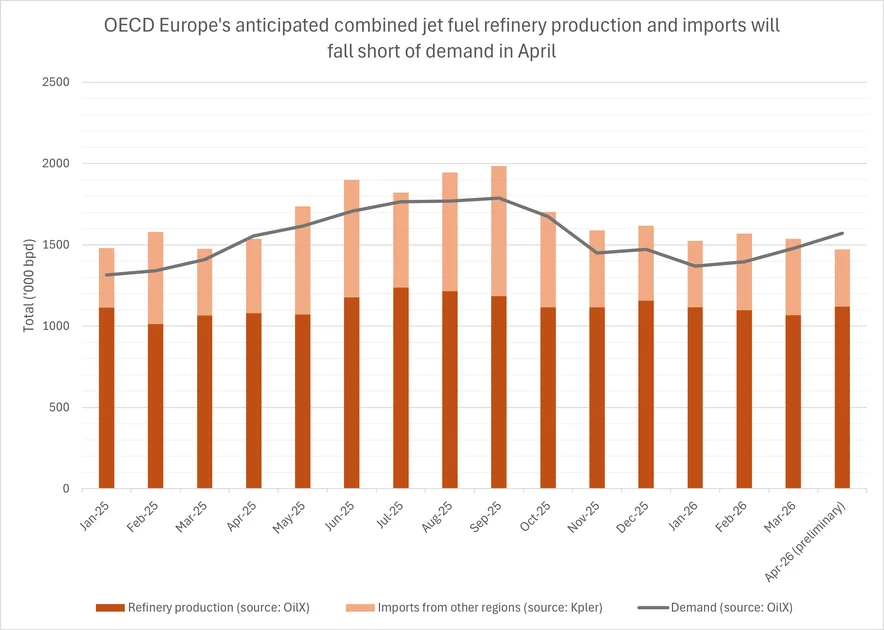
Jet fuel prices for the European standard Jet A-1 have surged by 50% since the start of the US-Israel war with Iran, according to the BBC. The International Air Transport Association (IATA) has warned that if the conflict persists, fuel shortages in some parts of the world could become inevitable. Stuart Fox, IATA's director of flight and technical operations, stated in a blog post that the situation is critical: "If the conflict in the Middle East continues, it won't be long before we see fuel shortages in some parts of the world."
Two Fuel Standards, One Crisis: The Jet A vs. Jet A-1 Divide
The Technical Difference
Commercial aviation relies on two primary fuel types: Jet A-1, the global standard used in most international operations, and Jet A, which is predominantly used in North America. Both are forms of kerosene and chemically similar, but Jet A-1 has a lower freezing point, making it more suitable for long-haul and polar routes. Since the crisis erupted, supplies of Jet A-1 from the Gulf region have slowed to a trickle, creating a particular problem for Europe, which depends heavily on imports from that region.
Increased shipments from the US have partially compensated, but many US refineries are not configured to produce Jet A-1, limiting the volume that can be shipped across the Atlantic. The new EU guidance allows European airlines to use US-grade Jet A, effectively broadening the available supply pool.
Regulatory Door Opens
The EU has confirmed there are "no regulatory obstacles" preventing European airlines from using US-grade fuel, provided it is done safely. EASA has detailed the risks and safety measures required for the transition. IATA has been pushing for wider international acceptance of Jet A as a way to relieve pressure on the constrained Jet A-1 market.
TUI Reassures Travelers: 'No Shortages in the Next 10 Weeks'
Holiday Giant Sees No Immediate Threat
Despite the alarming headlines, Europe's largest holiday company, TUI Group, has struck a cautiously optimistic tone. Speaking as the company reported its financial results for October 2025 through March 2026, TUI CFO Mathias Kiep told The Independent: "I’m very much convinced that we will see no shortage in the next 10 weeks. There’s definitely enough fuel."
Kiep described the fuel shortage discussion as "a little bit artificial," noting that TUI sees no impact on summer flights except for higher prices—against which the company is hedged. He pointed to shifting global supply patterns: "We do see that Europe now gets more oil from other countries like Nigeria because the increased prices made the production there profitable. We see that consumption is significantly lower than a year before, and refinery capacity is also up."
War-Related Costs Hit Bottom Line
TUI reported a "very successful" first half of its financial year, but the war in Iran delivered a €40 million (£35 million) hit to profits, driven by lost sales and the cost of repatriating holidaymakers from the Middle East and Asia. Hurricane Melissa in Jamaica cost an additional €5 million. Air bookings for the summer are 7% below last year, with travelers opting for last-minute bookings rather than planning months ahead.
TUI CEO Sebastian Ebel emphasized the company's resilience: "We offer our customers a high level of security and quality, especially in turbulent times. The package holiday remains the gold standard."
EU Commissioner Warns of Long-Term Risks
No Room for Complacency
While short-term outlooks remain stable, the European Union is not ruling out future disruptions. An EU commissioner told the Associated Press that a jet fuel shortage "can't be excluded in the long term." The warning underscores the fragility of global fuel supply chains and the dependence of European aviation on Middle Eastern imports.
The conflict has also impacted other energy markets. The IEA recently revised its 2026 forecast, and oil prices have remained volatile. WTI Crude was trading at $101.9, while Brent Crude stood at $106.4, reflecting ongoing geopolitical tensions.
Summer Travel Season Under Pressure
Demand Remains High, but Behavior Shifts
Consumer demand for travel has not declined, according to TUI, but booking behavior has shifted significantly. Travelers are now booking two or three weeks in advance rather than two or three months, creating uncertainty for airlines and tour operators planning capacity. Despite fears, TUI has seen no shift from air to surface transport.
The summer season is traditionally the busiest for European airlines, and any disruption to fuel supplies could have cascading effects on tourism-dependent economies. The UK government has stated that "UK airlines are clear that they are not currently seeing a shortage of jet fuel," with airports and suppliers maintaining bunkered fuel stocks for resilience.
Cruise Industry Faces Headwinds
The war in Iran has also affected the cruise industry. TUI's cruise operations reported a drop in occupancy from 97% to 93%, with two ships stranded in the Gulf for 10 weeks. Separately, a norovirus outbreak on a Princess Cruise ship sickened over 100 passengers, adding to the sector's challenges. Read more about the norovirus outbreak.
Broader Implications: Energy Security and the Future of Aviation
A Wake-Up Call for Diversification
The jet fuel crisis, while not yet catastrophic, serves as a stark reminder of the aviation industry's vulnerability to geopolitical shocks. The reliance on a single fuel standard (Jet A-1) sourced predominantly from one region has created a bottleneck that the EU's emergency measures only partially address.
Long-term solutions may include accelerating the adoption of sustainable aviation fuels (SAF), which can be produced from a variety of feedstocks and are less dependent on global crude oil supply chains. However, SAF currently accounts for less than 1% of global aviation fuel consumption, and scaling production remains a massive challenge.
Economic Ripples Across Industries
Higher fuel costs are already feeding through to airfares, with TUI and other carriers warning of increased prices for summer 2026. The situation also highlights the interconnectedness of energy markets. The surge in oil prices has made production profitable in countries like Nigeria, shifting supply patterns. Meanwhile, the US continues to be a key supplier, but its refineries are not optimized for Jet A-1 production.
In the broader energy landscape, nuclear and renewable energy stocks are seeing renewed interest as investors seek alternatives to fossil fuel volatility. Oklo Stock Rebounds 75% from Q1 Low as AI Nuclear Hopes Fuel Recovery, and Eos Energy Stock Surges 36% on Cerberus Deal and Q1 Earnings Beat, signaling a shift in investor sentiment toward energy independence and innovation.
What This Changes: A New Normal for Global Aviation?
The jet fuel shortage, even if mitigated in the short term, is reshaping the aviation industry's operational playbook. Airlines are now actively diversifying fuel sources, regulators are adapting standards, and consumers are bracing for higher travel costs.
IATA's warning that shortages could appear "in some parts of the world" if the conflict continues is a reminder that the crisis is far from over. The EU's decision to accept US-grade fuel is a pragmatic stopgap, but it does not solve the underlying supply chain fragility.
For travelers, the immediate outlook is one of higher prices and potential last-minute disruptions. For the industry, the crisis is accelerating conversations about fuel diversification, strategic reserves, and the transition to alternative energy sources. The summer of 2026 may well be remembered as the season when aviation's fuel dependency was laid bare—and the search for a more resilient future began in earnest.
Comments