
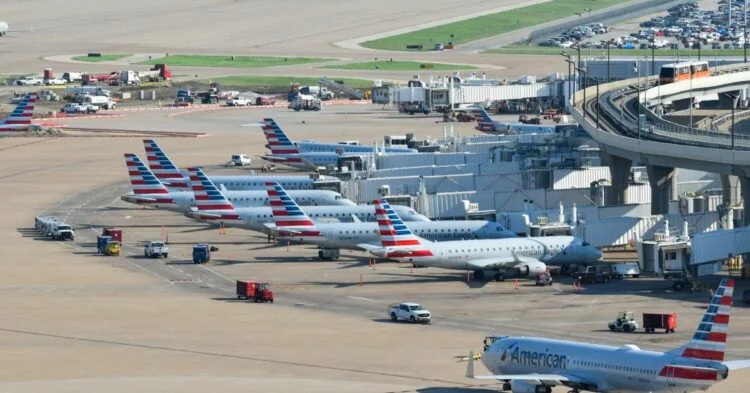
FAA Ground Stop at DFW Airport: Thunderstorms Trigger Massive Delays
DALLAS — The Federal Aviation Administration issued a ground stop at Dallas/Fort Worth International Airport on Sunday evening as thunderstorms swept through North Texas, snarling operations at one of the world's busiest hubs. The ground stop, which prevents flights destined for DFW from taking off at their departure airports, was downgraded to a ground delay by 9:35 p.m. local time, according to the FAA's airspace website.
The disruption left travelers facing extensive delays. Flights departing to DFW were delayed an average of 107 minutes, while departures from the airport were delayed an average of 30 minutes, the FAA reported. Dallas Love Field, the home base of Southwest Airlines, also saw departures delayed by an average of 30 minutes. According to FlightAware, DFW Airport accumulated more than 800 delays on Sunday, though cancellations remained relatively low at 25.
Immediate Impact on Travelers and Airlines
American Airlines, which operates its largest hub at DFW, bore the brunt of the weather-related ground stop. The airport serves as a critical connecting point for domestic and international travelers, and even brief disruptions can cascade through the airline's network. Passengers took to social media to report long lines at customer service desks and crowded terminals as they sought to rebook missed connections.
The ground stop was issued as a line of severe thunderstorms moved into the Dallas-Fort Worth area, bringing lightning, heavy rain, and gusty winds. The FAA typically initiates such measures when weather conditions make it unsafe for aircraft to land or when airport capacity is reduced. In this case, the storms prompted the agency to halt inbound traffic to prevent aircraft from circling or diverting to alternate airports.
Context: A Region Accustomed to Weather Woes, but Infrastructure Strain Persists
North Texas is no stranger to severe weather, particularly during the spring and fall months when thunderstorms and tornadoes are common. DFW Airport has robust procedures for handling such events, but the sheer volume of traffic—more than 800 daily departures—means that even short-lived ground stops can ripple across the national airspace system. The timing of Sunday's storms, arriving in the evening, compounded the problem as travelers returned from weekend trips or prepared for the workweek ahead.
The incident also highlights the broader fragility of the U.S. air traffic control system, which has faced mounting pressure from aging infrastructure and staffing shortages. Just days earlier, a major circuit failure at a Philadelphia facility forced the FAA to issue ground stops at Newark, Teterboro, and Philadelphia airports, later expanding to JFK and LaGuardia. That outage, caused by a construction crew accidentally severing a fiber-optic cable, resulted in hundreds of cancellations and delays across the Northeast. Transportation Secretary Sean Duffy and FAA Administrator Bryan Bedford both cited the need for additional funding to modernize outdated equipment.
A Pattern of Disruptions
While the DFW ground stop was weather-related, it occurred against a backdrop of increasing concern about the resilience of aviation infrastructure. In recent years, extreme weather events—from hurricanes to winter storms—have repeatedly tested the system's ability to recover quickly. The FAA has been working to implement NextGen, a long-term modernization program, but progress has been slow and funding remains a contentious issue in Congress.
For airlines, particularly American Airlines, such disruptions are costly. They lead to crew scheduling challenges, aircraft repositioning, and passenger compensation. The airline industry has been pushing for greater investment in technology and staffing to mitigate these impacts. However, the immediate focus on Sunday was on safely managing the flow of aircraft as storms passed.
Perspective: What This Means for Travelers and the Future of Air Travel
The DFW ground stop serves as a reminder of how quickly weather can upend travel plans, even at airports with advanced infrastructure. For passengers, it underscores the importance of flexibility: booking earlier flights, monitoring weather forecasts, and understanding airline rebooking policies can make a difference when disruptions occur. Airlines often issue travel waivers during such events, allowing customers to change flights without fees, as United did during the Newark outage.
Looking ahead, the frequency of such disruptions may increase if climate change intensifies severe weather patterns. Aviation experts argue that investing in more resilient air traffic control systems and better forecasting tools is essential. The FAA's aging infrastructure, much of it decades old, is increasingly vulnerable to both technical failures and extreme weather. The Newark incident, caused by a cut fiber line, illustrated how a single point of failure can halt operations across multiple airports.
Moreover, the ripple effects extend beyond the immediate region. DFW is a key hub for connecting flights across the country and to international destinations. When it sneezes, the rest of the system catches a cold. Sunday's ground stop likely affected travelers far from Texas, as aircraft and crews were out of position for subsequent flights. The FAA's decision to downgrade to a ground delay allowed some flights to resume, but residual delays persisted into Monday morning.
Balancing Safety and Efficiency
The FAA's primary responsibility is safety, and ground stops are a critical tool to prevent accidents when conditions deteriorate. However, the agency also faces pressure to minimize disruptions. The balance is delicate, and each event provides lessons for improving response. For instance, better coordination with airlines and more precise weather modeling could help narrow the scope of ground stops without compromising safety.
As North Texas recovers, travelers are advised to check with their airlines for the latest flight status. While the immediate storm has passed, the operational impact may linger. For an industry still recovering from the pandemic and facing ongoing challenges, such disruptions are an unwelcome reminder of the system's vulnerabilities.
In the broader context, the DFW event—like the Northeast outage—highlights the need for a comprehensive approach to aviation infrastructure. From modernizing radar and communications systems to ensuring redundant power and fiber connections, the investments required are significant. But as recent events show, the cost of inaction can be measured in thousands of stranded passengers and millions of dollars in lost productivity.
As the FAA and airlines work to clear the backlog, passengers can take some solace in the fact that safety was never compromised. The ground stop, while inconvenient, was a necessary measure to protect lives. In the end, that is the paramount consideration—even as travelers dream of smoother skies ahead.
Comments