
Electrify America Simplifies Payments, Rivian Hits 1,000 Stalls, and California Pours $55 Million into Fast Charging
This week marks a major turning point for electric vehicle (EV) charging in the United States, with three significant developments reshaping the landscape for drivers and investors alike. Electrify America announced a long-awaited overhaul of its payment system, ditching confusing prepaid account balances in favor of direct credit card billing. Rivian’s Adventure Network quietly crossed the milestone of 1,000 DC fast-charging stalls, with 97% of its locations open to all EVs. And the California Energy Commission authorized $55.2 million in new funding to accelerate the deployment of public fast chargers across the state, prioritizing disadvantaged communities.
Together, these moves signal a maturing industry that is finally addressing the three biggest complaints from EV drivers: payment friction, network reliability, and access equity. As more Americans consider making the switch to electric, the infrastructure that supports them is becoming simpler, more abundant, and better funded.
Electrify America Ditches Prepaid Balances for Direct Card Billing
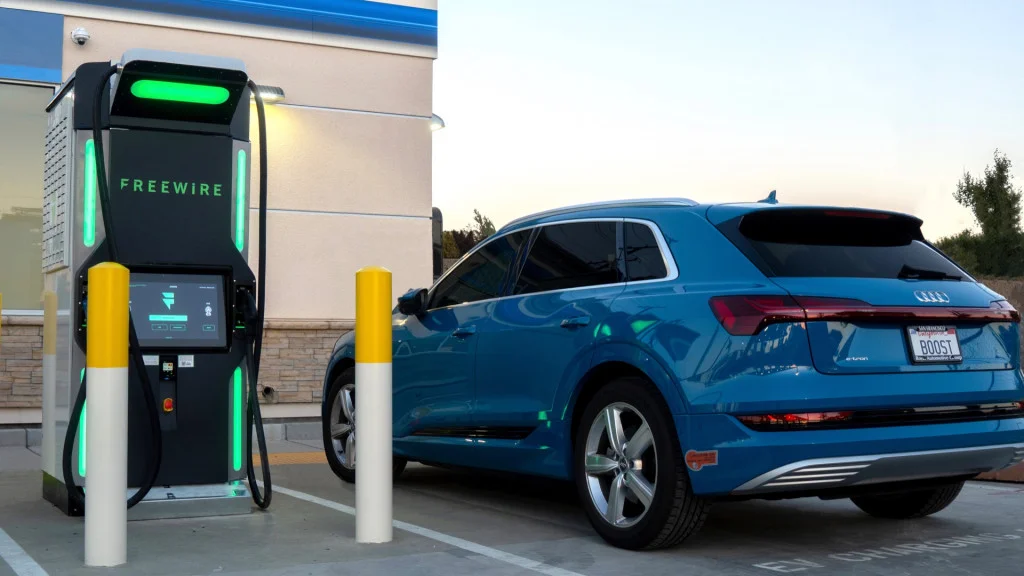
Electrify America, one of the largest DC fast-charging networks in North America, is fundamentally changing how drivers pay for charging sessions. According to an announcement on June 2, 2026, the company is removing account balances and automatic reload functions from its app over the coming weeks. Instead, charging costs will be billed directly to the credit or debit card saved on a user’s account.
“If drivers still have money left in their current Electrify America balance, that money won’t disappear,” the company stated. The remaining balance will automatically apply to the next charging session. If the balance does not fully cover the cost, the rest will be charged to the card on file. Once the account balance runs out, all future sessions will be billed directly to the saved payment method. Digital Pass subscriptions will remain unchanged.
The network is also altering how pre-authorizations work. Instead of automatically reloading prepaid balances, Electrify America will now place temporary $20 authorization holds on payment cards during charging sessions. Drivers will still only be charged for the actual amount of electricity used. How long those holds stay pending depends on the customer’s bank or credit card issuer.
This move appears aimed at simplifying payments as part of broader efforts to improve the user experience. Public fast-charging reliability remains a top frustration for EV drivers, and confusing payment systems have often been cited as a barrier to adoption. Electrify America currently operates more than 5,600 DC fast chargers and Level 2 chargers across North America, with its Hyper-Fast network capable of delivering up to 350 kW across 47 states and Washington, D.C. The company also upgraded more than 1,100 chargers to next-generation hardware in 2025.
Rivian Adventure Network Surpasses 1,000 DC Fast-Charging Stalls
On the same day, the Rivian Adventure Network (RAN) reached a round milestone of 1,000 individual DC fast-charging stalls. According to the Alternative Fuels Data Center (AFDC), RAN now has 148 locations and 1,007 stalls. A more granular tracker, the Rivian Roamer, reports 149 locations and 1,017 stalls. Just one year ago, RAN had just over 700 stalls, representing roughly 40% year-over-year growth. The average location now has 6.8 stalls, up from 6.3 a year ago, and peak power is often 300 kW.
RAN remains one of the largest DC fast-charging networks in the United States. Importantly, 97% of its locations — 144 out of 149 — are open to non-Rivian EVs. The company is also expanding the number of NACS (Tesla-style) connectors. These are now available at nearly 50 locations, encompassing 166 stalls, or about 16% of the total. At six locations, there are only NACS connectors — no CCS1 plugs — an unusual configuration outside of Tesla’s own Supercharger network.
Rivian’s expansion shows no signs of slowing. The company recently secured a contract with Caruso to install more than 150 chargers at properties owned by the real estate developer. According to the DCFC Tracker, the average cost of charging at RAN is $0.55 per kWh, slightly above the industry average. The network’s steady growth reflects a broader trend: automakers are increasingly investing in proprietary charging infrastructure to support their customers, even as they open those networks to other brands.
Why Reliability and Simplification Matter for EV Adoption
The Pain of Broken Chargers and Confusing Payments
Behind these announcements lies a deeper challenge: public charging has expanded quickly, but many EV drivers still face broken stations, spotty maintenance, and inconsistent performance. For people who rely on public charging — whether residents, commuters, or visitors — an ordinary errand can turn into a stressful guessing game.
Philadelphia, for example, is tackling this issue head-on. The city recently announced plans to install 435 new public EV charging ports — both DC fast chargers and Level 2 units — across the city. In a news release May 27, PositivEnergy said it is partnering with Philadelphia to make charging more accessible, reliable, and equitable. Anna Kelly of the city’s Office of Transportation and Infrastructure Systems stated, “Philadelphia’s goal is to make EV charging more accessible, reliable, and equitable for residents in neighborhoods across the city.”
Electrek noted that the emphasis on reliability was critical. Without dependable public charging, apartment dwellers, renters, and people who park on the street may find EV ownership impractical. For them, curbside or nearby charging can be the deciding factor. EVs can save drivers money on fuel and maintenance over time, but those savings are harder to realize if the charging network cannot be counted on. Broader benefits for cities include reduced tailpipe pollution and improved air quality.
The California Money: A Strategic Infusion for Fast Charging
The California Energy Commission (CEC) announced $55.2 million in new funding through the California Electric Vehicle Infrastructure Project (CALeVIP). The money will be available through two upcoming incentive windows under the Fast Charge California Project. Site owners and project developers will have two opportunities to move ready-to-build charging projects from planning to installation.
The first window — open from October 7, 2026, to January 14, 2027 — will offer incentives covering up to 100% of eligible installation costs for DC fast chargers, capped at $100,000 per charging port. The second window — from February 24, 2027, to May 27, 2027 — will offer incentives covering up to 100% of eligible costs, capped at $55,000 per port, with a minimum output of 150 kW. Sites must be publicly accessible. Priority will go to projects in tribal areas, disadvantaged communities, and low-income areas.
Qualifying sites may include businesses, public facilities, high-traffic destinations, and locations along key travel routes. Applicants must have ready-to-build projects — including a final utility service design and all required permits — before applying. The first window of the Fast Charge California Project has already awarded $54 million to date for more than 1,200 ready-to-build fast-charging ports in 35 counties. In total, CALeVIP has supported more than 10,500 charger installations across California.
Spencer Reeder, Director of the CEC’s Fuels Transportation Division, said, “Expanding access to reliable and convenient fast charging is essential to support California’s growing number of EV drivers and keep the state on track toward its clean transportation goals. CALeVIP has been pivotal in bringing chargers to communities and travel corridors that need them most."
What These Changes Mean for EV Drivers and the Industry
Simplification as a Competitive Advantage
Electrify America’s move to eliminate prepaid balances is more than a convenience upgrade. It addresses a long-standing friction point that has frustrated drivers who often found themselves with leftover credit on accounts they rarely used, or who struggled with confusing auto-reload mechanics. By moving to a straightforward credit card billing model, the network aligns itself with the simplicity that consumers expect from modern digital payments. Temporary authorization holds of $20 are a standard practice in the fuel industry, mirroring what gas stations frequently do.
This shift may also help Electrify America compete more effectively with Tesla’s Supercharger network, which has long been praised for its seamless plug-and-charge experience. As more automakers adopt NACS connectors, the pressure on legacy charging networks to offer similar ease of use will only grow.
The Network Effect: More Stalls, More Access
Rivian’s milestone of 1,000 stalls is significant not just for the number, but for the access model. That 97% of RAN locations are open to non-Rivian EVs signals a fundamental shift in how automakers view charging infrastructure. Rather than building walled gardens, companies like Rivian are recognizing that widespread network access benefits all EV owners — and ultimately strengthens the ecosystem.
The expansion of NACS connectors at RAN locations also underscores the industry’s gradual transition toward a unified standard. While the transition remains messy — with some stations offering only NACS or only CCS1 — the direction is clear. As more networks standardize, the hassle of carrying multiple adapters or searching for compatible chargers should diminish.
Public Funding as a Catalyst for Equity
California’s $55 million investment, with its focus on disadvantaged and tribal communities, highlights an essential truth: the EV transition will not succeed if charging infrastructure remains concentrated in wealthy neighborhoods or along popular highway corridors. By funding projects in underserved areas, the state is attempting to ensure that lower-income residents and apartment dwellers can also benefit from lower fuel costs and cleaner air.
The requirement that projects be “ready-to-build” before applying also accelerates deployment. It forces developers to secure permits and utility designs upfront, reducing the risk of funded projects stalling. This pragmatic approach has already yielded results: the first round of funding supported over 1,200 fast-charging ports in 35 counties.
A Pivotal Week for EV Charging
The convergence of these three developments — payment simplification, network expansion, and strategic public funding — paints a picture of an industry that is maturing rapidly. Electrify America is addressing user experience. Rivian is building out a robust, open-access network. California is ensuring that the infrastructure reaches communities that need it most.
For consumers, the message is clear: charging your EV is getting easier, more reliable, and more accessible. For policymakers and industry stakeholders, these moves offer a roadmap for continued growth. The road ahead still has bumps — reliability issues persist, standards are still fragmenting, and rural coverage remains thin — but this week’s developments suggest the industry is finally listening to drivers and responding with meaningful changes.
As the Microsoft Build 2026 conference showed with its focus on AI agents, technology companies are also eyeing the energy sector for smarter grid management. Meanwhile, drivers who rely on public charging — and those still on the fence about going electric — have more reasons than ever to feel optimistic. The age of confusing, unreliable charging is slowly giving way to something far simpler and more dependable.
Comments