
Government Announces Landmark Overhaul of England's Council Tax System
The UK government has confirmed sweeping reforms to the way council tax is administered in England, marking the most significant shake-up to the system since it was introduced in 1993. Announced on April 15, 2026, by the Ministry of Housing, Communities and Local Government, the changes are designed to protect the most vulnerable households from aggressive debt enforcement practices that ministers say have caused unnecessary distress for millions of people.
The reforms, championed by Local Government Secretary Steve Reed and Minister for Local Government Alison McGovern, respond to longstanding campaigning by consumer finance expert Martin Lewis and his charity, the Money and Mental Health Policy Institute. The government's announcement signals a clear political intent to overhaul a system that critics have long described as punitive, outdated, and ill-equipped to deal with the financial realities of modern life.
The Key Changes: More Time, Lower Costs, and Fairer Billing
A 63-Day Grace Period Replaces Two-Week Ultimatums
The most dramatic change concerns what happens when a household misses a monthly council tax payment. Under the rules in place since 1993, falling behind on a single payment triggered a legal mechanism known as "loss of the right to pay by instalments," meaning the entire remaining annual bill became due within just two weeks. For anyone already struggling financially, this cliff-edge could quickly spiral into court proceedings and bailiff visits.
From next year, that punishing two-week window will be replaced by a 63-day period — roughly two months — giving households significantly more time to address the arrears. Crucially, councils will also be legally required to work with residents to establish a sustainable repayment plan rather than immediately escalating to enforcement action. The reform effectively transforms the first missed payment from a potential financial catastrophe into a moment where support can be offered.
Billing Shifts to 12 Monthly Payments by Default
A second key change addresses the way bills are issued in the first place. Currently, council tax is spread over 10 monthly payments, leaving April and March free. While households can already request 12-month billing, the new rules will make this the default arrangement, spreading the annual cost more evenly across the year and reducing the size of individual payments. This seemingly technical adjustment could meaningfully ease cash-flow pressures for households budgeting on tight margins.
A Cap on Liability Order Costs
The government is also capping the administrative costs that councils can charge when pursuing overdue bills through a liability order — the legal instrument used to recover council tax debt. That charge will be limited to £100, preventing councils from piling additional financial burdens onto households already in arrears. Critics of the current system had pointed to the way these costs could compound rapidly, pushing people deeper into debt at the very moment they were least able to cope.
Why the Reform Matters: Decades of Harm to Vulnerable Households
A System Left Unchanged Since the John Major Era
The council tax system was introduced in April 1993 under Prime Minister John Major as a replacement for the deeply unpopular Community Charge, better known as the poll tax. Its billing and enforcement rules have remained essentially untouched for more than three decades — a remarkable policy stasis that has seen the broader economic and social landscape change dramatically while the administrative machinery stayed frozen in the early 1990s.
Steve Reed described the current system as having "become outdated" and causing "unnecessary stress and anxiety" for families. His assessment echoes complaints that have been building for years among debt charities, financial advisers, and mental health organisations who have documented the psychological toll of council tax enforcement on some of the most financially precarious households in England.
The Martin Lewis Factor
The announcement was explicitly linked to campaigning by Martin Lewis, founder of MoneySavingExpert and chair of the Money and Mental Health Policy Institute. Lewis has been a vocal and persistent critic of council tax debt collection practices, and the government's press release singled out his charity work for thanks.
In remarks accompanying the announcement, Lewis described the current system in stark terms: "Council Tax debt collection is so aggressive it'd make banks blush. It's the most vicious and damaging form of legal debt collection out there — causing counterproductive misery for millions." His intervention gave the campaign public visibility far beyond the usual reach of local government policy debates, and the government's swift acknowledgement of his role suggests that sustained civil society pressure played a direct part in driving legislative action.
The pattern of celebrity-backed advocacy accelerating policy reform is increasingly common in British public life. Much like legal reform debates in other countries — as explored in coverage of Criminal Defense Lawyers in the Spotlight as High-Profile Cases and Legal Reform Debates Reshape American Justice — public campaigns by well-known figures can shift political calculations in ways that years of technical lobbying sometimes cannot.
Council Tax in the 2026 Political Landscape
Reform UK and the Local Election Context
The government's announcement lands at a politically charged moment. Local elections are scheduled for May 7, 2026, and council tax has become a flashpoint issue in campaigning across England. Reform UK, which has controlled 13 upper-tier local authorities since 2025, has made council tax rises a central battleground, with the party's deputy leader Richard Tice claiming that Reform-led councils have delivered the lowest average annual council tax increase of any governing party — a figure of 4.33% according to an analysis by fact-checking charity Full Fact.
However, the picture is more complicated than that headline figure suggests. Full Fact's analysis also found considerable variation within Reform-controlled councils, with rises ranging from as low as 1.99% in Durham to as high as 8.98% in Worcestershire. Meanwhile, the party has faced accusations from both Labour and the Conservatives of breaking pre-election promises to cut council tax. Full Fact found no evidence that Nigel Farage had explicitly promised to cut council tax, though some local Reform candidates did make such pledges — pledges that have not materialised in practice.
Tice launched Reform UK's North East Lincolnshire local election campaign on April 14, arguing that the party's councillors are "better at saving money, renegotiating contracts, getting better value" — a message clearly calibrated for an electorate focused on household finances.
Labour's Strategic Timing
For the Labour government, the timing of the April 15 reform announcement is unlikely to be accidental. With local elections less than a month away, the ability to point to a concrete, tangible change that benefits households struggling with bills carries obvious political value. The reform touches a nerve that crosses party lines: concerns about council tax affordability and fairness are not confined to any one demographic or region.
Alison McGovern framed the changes as cutting through "complexity" to ensure council tax is "fit for the 21st century" — language that implicitly draws a contrast with what the government characterises as an inert and unfair status quo inherited from previous administrations.
Broader Implications: What This Changes for Households and Local Authorities
Relief for Millions, Implementation Challenges for Councils
For the estimated millions of households who have at some point fallen behind on council tax payments, the reforms represent a meaningful shift in the balance of power between local authorities and residents. The 63-day window and mandatory repayment plan requirement give people genuinely more space to resolve arrears before enforcement escalates. The cap on liability order costs removes a source of financial compounding that critics said served no purpose beyond penalising poverty.
For local councils themselves, the changes introduce new obligations. Councils will be required to engage proactively with residents in arrears rather than defaulting to rapid legal escalation. That is a cultural as well as procedural shift, and implementing it will require training, process redesign, and potentially additional resources at a time when many local authorities are already under severe financial pressure.
The £100 cap on liability order costs also reduces a revenue stream that some councils have relied upon, raising questions about how the shortfall will be managed — though the government has framed the cap as eliminating excessive charges rather than curtailing legitimate cost recovery.
A Signal About the Direction of Reform
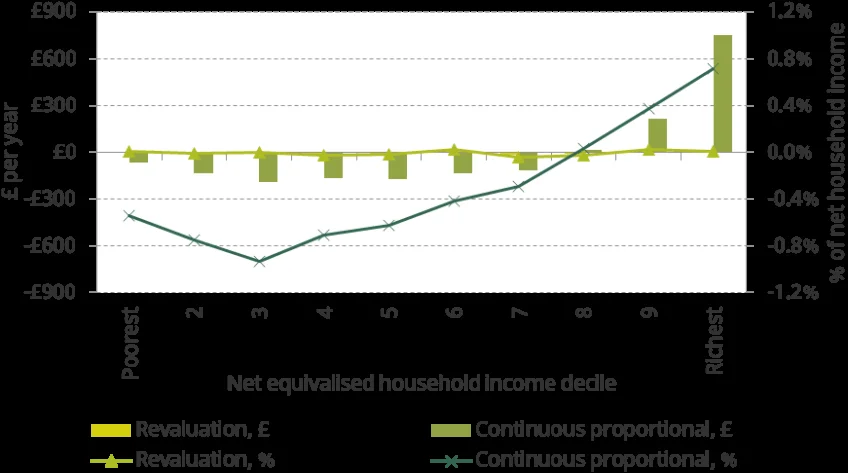
Perhaps the most significant aspect of today's announcement is what it signals about the government's broader approach to local government finance. The council tax system as a whole — its valuation bands, frozen since 1991, its exemptions, its interaction with benefits — has long been criticised as regressive and out of step with contemporary property values and living arrangements. Tuesday's reforms address the administration and enforcement side of the system without touching its underlying structure.
Whether this represents a first step toward more fundamental reform, or a deliberate choice to limit change to what is politically manageable, remains to be seen. What is clear is that after more than three decades of administrative stasis, the political appetite for change has finally outweighed the inertia — and that for households who have faced bailiff threats after a single missed payment, the coming changes cannot arrive soon enough.
Comments