
El Niño Threatens to Push 49 Million More People Into Acute Hunger
The World Food Programme (WFP) warned on Wednesday that a powerful El Niño weather event could push an additional 49 million people into acute food insecurity by the end of 2027, bringing the total number of people facing crisis-level hunger to 274 million across 45 countries. The UN agency's analysis, released amid growing concern over the rapidly intensifying climate phenomenon, highlights that even a moderate El Niño would tip many vulnerable regions over the edge.
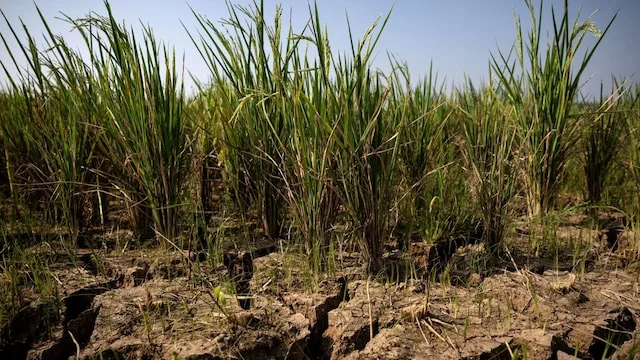
According to the WFP report, there is an 81% chance of a very strong El Niño, with sea surface temperatures in the Pacific at their warmest since at least 1982, potentially making it the strongest such event since 1950. This natural climate pattern, which disrupts weather globally, is expected to cause drought in Southern Africa, delayed monsoons in Asia, and erratic rainfall elsewhere, exacerbating already dire food insecurity.
The Scale of the Projected Crisis
Based on analysis of 45 countries deemed vulnerable to El Niño's effects, the WFP estimates that the number of people facing acute food insecurity could rise by 22% relative to the current baseline of 225 million. This increase would push the total to nearly 274 million by the end of next year. Hardest hit regions include Central America, where food-insecure populations could increase by 83%, and Southern Africa, with a projected 75% surge. Southern Africa, South America, and the Caribbean could each see more than 12 million additional people slide into acute hunger.
Jean-Martin Bauer, director of WFP's Food Security and Nutrition Analysis Service, told reporters, "These are events that in the past have triggered large-scale hunger." He stressed that while global food markets are currently in a relatively strong position following good harvests in 2025, conflict in the Middle East and potential weather-related crop losses could drive prices up, further limiting access for vulnerable households.
Why This Matters: A World Already on the Brink
This El Niño arrives at a time when global hunger levels are already alarmingly high. Years of drought in parts of Africa, the war in Iran and its impact on food prices, and the lingering effects of the COVID-19 pandemic have left millions in a precarious state. The WFP notes that even if this El Niño proves less intense than some models predict, it will add more than a fifth to the 225 million people already experiencing acute food insecurity.
The Human Toll: Women and Girls Bear the Brunt
The humanitarian organization CARE highlights that 172.3 million women and girls are already at risk of food insecurity in the countries expected to be worst affected. In 20 of the 22 most at-risk countries, more women and girls are going hungry than men. El Niño acts as a "risk multiplier," exacerbating existing inequalities and vulnerabilities. Ann Vaughan, Associate VP for Resilient Futures at CARE, noted, "El Niño is not simply a climate phenomenon. It becomes a humanitarian crisis when it collides with hunger, poverty, conflict, inequality, disrupted supply chains and shrinking humanitarian funding."
Economic and Logistical Challenges
Treating child malnutrition has become substantially more expensive and challenging due to increased costs and supply chain disruptions. The average cost to treat one child with malnutrition has risen by $40 since the Strait of Hormuz was first closed, meaning an additional $275 million would be needed to treat the nearly 7 million children currently experiencing malnutrition, before El Niño's full impacts even materialize.
A Super El Niño? The Strongest in Decades
Climate scientists are closely monitoring the development of this El Niño, which some are calling a "super El Niño," though the term is not officially recognized. The last such event in 2015–2016 affected an estimated 60 million people worldwide. This time, the world is facing significantly higher levels of food insecurity and displacement than a decade ago, compounded by conflicts, epidemics, and a lack of affordable fertilizer.
The current El Niño is shaping up to be the strongest in at least 70 years, with sea surface temperatures at record levels. Experts warn that its impacts are being amplified by the climate crisis, potentially leading to the hottest year on record either this year or in 2027. The combination of El Niño-driven drought and floods with global heating poses an unprecedented challenge to food security.
Regional Impacts: From Africa's Lean Season to Asia's Monsoons
In Southern Africa, the main growing season runs from October 2026 to March 2027, but the biggest food security impact will be felt during the lean season following the harvest, about nine months later, potentially in late 2027 and into 2028. Farmers may take more than one season to exhaust their food supplies, meaning the crisis could persist well beyond the initial weather event.
In South and Southeast Asia, less rainfall than usual is expected, which would seriously disrupt agriculture and farmers' livelihoods. India's monsoon rains are in danger, which could have devastating consequences for the region's food production and economy. Central America, already reeling from droughts and migration pressures, is projected to see an 83% increase in food insecurity, affecting millions of smallholder farmers and rural communities.
The Philippines is already experiencing a seemingly endless cycle of disasters, with several provinces that declared states of calamity under the last El Niño in 2024 still not recovered. This new shock is landing on those with the least capacity to absorb it, as flooding and drought alternate in rapid succession.
The Response: Early Warning, Early Action
The WFP is hoping to mitigate the effects through early warning systems and "anticipatory" relief efforts, for which at least $80 million is budgeted. However, funding cuts from U.S. and European donors in 2025 are hampering efforts to monitor the developing crisis. Bauer described a growing "drought of food-security data," as the number of household surveys conducted by WFP fell from 1.1 million in 2024 to about 800,000 in 2025, with further reductions this year due to funding restrictions.
"At a time when you have a risk like an El Niño, it is important to have high-frequency data collection," Bauer warned, noting that reduced monitoring could make it harder to identify and respond to emerging hotspots. CARE and other organizations are calling for increased investment in anticipatory action, women-led adaptation, and local organizations to reduce suffering before disaster strikes.
A Growing Threat: The Future of Hunger and Climate
This El Niño is a stark reminder of how climate change is amplifying natural weather phenomena and their humanitarian impacts. As the planet warms, the frequency and intensity of El Niño events are expected to increase, and their effects on food security will become more severe. The WFP's warning is not just about the next 18 months but about a broader trend: the world is becoming more vulnerable to climate shocks, and the poorest and most marginalized are bearing the brunt.
The combination of El Niño, conflict, and economic instability is creating a perfect storm for global hunger. The number of people needing food assistance is at record levels, and the resources to help them are shrinking. Unless significant funding is restored and proactive measures are taken, the 49 million projected new victims of acute hunger may only be the beginning.
What This Changes
This El Niño may change how the international community approaches climate-related food crises. The emphasis is shifting from reactive to anticipatory action, with early warning systems and pre-positioned supplies proving more effective and cost-efficient than emergency response. Yet, the current funding cuts threaten these efforts, leaving millions more exposed.
The crisis also underscores the need to address the root causes of vulnerability: conflict, inequality, and the climate crisis itself. Investing in resilient agriculture, social safety nets, and women's empowerment is essential to reduce the impact of future shocks. As the WFP's Bauer noted, we are entering a period where such extreme events are no longer anomalies but part of the new normal, requiring a fundamental reassessment of global food security strategies.
In the meantime, the immediate priority is to raise the necessary funds to scale up monitoring and anticipatory actions in the most at-risk regions. For the millions of people already on the edge, the onset of a super El Niño could push them over the brink unless the world acts decisively and swiftly.
How to Help and What’s Next
International organizations, governments, and NGOs are calling for urgent donations and policy changes to avert the worst impacts of this El Niño. The WFP’s anticipatory action plan, costing at least $80 million, is a small price compared to the humanitarian catastrophe that could unfold. For those looking to understand more about this phenomenon, our previous analysis on Super El Niño Intensifies: Hurricanes, Fisheries, and Global Weather at Risk provides deeper insights into its meteorological and ecological consequences.
The coming months will be critical, as forecasts are refined and early signs of crop failure and food price spikes emerge. The world will be watching to see whether the international community can learn from past El Niño events and take proactive steps to protect the most vulnerable. As the WFP and CARE have emphasized, the time to act is now, before the lean seasons arrive and the hunger statistics translate into real human tragedy.
Comments