
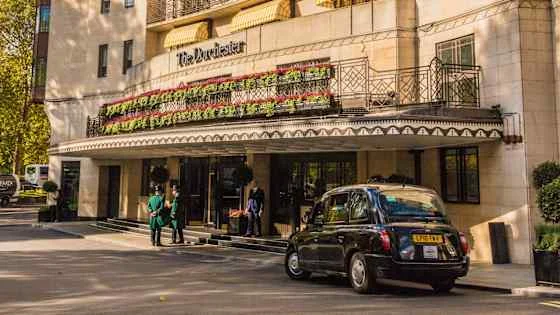
Dorchester Moves to Seize Sheikh's Car Over £460k Debt
The Dorchester Hotel in Mayfair is preparing to sell a car belonging to a member of Qatar's ruling family after the guest accumulated an unpaid bill of approximately £460,000, according to a Financial Times report. The luxury hotel, a landmark of London's most exclusive district, has moved to recover the debt by disposing of the vehicle, which was left on the premises as security.
The sum is striking even by the standards of one of the world's most expensive hotels. It could cover several months of stay in one of the Dorchester's signature suites, where nightly rates can exceed £5,000. The decision to sell the car marks a rare public escalation in a dispute between a high-end London establishment and a wealthy Gulf patron—a relationship normally conducted with discretion.
Details of the vehicle and the exact mechanism of the sale have not been fully disclosed. The hotel has not commented publicly on the matter, and representatives for the Qatari royal have not issued a statement.
A Debt Rooted in Summer's Supercar Season
The incident fits a broader pattern of unpaid bills and fines linked to wealthy Middle Eastern visitors who bring their luxury cars to London each summer. According to data reported by the Wall Street Journal and cited by Luxurylaunches, Westminster City Council issued 13,423 parking tickets to vehicles registered in the United Arab Emirates between 2018 and 2022—yet only about 1 percent were paid. Last year, four Gulf states accounted for 41 percent of Westminster's tickets issued to foreign vehicles, with Qatar alone responsible for 2,570 tickets, more than any other foreign country.
The concentration of such vehicles is especially visible around Knightsbridge and Mayfair, where luxury retail, five-star hotels, and private clubs draw Gulf families escaping summer temperatures that can exceed 45°C (113°F) at home. Many ship their cars to Britain by air freight, paying roughly £25,000 each way—about £50,000 for a return trip—simply to have their own bespoke vehicles on hand.
That willingness to spend enormous sums on logistics makes the non-payment of parking fines and hotel bills all the more glaring to local authorities and businesses. For residents, the issue is less about the value of the cars than the apparent disregard for rules that everyone else is expected to follow.
The Stakes for London's Luxury Economy
The Dorchester's decision to sell the car is significant because it signals that even the most prestigious institutions may be willing to pursue debts publicly when diplomatic and informal channels fail. London's luxury hospitality sector depends heavily on Gulf patrons, whose spending supports hotels, restaurants, retail, and property. But the sector also operates on thin margins of tolerance for unpaid bills, and a single seven-figure dispute can set a precedent.
For the Qatari royal, the episode risks reputational damage. Gulf royalty and billionaires are accustomed to privacy and deference, not debt collection through vehicle sales. The optics of a sheikh's car being auctioned to settle a hotel bill could complicate future visits and relationships with British institutions.
For Westminster and other London boroughs, the case underscores a persistent enforcement gap. Foreign-registered vehicles are difficult to trace and pursue once their owners leave the country, and diplomatic immunity can further complicate matters if the owner holds official status. The Dorchester, by contrast, had a physical asset in its possession—a car—which gave it leverage that councils rarely enjoy.
A Wider Context of Unpaid Foreign Debts
The problem is not limited to parking tickets. Luxury hotels, private clubs, and high-end rental services have all reported difficulties collecting from some ultra-wealthy foreign visitors. The sums involved are often trivial relative to the guests' wealth, which makes non-payment appear less a matter of inability than of attitude.
At the same time, London remains a magnet for Gulf visitors. The city's legal system, property market, schools, and cultural life continue to attract families from Qatar, Saudi Arabia, and the UAE, many of whom maintain homes and businesses in Britain. Their long-term presence makes the relationship more complex than a simple tourist transaction.
Perspective: A Test of Enforcement and Reputation
The Dorchester case is likely to be resolved privately—most such disputes are—but its emergence in the Financial Times suggests that patience has worn thin. If the hotel proceeds with the sale, it will send a message that even royal guests are not exempt from the obligations of hospitality.
More broadly, the episode highlights a tension in global cities that cater to the ultra-rich: the difficulty of enforcing ordinary rules when the parties involved are extraordinarily wealthy, mobile, and sometimes protected by diplomatic status. London's ability to manage that tension will shape its reputation as a place where both luxury and accountability coexist.
For now, the car sits in limbo, a symbol of a debt that a member of one of the world's richest families has apparently chosen not to pay. The Dorchester, known for its discretion, has apparently decided that silence is no longer an option.
Comments