
Judge Extends Block on Trump Mail-In Voting Order as Supreme Court Showdown Looms
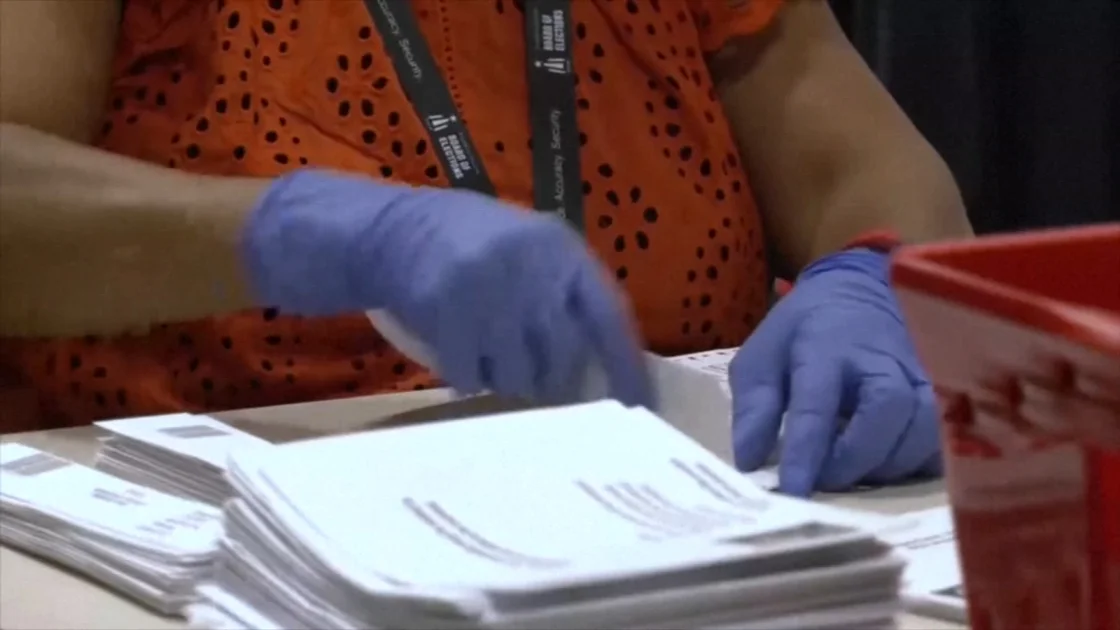
With less than two months until the November midterm elections, a federal judge has again blocked the Trump administration's executive order imposing sweeping restrictions on mail-in voting, setting the stage for a third Supreme Court intervention. The ruling, issued Friday by U.S. District Judge Indira Talwani, extends a prior temporary block with a more robust preliminary injunction, dealing a significant setback to the president's efforts to reshape election procedures. The administration appealed within hours, and on Sunday, the solicitor general filed an emergency application with the Supreme Court, urging justices to allow the rule to take effect as states begin mailing ballots.
Judge Talwani's order came just hours after North Carolina became the first state to send out mail-in ballots for the November 3 election. In her ruling, the judge underscored the practical impossibility of implementing the rule at this late stage, writing that states are “required under state law to mail millions of ballots to voters on a prescribed timeframe” and “are unable to pivot this late in the election cycle, nearly guaranteeing significant disenfranchisement for eligible voters.” The preliminary injunction will remain in place while a lawsuit filed by a coalition of 24 state attorneys general moves forward.
The executive order, signed by President Trump in March, would create a nationwide list of verified eligible voters, compelling the U.S. Postal Service (USPS) to work with states to establish lists of mail-in voters before each election. Under the rule, ballot delivery would be limited only to those voters on approved lists, with the USPS tracking mail-in ballots and potentially rejecting those sent to or from individuals not included in the federal database. The Department of Homeland Security would be responsible for determining voter eligibility—a dramatic departure from the decentralized, state-run election system that has defined American democracy for centuries.
The Stakes: Why This Legal Battle Matters
The outcome of this legal fight carries enormous consequences for the 2026 midterm elections, with control of both chambers of Congress at stake. Nearly one-third of American voters typically cast their ballots by mail, and the rule's implementation could disenfranchise millions. Voting rights groups and Democratic state officials argue the order is unconstitutional, while state election officials who actually run elections warn that the technology required to carry out the directive is not even available.
The USPS itself has acknowledged in recent court filings that the technology needed to administer the order does not yet exist. Earlier this week, a USPS whistleblower came forward, warning of “potentially catastrophic problems” if the agency were forced to implement the rule under the current timeline. These admissions undercut the administration’s argument that the rule imposes only “modest” requirements on states, as stated in its Sunday filing to the Supreme Court.
The Legal Back-and-Forth
Judge Talwani initially issued a temporary restraining order in late August, preventing the USPS from enforcing the rule. The administration appealed that order to the Supreme Court, which allowed the plan to move forward procedurally but did not rule on its legality. After a hearing on Thursday, Talwani on Friday converted the temporary order into a preliminary injunction, citing the likelihood that the rule is unlawful and unconstitutional. In her order, she also pointed to the rushed nature of the rule, noting that “immediate implementation of the Final Rule issued less than seventy days before the November 2026 election threatens disenfranchisement of millions of United States citizens who seek to vote by mail.”
In the latest Supreme Court filing, Solicitor General John Sauer emphasized the urgency, writing that “ballots have already begun to be mailed in North Carolina, and more states will begin the mailing process as the injunction remains in place—including Alabama on September 9 and at least five states the week of September 13.” Sauer argued that “once those ballot envelopes enter the mailstream, there is no retrieving them,” and that the injunction “risks sowing confusion and chaos because the injunction makes those preparatory steps voluntary, rather than mandatory.” The administration has now asked the Supreme Court three times to intervene.
The Coalition of States Responds
The coalition of 24 state attorneys general, co-led by California Attorney General Rob Bonta, filed suit against the USPS shortly after the executive order was signed. They sought both a temporary restraining order and a preliminary injunction. After Friday’s ruling, Bonta declared, “We’ve now secured longer-term relief that will keep the USPS changes blocked while our case moves forward. We will continue to take all steps to stop the Trump Administration from trampling on voting rights and restricting mail voting.”
The coalition argues that the executive order violates the Constitution’s Elections Clause, which grants states the primary authority to regulate the “Times, Places and Manner” of congressional elections. They contend that the federal government cannot unilaterally impose such restrictions without congressional approval, and that the rule would lead to eligible voters being purged from lists due to data errors or failure to verify citizenship status.
The Broader Implications: A Historic Shift in Election Control
This legal battle represents a fundamental clash over who controls American elections. Historically, elections have been administered by state and local officials, with the federal government playing a limited role—primarily through the Voting Rights Act and other civil rights legislation. The Trump administration’s executive order attempts to federalize a key aspect of the process by giving the USPS and the Department of Homeland Security authority over which voters receive mail-in ballots.
Legal scholars note that the administration’s position is untested and likely unconstitutional. The Supreme Court’s eventual ruling could have far-reaching implications not just for this election, but for the future of election administration in the United States. If the Court sides with the administration, it would set a precedent for the federal government to insert itself into the mechanics of voting in ways not seen since the Reconstruction era. If the Court upholds the injunction, it would reaffirm the traditional state-based system.
The midterm elections are now just 54 days away, and states are scrambling to prepare. North Carolina has already begun mailing ballots, and other states are set to follow in the coming days. The uncertainty caused by the legal wrangling is itself a concern for election officials, who worry that voters will be confused about whether their mail-in ballots will be counted. In related news, the Department of Justice has issued subpoenas for voter data in Nevada as part of broader post-election investigations, adding another layer of tension.
The USPS Whistleblower Warning
The USPS whistleblower’s warning of “potentially catastrophic problems” underscores the real-world consequences of the executive order. The agency’s own filings admit that the systems required to cross-reference voter records with federal databases and track individual ballots are not in place. Election officials in several states have testified that they would have to build new infrastructure in a matter of weeks—a task that would normally take years.
The administration, for its part, insists that the rule is reasonable and necessary to combat voter fraud, despite the lack of evidence of widespread mail-in voting fraud. In its Supreme Court filing, the administration argued that “the Postal Service’s final rule imposes only modest envelope-design and addressee-information requirements for federal-election ballots sent via U.S. Mail.” The filing further stated that the rule “requires States to upload the name, address, and barcode information of intended recipients of ballot mail in an online portal—information that election officials would necessarily already possess to send ballot mail under the Rule to those recipients.”
What Happens Next
The Supreme Court is now under immense pressure to rule quickly. The administration has asked the justices to allow the rule to take effect while litigation continues, but the Court may decline to intervene, allowing the preliminary injunction to stand through the election. Alternatively, the Court could issue a stay of the injunction, effectively green-lighting the rule’s implementation—though that would be logistically catastrophic given the lack of technology and time.
A final ruling on the merits could come months after the election, which would mean that the 2026 midterms would be conducted under the rules in place now, with the injunction preventing enforcement of the order. That scenario would likely be seen as a victory for voting rights advocates, but the legal fight would continue regardless.
This case is part of a broader trend of contentious election-related litigation that has intensified since the 2020 election. The Supreme Court has already weighed in on issues ranging from redistricting to voting access, and its decision here could shape the landscape for years to come. The midterms will be a high-stakes test of the American electoral system’s resilience amid unprecedented legal and political pressure.
The Road to the Midterms: A Nation on Edge
As the legal battle unfolds, election officials, voters, and political operatives are bracing for a chaotic final stretch. With the Supreme Court likely to have the final say, the coming days will be critical. States that have already begun mailing ballots are watching closely, but some are moving forward despite the uncertainty. Alabama, for example, is scheduled to begin mailing ballots on September 9, and at least five more states will join the following week.
Voting rights organizations have launched public awareness campaigns to reassure voters that mail-in ballots are secure and will be counted. Meanwhile, the administration’s repeated appeals to the Supreme Court suggest that it will not back down easily. The justices, now with a conservative majority, are the ultimate arbiters in this dispute, and their decision could either preserve or upend the current system with just weeks to go.
The broader implication of this fight extends beyond the midterms. It signals a new era of federal involvement in elections—one that could be wielded by future administrations of either party. The precedent set by this case will likely influence how presidents attempt to use executive orders to shape election procedures, making the Supreme Court’s eventual ruling a landmark in American election law.
For now, the immediate focus is on the November 3 election. Voters in North Carolina have already started receiving their ballots, and millions more will soon follow. The legal uncertainty, however, casts a pall over the process, leaving many to wonder whether their votes will truly count. The Supreme Court, once again, holds the key.
Comments